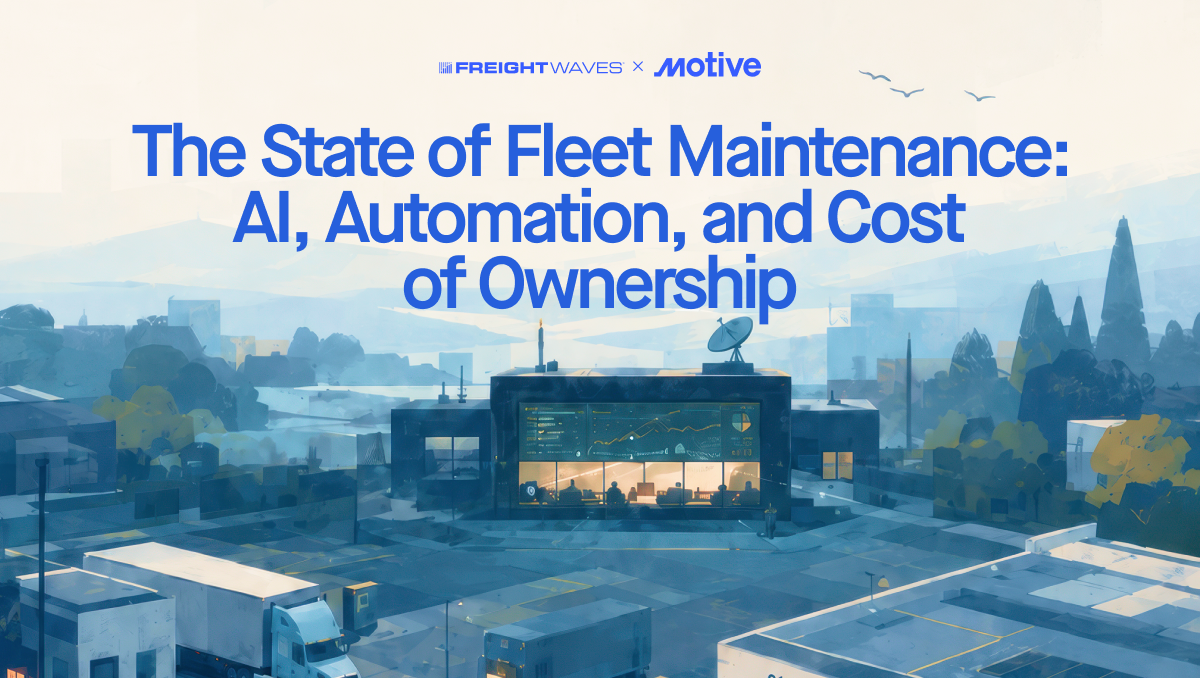
Fleet maintenance costs are rising, and reactive strategies are becoming more expensive, according to FreightWaves, which partnered with Motive to explore how fleet organizations are using AI, automation, and integrated operations platforms to reduce downtime, improve efficiency, and lower total cost of ownership. The FreightWaves-Motive report is positioned ahead of the F3: Future of Freight Festival in Chattanooga, Tennessee, where fleet operators, brokers, and shippers will gather to benchmark technology and compliance practices.
What the 2026 Fleet Maintenance Report Covers
The report, hosted by FreightWaves and supported by Motive, addresses the biggest fleet maintenance challenges in 2026, where AI and automation are delivering the greatest impact, why integrated platforms outperform disconnected systems, and how leading fleets are reducing costs and improving uptime. According to FreightWaves, the research is designed to give maintenance teams a roadmap for shifting from reactive repairs to predictive, automated operations.
| Report topic | What it covers |
|---|---|
| Biggest maintenance challenges | Reactive maintenance costs, rising downtime, and total cost of ownership pressure in 2026 |
| AI and automation impact | Where predictive and automated workflows deliver the greatest maintenance savings |
| Integrated vs. disconnected systems | Why connected platforms beat siloed maintenance tools |
| Cost and uptime | How leading fleets lower ownership costs and improve vehicle availability |
AI, Automation, and the Shift from Reactive Maintenance
The FreightWaves-Motive report highlights AI and automation as key levers for fleets facing higher maintenance costs. According to FreightWaves, the greatest impact comes where predictive maintenance replaces reactive repairs and automated workflows reduce administrative overhead. The report also stresses that integrated operations platforms outperform disconnected systems, meaning fleets that link maintenance data with dispatch, safety, and compliance functions can control costs more effectively than those relying on separate point solutions.
Motive Fleet Maintenance Platform
FreightWaves promoted the report alongside Motive Fleet Maintenance, the product platform central to the research. Operators seeking details on Motive's maintenance capabilities can visit gomotive.com/products/maintenance. The article did not include specific pricing, contract terms, or maintenance cost benchmarks for the platform.
F3 Events in Chattanooga
FreightWaves tied the report to its coming industry events at The Signal at Chattanooga Choo Choo in Chattanooga, Tennessee. The Brokerage Compliance Symposium, scheduled for the day before F3, brings attorneys and operators together to define best practices on fraud exposure, carrier liability, FMCSA rules, cargo theft, and insurance gaps. The F3 Awards Dinner, held the night before F3, honors FreightTech100 companies and reveals FreightTech 25 and Shipper of Choice winners live, with a cocktail reception, dinner, live music, and 300 industry leaders in attendance. The F3: Future of Freight Festival itself features industry-defining keynotes, rapid-fire technology demos, and networking experiences across Chattanooga, plus the inaugural F3 Awards Dinner.
What Operators and Shippers Should Do
For freight forwarders, 3PLs, and fleet managers, the FreightWaves-Motive report points to a concrete shift: replacing reactive maintenance with AI-supported, integrated maintenance operations can reduce downtime and improve efficiency. FreightWaves recommends fleets evaluate where AI and automation can have the greatest impact and consider consolidating disconnected maintenance systems into one integrated platform. Operators planning to attend F3 in Chattanooga can use the Brokerage Compliance Symposium, F3 Awards Dinner, and the main festival to benchmark maintenance technology, compliance practices, and industry best practices.
Watch list: The F3: Future of Freight Festival and its associated events in Chattanooga, the broader release of the FreightWaves-Motive report, and continued adoption of AI-based maintenance platforms by fleets in 2026.
Sources: