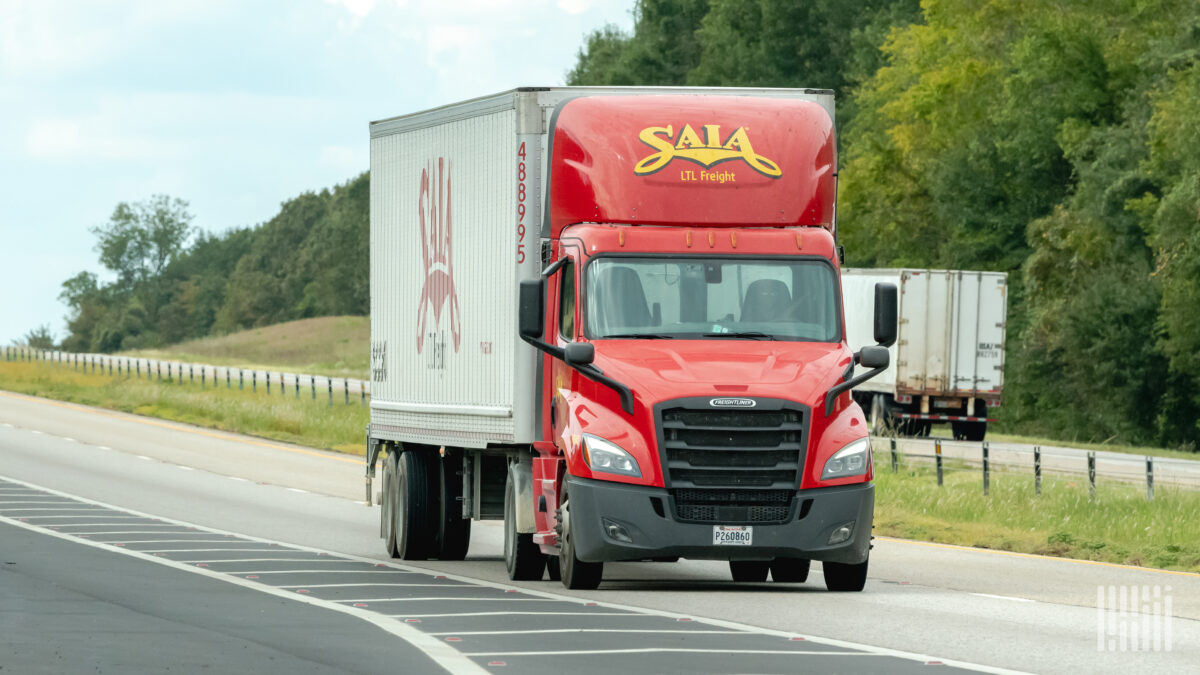
The less-than-truckload (LTL) sector is experiencing a significant surge as rising truckload rates and tightening capacity push shippers to consolidate half-load freight back onto LTL networks, according to Brad Hadley, vice president of national accounts at Saia. This shift, which began around the start of the second quarter, has driven Saia to record quarterly tonnage levels and is prompting major carrier investments.
The Mode Shift from Truckload to LTL
Hadley told FreightWaves at the Univar Solutions Carrier Kickoff event in Chattanooga, Tennessee, that the mode shift is a direct response to market conditions. "Capacity's tightened, truckload prices have increased," he said. "Shipments that might have been half loads that were cheaper for customers to move via truckload have now shifted back to the LTL side." Average shipment weights at Saia have climbed alongside volume gains, he added.
Saia’s Record Q2 and $1.6B Infrastructure Investment
Saia recorded its best quarter ever for tonnage in Q2, according to Hadley. The milestone reflects a broader trend that began in Q2 and that the carrier expects to continue, ending what Hadley described as a "4-year freight recession." To prepare for this growth, Saia has deployed $1.6 billion in capital expenditures over the past two years — a significant share of its $3 billion-plus annual revenue. That spending has funded 70 new terminal openings over seven years, plus the relocation or expansion of an additional 26 terminals. Hadley framed the surge as the payoff for this aggressive infrastructure build.
Pricing, Selectivity, and Driver Programs
On pricing, Hadley said LTL carriers are moving to recapture rates after years of margin pressure. Equipment costs have climbed sharply, with a single tractor now costing $140,000 to $160,000, while insurance costs have also risen materially. Saia intends to ensure it is "paid fairly" by customers who may have taken advantage of the soft market, while honoring long-standing partnerships such as its roughly 15-year relationship with Univar Solutions.
To protect profitability as volumes grow, Saia is being selective about the freight it pursues. The carrier is targeting shippers that engage across multiple service lines, including a white-glove final-mile logistics division called Saia Logistics that operates in Florida. Hadley also noted that Saia recently opened a Saia Logistics international office in Chattanooga — two blocks from the Westin where the Univar event was held.
On the driver supply side, Hadley highlighted an internal program called dock-to-driver, in which high-performing dock workers are sponsored through CDL training at Saia break terminals at the company’s expense. The program reduces turnover and ensures the carrier knows the background of the drivers it places on the road. Hadley, who has been with Saia for 19 years, said culture and continued investment are what keep him at the company.
Implications for Shippers and Operators
The mode shift from truckload to LTL has direct operational implications. Shippers that had been using truckload for half-load shipments should expect tighter LTL capacity as more freight moves into that network. Carriers like Saia are becoming more selective, prioritizing multi-service shippers and those with consistent volumes. This means that logistics managers may need to adjust their carrier mix and be prepared for potential rate increases as LTL carriers seek to recapture margins. The investments in terminals and driver training suggest that Saia and other LTL carriers are positioning to handle sustained volume growth, but near-term capacity constraints could persist.
Watch List
- Continued tightening of truckload capacity and rising truckload rates, which could accelerate the shift to LTL.
- Carrier pricing actions: LTL carriers are expected to raise rates to recoup years of margin pressure and higher equipment/insurance costs.
- Terminal expansion pace: Saia’s 70 new openings in seven years demonstrates significant capacity buildout; other carriers may follow.
- Effectiveness of driver training programs like dock-to-driver in easing labor shortages.
Sources: