A new survey from the International Road Transport Union (IRU) reveals that 14% of commercial driver positions in Mexico are unfilled, the second-highest vacancy rate among 18 major freight markets surveyed, according to FreightWaves. The shortage has worsened since 2021 and is now a structural issue threatening cross-border trade with the U.S. and domestic supply chains.
Driver shortage deepens in Mexico
The 14% vacancy rate trails only Uzbekistan at 15% and exceeds the global average of 11%. Recruitment difficulties have worsened in nearly every market since 2021, the IRU report found, suggesting driver shortages have become structural rather than cyclical. In Mexico, structural labor constraints and underdeveloped training pathways keep vacancy rates elevated, according to the IRU.
The survey found that 44% of Mexican trucking companies rank the driver shortage as their biggest operational challenge, ahead of concerns about the economy, decarbonization and digitalization. Mexico’s National Chamber of Cargo Transportation estimates that roughly 90,000 trucks are currently sitting idle because carriers cannot find enough qualified drivers. Without additional workforce initiatives, that figure could climb above 108,000 trucks by 2028, according to industry estimates cited in the report.
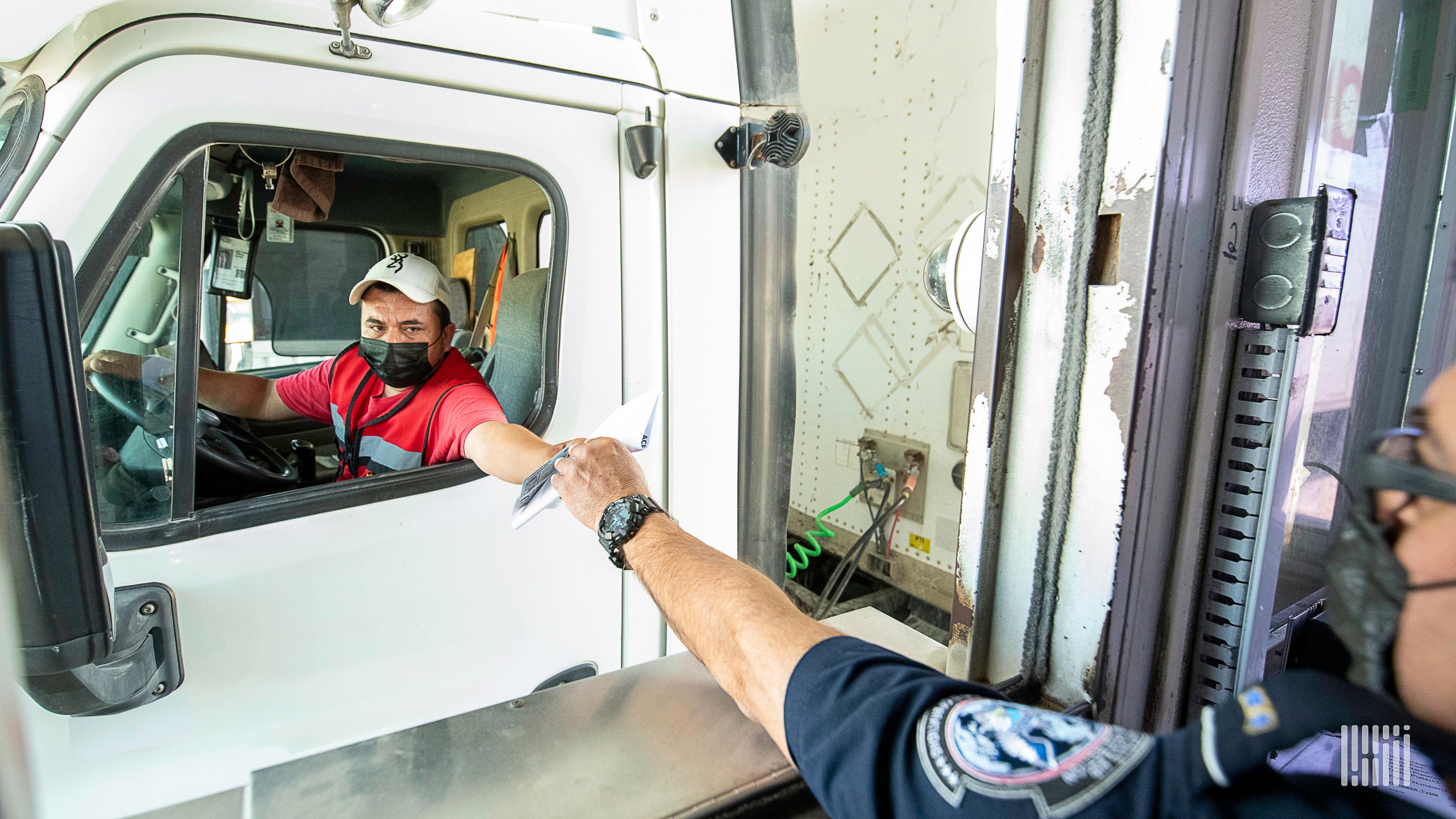
Trucking moves about 81% of Mexico’s land cargo and 57% of its domestic freight, making driver availability critical for manufacturers, retailers and exporters that rely on road transportation. The shortage directly affects capacity on cross-border lanes to the U.S., Mexico’s largest trading partner.
Global shortage reaches 2.9 million drivers
Worldwide, IRU estimates there are approximately 2.9 million unfilled truck driver positions across 18 major freight markets, equivalent to 11% of the industry’s workforce. Europe reported a 13% vacancy rate, Australia 12%, Brazil 11% and China 10%. The Geneva-based IRU represents bus, coach, taxi and truck operators in 75 countries.
| Market | Driver vacancy rate |
|---|---|
| Uzbekistan | 15% |
| Mexico | 14% |
| Europe | 13% |
| Australia | 12% |
| Brazil | 11% |
| Global average | 11% |
| China | 10% |
IRU Secretary General Umberto de Pretto said the shortage has evolved into a structural problem affecting freight capacity and supply chain reliability. “Despite significant industry efforts, the shortage of drivers has deepened as a critical structural issue for the road transport industry,” de Pretto said in a statement. “Driver recruitment is directly affecting transport capacity, business growth and supply chain reliability.”
Operational implications for freight operators
For freight forwarders, logistics managers and shippers relying on Mexican trucking, the driver shortage means reduced capacity, longer transit times and upward pressure on rates. With nearly one in seven positions vacant, fleets are unable to deploy all available equipment. The 90,000 idle trucks represent a significant loss of haulage capacity that cannot be quickly replaced. Cross-border operations between Mexico and the U.S. are particularly vulnerable given that trucking carries the vast majority of land cargo. The IRU data indicates the problem is not temporary — recruitment challenges have persisted and worsened since 2021 across nearly all surveyed markets. Fleet operators may need to invest in driver recruitment, training and retention programs, while shippers should anticipate tighter capacity and plan longer lead times for shipments moving by road.
Sources: