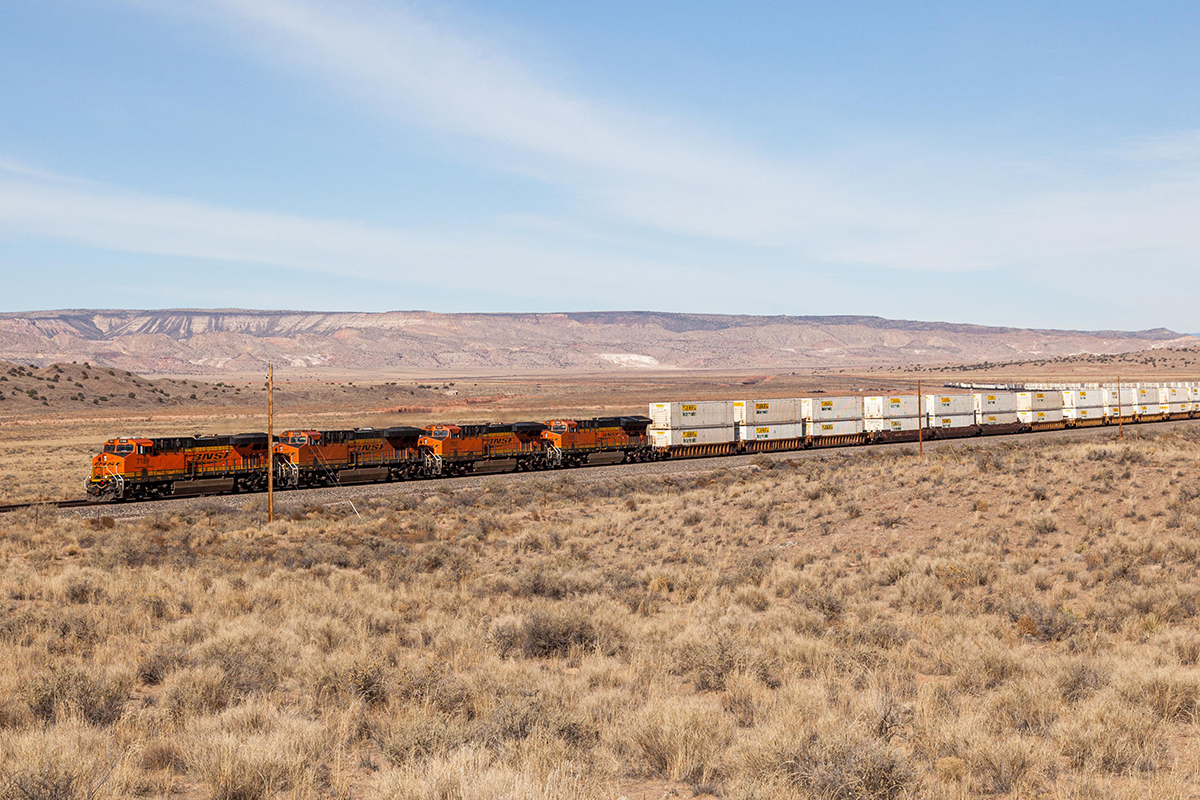
U.S. rail freight volumes rose 2.4% year-over-year in the week ending August 1, with intermodal traffic surging 4.8% as the beginnings of a peak-season import wave and continued truckload-to-rail shifts offset a 0.4% dip in carloads, according to Association of American Railroads (AAR) data reported by FreightWaves. Total weekly volume reached 526,410 carloads and intermodal units, up from the year-ago week.
Intermodal outperforms carloads in weekly U.S. traffic
Intermodal volume — containers and trailers moving on rail — climbed to 293,239 units, up 4.8% from the same week in 2025, FreightWaves reported. Carloads totaled 233,171 units, down 0.4%. The combined result was a 2.4% gain.
| Metric (U.S. railroads) | Week ending Aug 1 | Change vs 2025 |
|---|---|---|
| Carloads | 233,171 | -0.4% |
| Intermodal units | 293,239 | +4.8% |
| Total | 526,410 | +2.4% |
Intermodal volume picked up the slack at 293,239 containers and trailers, up 4.8% from 2025.
Metallic ores and petroleum pace carload commodities
Seven of 10 carload commodities tracked by AAR finished higher. Metallic ores and metals led with a 9.1% year-over-year gain, followed by petroleum and related products at 5.9%. Ore shipments have surged on increased domestic steel production, which is up 5.6% year-over-year and 5.8% year-to-date, according to the American Iron and Steel Institute.
Coal topped the decliners, falling 7.7%, while chemicals dropped 2.3% and motor vehicles and parts declined 5.3%.
30-week cumulative volumes stay positive
For the first 30 weeks of 2026, U.S. railroads reported cumulative carload volume of 6,811,496 units, up 2.7%, and intermodal volume of 8,418,215 units, up 3.8% from the previous year, according to AAR data. Total combined U.S. traffic improved 3.3% to 15,229,711 carloads and intermodal units.
| U.S. railroads, first 30 weeks | Volume | Change vs 2025 |
|---|---|---|
| Carloads | 6,811,496 | +2.7% |
| Intermodal units | 8,418,215 | +3.8% |
| Total | 15,229,711 | +3.3% |
North American weekly traffic edges higher
On nine reporting U.S., Canadian, and Mexican railroads, weekly carloads edged up to 335,697, up 0.5%, while intermodal units reached 377,702, a 4.3% gain compared with 2025, FreightWaves reported. Combined North American traffic rose 2.5% to 713,399 carloads and intermodal units. For the first 30 weeks of 2026, North American volume improved 2.9% to 20,931,511 carloads and intermodal units, year over year.
What this means for shippers and operators
For freight forwarders, logistics managers, and 3PL operators, the weekly and cumulative data show intermodal driving U.S. rail growth, with intermodal units up 4.8% for the week and 3.8% year-to-date. FreightWaves reported that ongoing shifts of truckload freight to rail helped boost weekly intermodal traffic. The 9.1% gain in metallic ores and metals coincided with domestic steel production up 5.6% year-over-year and 5.8% year-to-date, according to the American Iron and Steel Institute. The 5.3% weekly decline in motor vehicles and parts and the 7.7% drop in coal mark the largest carload pullbacks among tracked commodities.
Watch list
- Peak import surge: FreightWaves reported "the beginnings of another peak import surge" supporting weekly intermodal traffic.
- Domestic steel production: Up 5.6% year-over-year and 5.8% year-to-date, underpinning ore and metals carloads.
- Coal's slide: Weekly coal volumes fell 7.7%, the largest decline among tracked commodities.
- Cumulative intermodal momentum: U.S. intermodal volume is up 3.8% year-to-date, with North American weekly intermodal up 4.3%.
Sources: