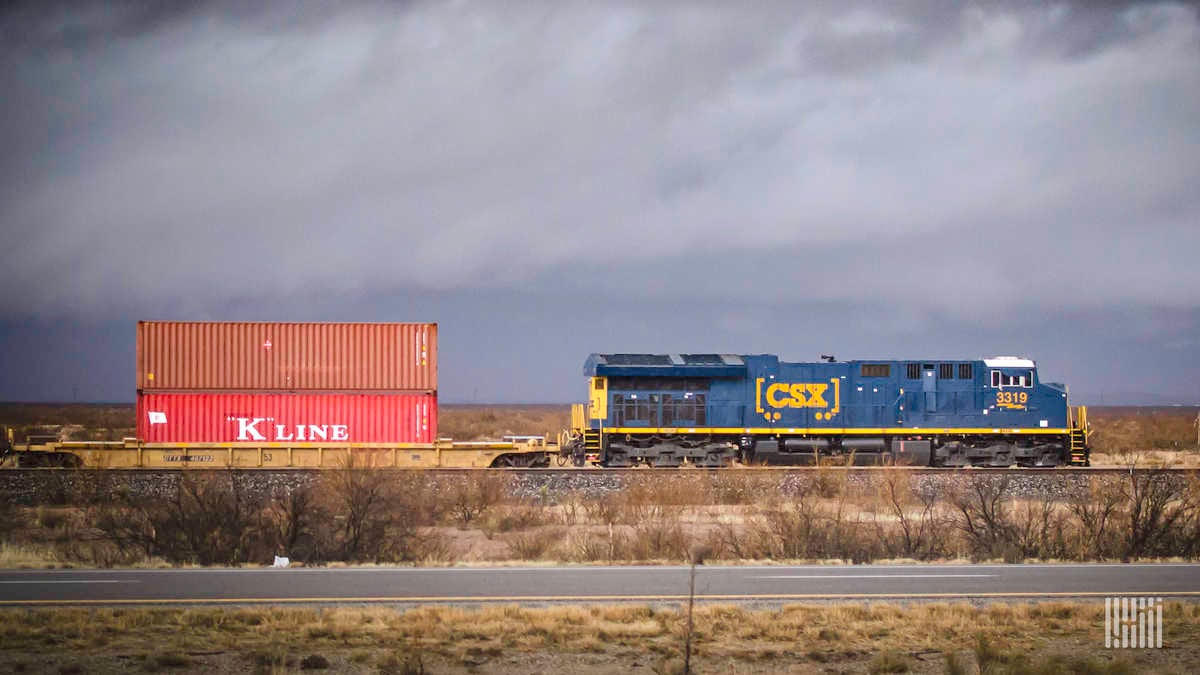
U.S. rail freight volumes accelerated over the July 4 holiday week, with total carloads and intermodal units hitting 482,121, an 8.7% gain compared to the same week in 2025, according to FreightWaves.
The strong holiday-week performance underscores the ongoing momentum in U.S. rail freight, particularly in intermodal shipping. For the week ending July 4, commodity carloads totaled 212,691, up 3.7% year-over-year, while intermodal volume—containers and trailers—surged 12.9% to 269,430 units, FreightWaves reported.
Commodities Performance
Nine of the top 10 commodity categories posted gains compared to 2025. Grain and farm products (excluding grain and food) led the gainers, up 13.0% and 12.7%, respectively. Metallic ores and metals increased 10.6% from 2025, topping industrial categories. The only decliner was coal, which saw carloads fall 7.9%.
First-Half Trends
For the first 26 weeks of 2026, U.S. railroads reported cumulative volume of 5,894,302 carloads, better by 3.2% year-over-year, and 7,254,412 intermodal units, ahead 3.6%. Total combined traffic reached 13,148,714 carloads and intermodal units, an increase of 3.4% compared to the same period in 2025, according to FreightWaves.
North American Volume
On a North American scale, nine reporting U.S., Canadian, and Mexican railroads combined for 316,737 carloads in the week, up 6.3%, and 354,603 intermodal units, up 10.3%. Total combined North American volume was 671,340 carloads and intermodal units, up 8.4%. For the first 26 weeks, North American volume reached 18,099,612 carloads and intermodal units, better by 2.9% year-over-year.
Implications for Operators and Shippers
The sustained growth in intermodal volume, now well into double digits during the holiday week, signals strong demand for containerized freight moving by rail across the U.S. and North America. For freight forwarders and logistics managers, the data points to healthy capacity utilization on major rail networks, which may support rate stability or upward pressure on contract renewals. Shippers relying on rail for long-haul container moves should factor in the potential for tighter capacity during peak seasons, especially given the 12.9% intermodal spike.
The decline in coal carloads (down 7.9%) reflects ongoing structural shifts in energy transportation, but the broad-based gains across agricultural and industrial commodities suggest diversified demand for rail services.
Watch List
No additional factors were reported in the source article. Keep an eye on upcoming weekly rail traffic reports to see if the double-digit intermodal growth persists through the summer months.
Sources: