
iGEN
Visit IGEN World Explore IGEN Expo
EXPLORE UPGRADE PLANS
BREAKING
CPKC sets second-quarter revenue record as operating income rises 10% Your Freight Funnel Is Leaking Margin: What Your Reports Won't Show Transponders Off: Saudi Crude Tankers for India Exit Red Sea 'Dark' to Avoid Houthi Blockade Nvidia’s Open Source Alliance Snubs OpenAI and Anthropic, Deepening AI Rift For the First Time, Zoox Can Charge People for Rides in Its Steering-Wheel-Free Robotaxis Chrome's AI-Driven Bug Hunt Spurs Twice-a-Week Security Patches, Google Reports Domestic Sugar Prices to Remain Firm in Short-Term, Says Triveni Engineering Saia’s Softer Q3 Margin Guidance Triggers 12% Share Drop Despite Record Q2 Results Buffalo meat and non-basmati rice lead 14% surge in India's Q1 agri exports Mahindra & Mahindra Records 34% Profit Jump Despite Commodity Cost Headwinds CPKC sets second-quarter revenue record as operating income rises 10% Your Freight Funnel Is Leaking Margin: What Your Reports Won't Show Transponders Off: Saudi Crude Tankers for India Exit Red Sea 'Dark' to Avoid Houthi Blockade Nvidia’s Open Source Alliance Snubs OpenAI and Anthropic, Deepening AI Rift For the First Time, Zoox Can Charge People for Rides in Its Steering-Wheel-Free Robotaxis Chrome's AI-Driven Bug Hunt Spurs Twice-a-Week Security Patches, Google Reports Domestic Sugar Prices to Remain Firm in Short-Term, Says Triveni Engineering Saia’s Softer Q3 Margin Guidance Triggers 12% Share Drop Despite Record Q2 Results Buffalo meat and non-basmati rice lead 14% surge in India's Q1 agri exports Mahindra & Mahindra Records 34% Profit Jump Despite Commodity Cost Headwinds
Home ›› Logistics ›› Rail Road ›› Saia's Tonnage Growth Surges Amid Market Shifts

Saia's Tonnage Growth Surges Amid Market Shifts

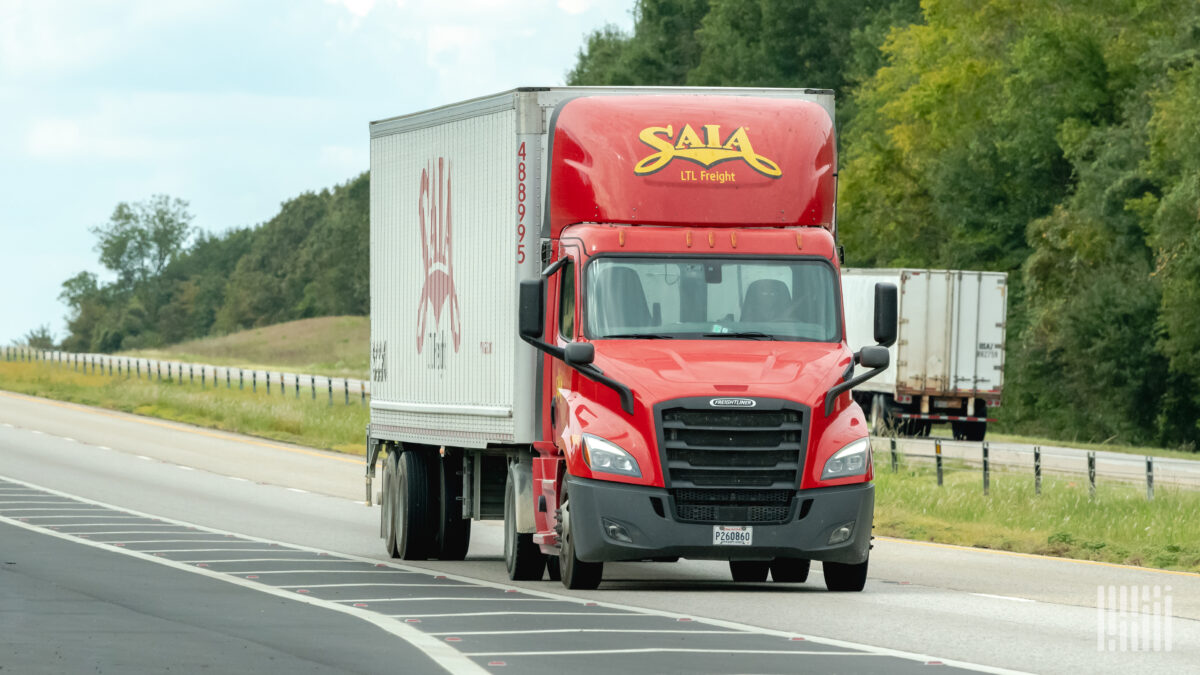
Saia's tonnage growth accelerated by 8.4% year-over-year in May, driven by increased shipment weights and a softer prior-year comparison. This growth reflects a strengthening less-than-truckload (LTL) market.

iG
iGEN Editorial
June 2, 2026
Saia's Tonnage Growth Surges Amid Market Shifts

Saia's tonnage growth accelerated by 8.4% year-over-year in May, marking a significant improvement from the previous month's 6.9% increase. This growth is attributed to a combination of increased shipment weights and a softer prior-year comparison.

Market Context

The Purchasing Managers’ Index (PMI) registered a reading of 54 in May, indicating expansion in industrial activity for the fifth consecutive month. This positive trend in manufacturing is a key driver of the increased LTL volumes experienced by Saia.

Impact on Trade Lanes

Saia's operations, primarily focused on the less-than-truckload (LTL) sector, have seen a notable increase in shipment weights, averaging an 8% increase on a two-year-stacked comparison for both April and May. This suggests a strengthening market that could lead to higher revenue per shipment and improved margins.

Implications for Shippers

Shippers utilizing Saia's services should anticipate potential improvements in operating margins, as the company has guided for a 400 to 450 basis points sequential improvement in the second quarter. This is expected to result in an operating ratio of 87.5% at the midpoint, marking a year-over-year improvement for the first time in over two years.

"Higher shipment weights are a sign of an improving LTL market, typically driving revenue per shipment and margins higher."

Watch List

  • Industrial Activity: Continued monitoring of PMI and new orders subindex for future LTL volume predictions.
  • Operational Margins: Saia's margin improvements and terminal expansions could further influence market dynamics.
Metric April May
Tonnage Growth 6.9% 8.4%
Shipment Growth 5.6% 3.7%
Weight per Shipment Growth 1.3% 4.5%

Shippers and logistics managers should remain vigilant of these trends to optimize their operations and leverage Saia's expanding capabilities.


Keep Reading

Recommended Stories

Trucking Boosts Rail Freight Growth Amid Capacity Squeeze Logistics

Trucking Boosts Rail Freight Growth Amid Capacity Squeeze

The U.S. rail freight sector is experiencing significant growth, driven by shifts in the trucking market. Intermodal volumes have surged as shippers seek alternatives amid trucking capacity constraints.

June 6, 2026
Trucking Capacity Tightness Persists as Regulatory Pressures and Driver Shortages Squeeze Supply Logistics

Trucking Capacity Tightness Persists as Regulatory Pressures and Driver Shortages Squeeze Supply

Trucking capacity remains tight as regulatory pressures and driver shortages push tender rejections well above historical norms. Spot rates are holding steady even as diesel prices fall, signaling that capacity constraints—not fuel costs—are driving rates. Carrier earnings from Knight-Swift, Werner, and J.B. Hunt show gains from supply-side tightness rather than demand recovery, with capacity expected to remain constrained through fall and into 2025.

July 30, 2026
Record Rail Freight Volumes Signal Strong Industrial Economy Through H2 2026 Logistics

Record Rail Freight Volumes Signal Strong Industrial Economy Through H2 2026

Rail freight is experiencing surprising strength in 2026, with record-breaking carloads and intermodal units, according to the Association of American Railroads (AAR). Broad-based growth across categories from chemicals to motor vehicles indicates a healthier industrial economy than many realize. Factors such as fuel prices, trucking capacity issues, and regulatory changes are positioning rail as a highly attractive option for shippers.

July 8, 2026
Muted Truck Transportation Job Growth Signals Persistent Capacity Constraints for Shippers Logistics

Muted Truck Transportation Job Growth Signals Persistent Capacity Constraints for Shippers

U.S. truck transportation employment in June 2026 totaled 1,466,600 jobs, just 1,000 higher than January, with monthly declines in four of the last five months. Analysts cite regulatory pressure, high operating costs, and a fragile consumer economy as factors, warning that continued rate increases may be needed to attract drivers. Meanwhile, warehouse jobs grew by 18,100 over three months but remain below year-ago levels, and rail employment continues to lag.

July 2, 2026