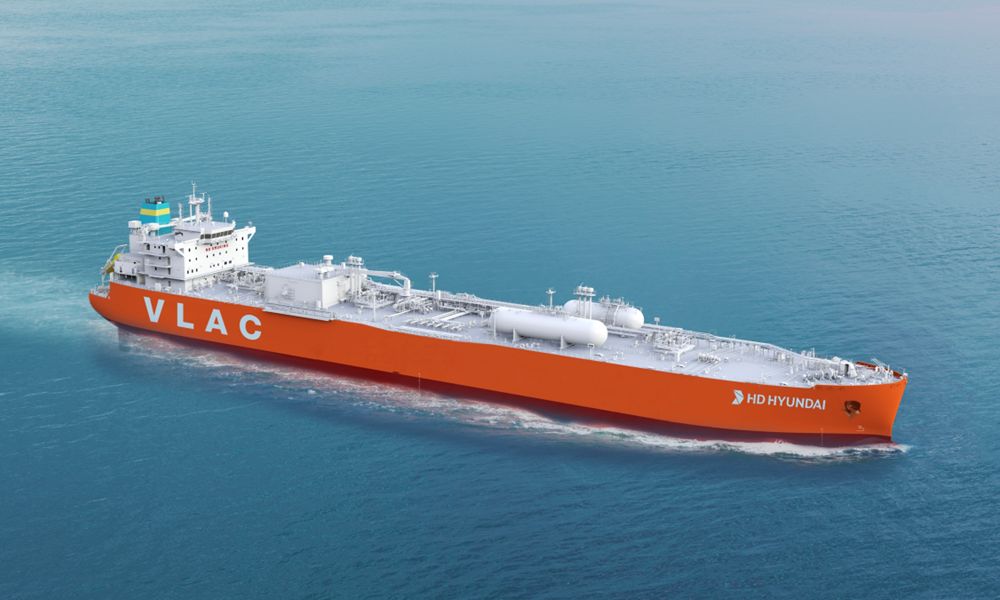
Sinokor Maritime’s extraordinary tanker buying campaign has made it the dominant force in secondhand VLCC (Very Large Crude Carrier) acquisitions, with 73 ships purchased for $5.925bn in 2026 — roughly equivalent to the combined spending of the next eight largest tanker buyers, according to VesselsValue. The South Korean owner is now estimated to control around 10% of the global VLCC fleet, and the buying spree has helped propel VLCC asset prices to levels not seen since 2008, the maritime data provider said.
Hormuz crisis drives tanker earnings
The buying campaign has unfolded against a tanker market reshaped by security risks in the Strait of Hormuz. According to VesselsValue, the crisis has drastically reduced the pool of owners willing and able to enter the Persian Gulf, pushing Middle East-China VLCC earnings recently towards $510,000 a day. A Sinokor-controlled ship has itself been linked with a $31m Persian Gulf-China fixture, while another Sinokor charter earlier this month generated estimated earnings close to $500,000 a day, Splash247 reported.
Sinokor has accumulated ships at extraordinary speed since last November, just before and during a tanker market that has spent long stretches in six-digit earnings territory, VesselsValue noted. The Hormuz crisis changes tanker positioning and creates an enormous premium for ships capable of operating flexibly around disrupted trade routes, the valuation firm added.
MSC financing takes shape
Behind the buying spree sits one of shipping’s deepest pockets. Splash247 reported that reports at the start of the year that MSC founder Gianluigi Aponte was financing Sinokor’s VLCC push have subsequently been given considerably more substance. Competition filings show MSC subsidiary SAS Shipping Agencies Services agreed to acquire 50% of Sinokor, creating joint control alongside South Korean owner Ga-Hyun Chung. Greek competition authorities approved the transaction in June, the article reported.
Top tanker buyers in 2026
Sinokor’s $5.9bn outlay dwarfs the rest of the secondhand tanker market, according to VesselsValue data cited by Splash247.
| Buyer | Spending |
|---|---|
| Sinokor Maritime | $5.925bn |
| Industrial Bank Financial Leasing | $1.15bn |
| ADNOC Logistics & Services | $987m |
| Bank of Communications Financial Leasing | $917.8m |
| Frontline | $875.7m |
The preponderance of Chinese leasing companies in the ranking illustrates how much current sale-and-purchase (S&P) activity involves sale-and-leaseback financing rather than straightforward changes of beneficial ownership, the article reported.
Outlook: what happens when Hormuz normalises?
The bigger question hanging over the tanker market is what happens when — or if — the Hormuz situation normalises, according to Splash247. VesselsValue said in a release:
Whether this pace of buying continues will depend largely on how the Hormuz situation evolves. With VLCC values already at multi-decade highs, the more likely path is a levelling off rather than further acceleration, though owners with older fleets may still find it an attractive window to trade up before a market correction occurs.
For freight operators, charterers and tanker owners, the key factors to track are the evolution of Hormuz security, VLCC spot earnings, asset price movements and whether Sinokor’s buying pace holds. The competition approval and MSC’s 50% joint control also signal continued financial backing for Sinokor’s expansion, according to the competition filings.
Sources: