iGEN
Visit IGEN World Explore IGEN Expo
EXPLORE UPGRADE PLANS
BREAKING
CMA CGM and Stonepeak Launch United Ports LLC in $2.4 Billion Terminal Joint Venture UPS shift away from Amazon shows bigger payoff Lanesurf: 62% of Loads Get Vetted Carrier Offers Before Brokers Arrive India-China Border Trade Via Lipulekh Resumes Aug 1; China Permits 20 Traders Geopolitics Drives CMA CGM Q2 Profit Surge of 42% as Volumes and Rates Climb Benchmark Diesel Price Rises Third Week as Futures Plunge; Spread Hits Record Indian Government Limits Sugar Dealers to 400 Tonnes Stock Until November to Curb Hoarding Tenants signing longer leases for larger warehouses as 3PLs lock in capacity US stock market flat as S&P 500 and Dow barely move, Nasdaq slides over 1% on chip rout TruAlt Bioenergy Q1 Net Zooms to ₹59.27 Crore on Higher Revenues, Capacity Expansion CMA CGM and Stonepeak Launch United Ports LLC in $2.4 Billion Terminal Joint Venture UPS shift away from Amazon shows bigger payoff Lanesurf: 62% of Loads Get Vetted Carrier Offers Before Brokers Arrive India-China Border Trade Via Lipulekh Resumes Aug 1; China Permits 20 Traders Geopolitics Drives CMA CGM Q2 Profit Surge of 42% as Volumes and Rates Climb Benchmark Diesel Price Rises Third Week as Futures Plunge; Spread Hits Record Indian Government Limits Sugar Dealers to 400 Tonnes Stock Until November to Curb Hoarding Tenants signing longer leases for larger warehouses as 3PLs lock in capacity US stock market flat as S&P 500 and Dow barely move, Nasdaq slides over 1% on chip rout TruAlt Bioenergy Q1 Net Zooms to ₹59.27 Crore on Higher Revenues, Capacity Expansion
Home ›› Manufacturing ›› Mfg Automotive ›› Delhi EV Policy 2026: Rs 15,000 Crore Plan to Boost Electric Mobility and Phase Out Petrol Two-Wheelers

Delhi EV Policy 2026: Rs 15,000 Crore Plan to Boost Electric Mobility and Phase Out Petrol Two-Wheelers

The Delhi government officially notified the Delhi Electric Vehicles Policy 2026, effective July 1, 2026, with a Rs 15,000 crore investment plan, over 30,000 charging points, and full road tax exemption for electric cars priced up to Rs 30 lakh. The policy also phases out registration of petrol two-wheelers from April 1, 2028, and restricts subsidies to battery electric vehicles only.

iG
iGEN Editorial
July 1, 2026
Delhi EV Policy 2026: Rs 15,000 Crore Plan to Boost Electric Mobility and Phase Out Petrol Two-Wheelers

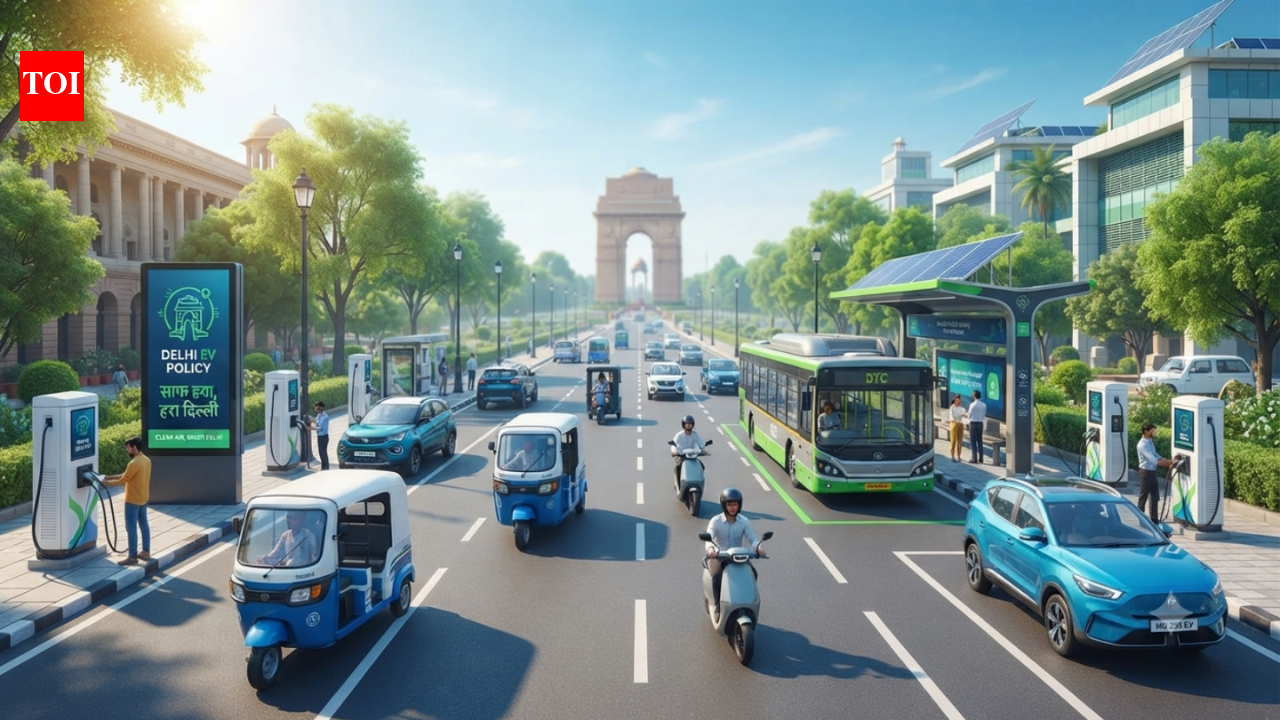
The Delhi government on Wednesday officially notified the Delhi Electric Vehicles Policy 2026, setting in motion an ambitious roadmap to accelerate electric vehicle (EV) adoption, improve air quality and strengthen the capital's electric mobility ecosystem, according to a government notification.

Financial Incentives for EV Buyers

Under the new policy, all electric cars with an ex-showroom price of Rs 30 lakh or less registered in Delhi will receive a full exemption from road tax and registration fees, as per the notification. The government has also announced subsidies for electric two-wheelers: buyers will receive an incentive of Rs 30,000 in the first year, Rs 20,000 in the second year and Rs 10,000 in the third year. For electric three-wheelers, purchase incentives go up to Rs 50,000 in the first year, Rs 40,000 in the second year and Rs 30,000 in the third year. The policy explicitly excludes hybrid vehicles, focusing exclusively on battery electric vehicles.

Phased Transition to Electric Mobility

The policy lays down a phased transition towards electric mobility across vehicle categories. Only electric auto-rickshaws will be registered in Delhi from January 1, 2027. Registration of new petrol and CNG two-wheelers will be phased out from April 1, 2028, after which only electric two-wheelers will be eligible for registration.

Rs 15,000 Crore Investment in Charging Infrastructure

To support the growing EV fleet, the Delhi government plans to invest around Rs 15,000 crore over the next four years, according to the notification. More than 30,000 EV charging points will be established across the city. The policy also includes a dedicated online portal to process incentives through Direct Benefit Transfer (DBT) and introduces a three-year lock-in period, preventing beneficiaries from registering their electric vehicles in another state during that time.

Scrapping Incentive for Old Vehicles

As part of efforts to replace older polluting vehicles, the policy introduces a scrapping incentive for electric car buyers. Buyers purchasing a new electric car priced up to Rs 30 lakh will be eligible for a scrapping incentive of Rs 1 lakh if they scrap a Delhi-registered Bharat Stage-IV or older car through an authorised scrapping facility and complete the purchase within six months of receiving the Certificate of Deposit. The benefit will be available to the first one lakh eligible applicants.

Incentive Category First Year Second Year Third Year
e-2W purchase incentive Rs 30,000 Rs 20,000 Rs 10,000
e-3W purchase incentive Up to Rs 50,000 Up to Rs 40,000 Up to Rs 30,000
e-car road tax & registration Full exemption Full exemption Full exemption
Scrapping incentive (e-car) Rs 1 lakh

Implications for EV Manufacturing and Supply Chain

For manufacturing executives and procurement professionals, the policy creates a clear demand signal for battery electric vehicles and associated charging infrastructure in the National Capital Region. The Rs 15,000 crore investment over four years and the target of 30,000 charging points will require sustained production of chargers, cables, and power electronics. The phase-out of petrol two-wheeler registration from April 2028 gives OEMs a fixed timeline to shift manufacturing capacity toward electric two-wheelers. The exclusion of hybrid vehicles means that only pure battery electric models will benefit from the incentives, which may influence product planning for automakers serving the Delhi market. The scrapping incentive for old vehicles is capped at one lakh applicants, which could drive a wave of replacement demand for entry-level electric cars priced up to Rs 30 lakh. Manufacturers and suppliers should note the three-year lock-in period for subsidised vehicles, which prevents cross-state arbitrage and ensures the EVs remain registered in Delhi for at least three years. The policy came into effect from July 1, 2026 and will remain in force until March 31, 2030, providing a multi-year policy framework for capacity planning.


Sources: Business-Today
Keep Reading

Recommended Stories

Delhi EV Policy 2026 Poses Big Risk for Automakers If Other States Follow, Warns Morgan Stanley Report Manufacturing

Delhi EV Policy 2026 Poses Big Risk for Automakers If Other States Follow, Warns Morgan Stanley Report

Morgan Stanley warns that Delhi's newly notified EV Policy 2026, while having modest immediate impact due to Delhi's small sales share, could become a dangerous template for other states. The policy bans new ICE vehicle registrations in select segments by 2027-2028 and offers substantial incentives. Automakers with strong EV portfolios are better positioned, but the industry may resist wider adoption.

July 3, 2026
MG Sets Target for New Energy Vehicles to Account for 80% of Sales by 2026 Manufacturing

MG Sets Target for New Energy Vehicles to Account for 80% of Sales by 2026

JSW MG Motor India expects new energy vehicles (NEVs) — including EVs, hybrids, and plug-in hybrids — to account for nearly 80% of its total sales in 2026, according to managing director Anurag Mehrotra. The company will launch its first plug-in hybrid later this financial year, built on the new ADAPT multi-energy platform. Industry-wide EV sales are growing at around 70%, and EV penetration in India crossed 8% in June 2026.

July 16, 2026
CNG, Hybrid, and EV Sales Hit Record 40% of India's Car Market in June Manufacturing

CNG, Hybrid, and EV Sales Hit Record 40% of India's Car Market in June

In June 2026, alternative-fuel passenger vehicles (CNG, hybrid, EV) reached a record 40.2% share of India's car retail sales, up from 33.3% a year ago. Retail sales hit an all-time June high of 410,853 units, a 28.6% increase. FADA attributed the shift to improved supplies, new model launches, and consumer preference for fuel-efficient powertrains.

July 7, 2026
India Electric Passenger Vehicle Sales May Cross 3 Lakh Units in 2026 Manufacturing

India Electric Passenger Vehicle Sales May Cross 3 Lakh Units in 2026

India's electric passenger vehicle (EPV) sales are expected to exceed 3 lakh units in 2026 for the first time, compared to under 2 lakh in 2025, according to Frost & Sullivan and Crisil. Growth is supported by doubling of model options, improved battery range, and rising fuel prices widening EV total cost of ownership advantage. Vahan data shows registrations nearing 1.5 lakh so far in 2026.

June 29, 2026