iGEN
Visit IGEN World Explore IGEN Expo
EXPLORE UPGRADE PLANS
BREAKING
CMA CGM and Stonepeak Launch United Ports LLC in $2.4 Billion Terminal Joint Venture UPS shift away from Amazon shows bigger payoff Lanesurf: 62% of Loads Get Vetted Carrier Offers Before Brokers Arrive India-China Border Trade Via Lipulekh Resumes Aug 1; China Permits 20 Traders Geopolitics Drives CMA CGM Q2 Profit Surge of 42% as Volumes and Rates Climb Benchmark Diesel Price Rises Third Week as Futures Plunge; Spread Hits Record Indian Government Limits Sugar Dealers to 400 Tonnes Stock Until November to Curb Hoarding Tenants signing longer leases for larger warehouses as 3PLs lock in capacity US stock market flat as S&P 500 and Dow barely move, Nasdaq slides over 1% on chip rout TruAlt Bioenergy Q1 Net Zooms to ₹59.27 Crore on Higher Revenues, Capacity Expansion CMA CGM and Stonepeak Launch United Ports LLC in $2.4 Billion Terminal Joint Venture UPS shift away from Amazon shows bigger payoff Lanesurf: 62% of Loads Get Vetted Carrier Offers Before Brokers Arrive India-China Border Trade Via Lipulekh Resumes Aug 1; China Permits 20 Traders Geopolitics Drives CMA CGM Q2 Profit Surge of 42% as Volumes and Rates Climb Benchmark Diesel Price Rises Third Week as Futures Plunge; Spread Hits Record Indian Government Limits Sugar Dealers to 400 Tonnes Stock Until November to Curb Hoarding Tenants signing longer leases for larger warehouses as 3PLs lock in capacity US stock market flat as S&P 500 and Dow barely move, Nasdaq slides over 1% on chip rout TruAlt Bioenergy Q1 Net Zooms to ₹59.27 Crore on Higher Revenues, Capacity Expansion
Home ›› Manufacturing ›› Mfg Automotive ›› MG Sets Target for New Energy Vehicles to Account for 80% of Sales by 2026

MG Sets Target for New Energy Vehicles to Account for 80% of Sales by 2026

JSW MG Motor India expects new energy vehicles (NEVs) — including EVs, hybrids, and plug-in hybrids — to account for nearly 80% of its total sales in 2026, according to managing director Anurag Mehrotra. The company will launch its first plug-in hybrid later this financial year, built on the new ADAPT multi-energy platform. Industry-wide EV sales are growing at around 70%, and EV penetration in India crossed 8% in June 2026.

iG
iGEN Editorial
July 16, 2026
MG Sets Target for New Energy Vehicles to Account for 80% of Sales by 2026

JSW MG Motor India has announced plans for new energy vehicles (NEVs) to account for up to 80% of its total sales in 2026, according to a report by Business Today. Managing director Anurag Mehrotra cited rising fuel prices and growing consumer interest in electric mobility as key drivers, noting that passenger vehicle EV penetration in India crossed 8% in June 2026, up from below 4% at the start of the year.

New Energy Vehicle Sales Target

Mehrotra stated that the company expects NEVs — comprising battery electric vehicles (EVs), hybrids, plug-in hybrids (PHEVs), and range-extender EVs — to make up nearly 80% of its sales this year, broadly in line with its long-term target of 75%. This ambition positions MG among the most aggressive automakers in India's electrification race. Currently, Tata Motors remains India's largest electric passenger vehicle maker, with EVs accounting for about one-fifth of its passenger vehicle sales. Mahindra is also expanding rapidly, with EVs contributing 12% of its passenger vehicle volumes in June 2026.

Industry EV Adoption Trends

Industry-wide, the report highlights that EV sales are growing at around 70%, far outpacing the broader passenger vehicle market. The sharp acceleration is attributed to higher fuel costs and increased awareness of running-cost savings among buyers. Mehrotra noted that "demand is not the challenge any more; the challenge is giving customers enough choice," according to Business Today.

Automaker EV share of PV sales (June 2026) NEV target
JSW MG Motor India Not disclosed ~80% NEV by 2026
Tata Motors ~20%
Mahindra ~12%

Plug-in Hybrid Strategy

To broaden its market, MG will introduce its first plug-in hybrid later this financial year, positioning it primarily as an alternative for diesel SUV buyers. Mehrotra explained that PHEVs combine the low running costs of electric vehicles with the reassurance of a petrol engine for long-distance travel, eliminating range anxiety while bypassing the need for charging infrastructure. Widely adopted in China and Europe, PHEV technology is yet to take off in India because automakers have so far focused on pure EVs or conventional hybrids, according to the report.

ADAPT Platform

The new products will be built on MG's newly unveiled ADAPT (Advance Drive Architecture Platform Technology), which the company describes as India's first multi-new energy vehicle platform. The architecture supports battery electric vehicles, hybrids, plug-in hybrids, and range-extender EVs on a common platform, enabling manufacturing flexibility and cost efficiencies. This platform strategy is expected to allow MG to rapidly expand its NEV portfolio without requiring separate production lines for each drivetrain type.

For manufacturing executives and supply chain professionals, MG's accelerated shift to NEVs signals growing demand for multi-energy platforms and hybrid components. The ADAPT platform's flexibility could reduce tooling costs and simplify assembly, while the increased volume of PHEVs and EVs will require suppliers to scale up production of batteries, electric motors, and power electronics. As the industry moves toward higher NEV penetration, investments in flexible manufacturing systems and dual-drivetrain supply chains will become critical.

Production timeline: The first MG PHEV is expected to launch later in the current financial year, with additional NEV models following on the ADAPT platform.


Sources: Business-Today

Keep Reading

Recommended Stories

Delhi EV Policy 2026: Rs 15,000 Crore Plan to Boost Electric Mobility and Phase Out Petrol Two-Wheelers Manufacturing

Delhi EV Policy 2026: Rs 15,000 Crore Plan to Boost Electric Mobility and Phase Out Petrol Two-Wheelers

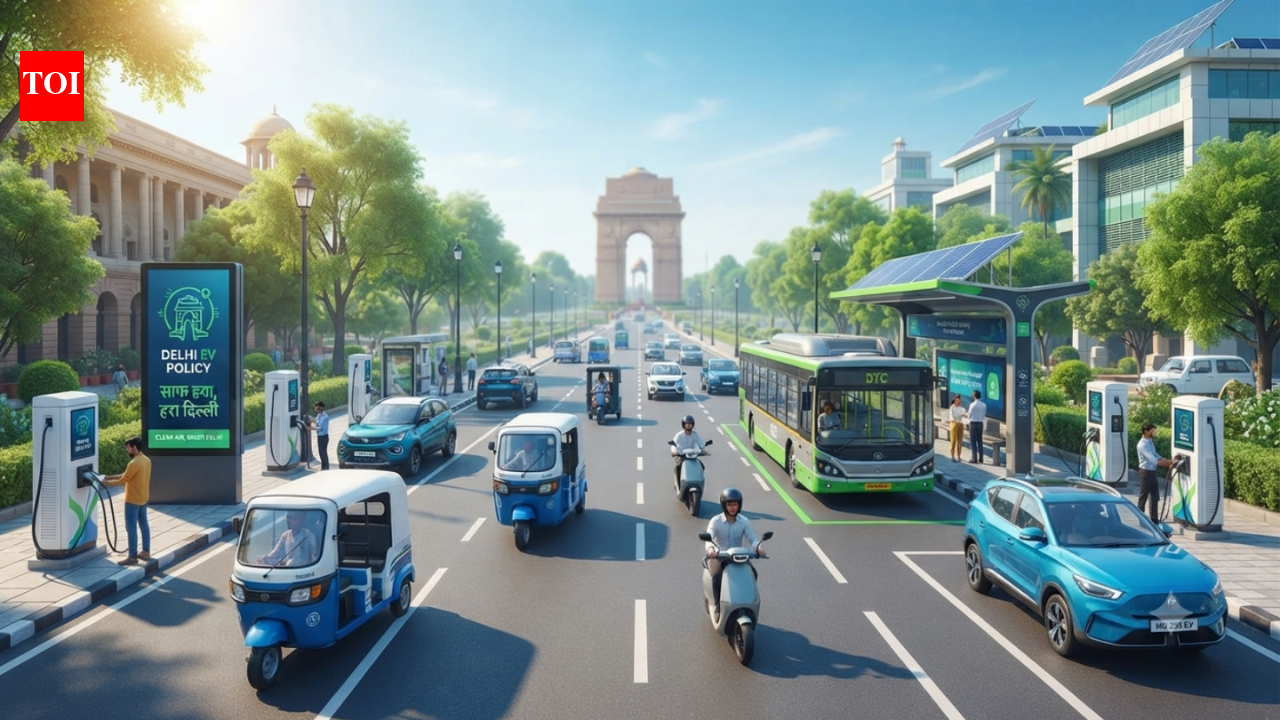
The Delhi government officially notified the Delhi Electric Vehicles Policy 2026, effective July 1, 2026, with a Rs 15,000 crore investment plan, over 30,000 charging points, and full road tax exemption for electric cars priced up to Rs 30 lakh. The policy also phases out registration of petrol two-wheelers from April 1, 2028, and restricts subsidies to battery electric vehicles only.

July 1, 2026
UK Government Set to Weaken Electric Car Sales Target to 50-70% by 2030 Trade

UK Government Set to Weaken Electric Car Sales Target to 50-70% by 2030

The UK government is set to water down its 2030 target for electric vehicle sales, currently 80% of new cars, with a consultation on a new target between 50% and 70%. The Zero Emission Vehicles (ZEV) mandate, which includes phased annual targets and fines of £15,000 per non-compliant car, has cost the industry over £10bn in two years according to the SMMT. Industry and unions warn of job losses, while sustainability groups argue weakening could harm charging infrastructure investment.

June 15, 2026
XPeng Launches L03 Budget EV in 60 Countries, Aiming for Global Volume Sales Manufacturing

XPeng Launches L03 Budget EV in 60 Countries, Aiming for Global Volume Sales

XPeng unveiled its first globally released electric vehicle, the L03, priced starting at €35,600. The budget model boasts a 320-mile WLTP range, 20-minute fast charging, and a suite of standard features. It will launch across 60 countries in Europe, Latin America, the Middle East, and Asia-Pacific, marking the Chinese automaker's mass-market push.

July 16, 2026
Battery-as-Service Models Cut EV Upfront Costs but Add Recurring Payment Obligations Manufacturing

Battery-as-Service Models Cut EV Upfront Costs but Add Recurring Payment Obligations

Battery-as-Service (BaaS) plans in India cut the upfront price of EVs by up to Rs 8 lakh, but impose recurring per-km charges of Rs 2.3–5, minimum monthly usage commitments, and separate battery financing. Tata Motors, JSW MG Motor, Maruti Suzuki, and Citroen offer BaaS, with MG reporting 12-15% of EV sales through the model. The effective cost per km can rise sharply for low-mileage drivers, narrowing long-term savings.

July 11, 2026