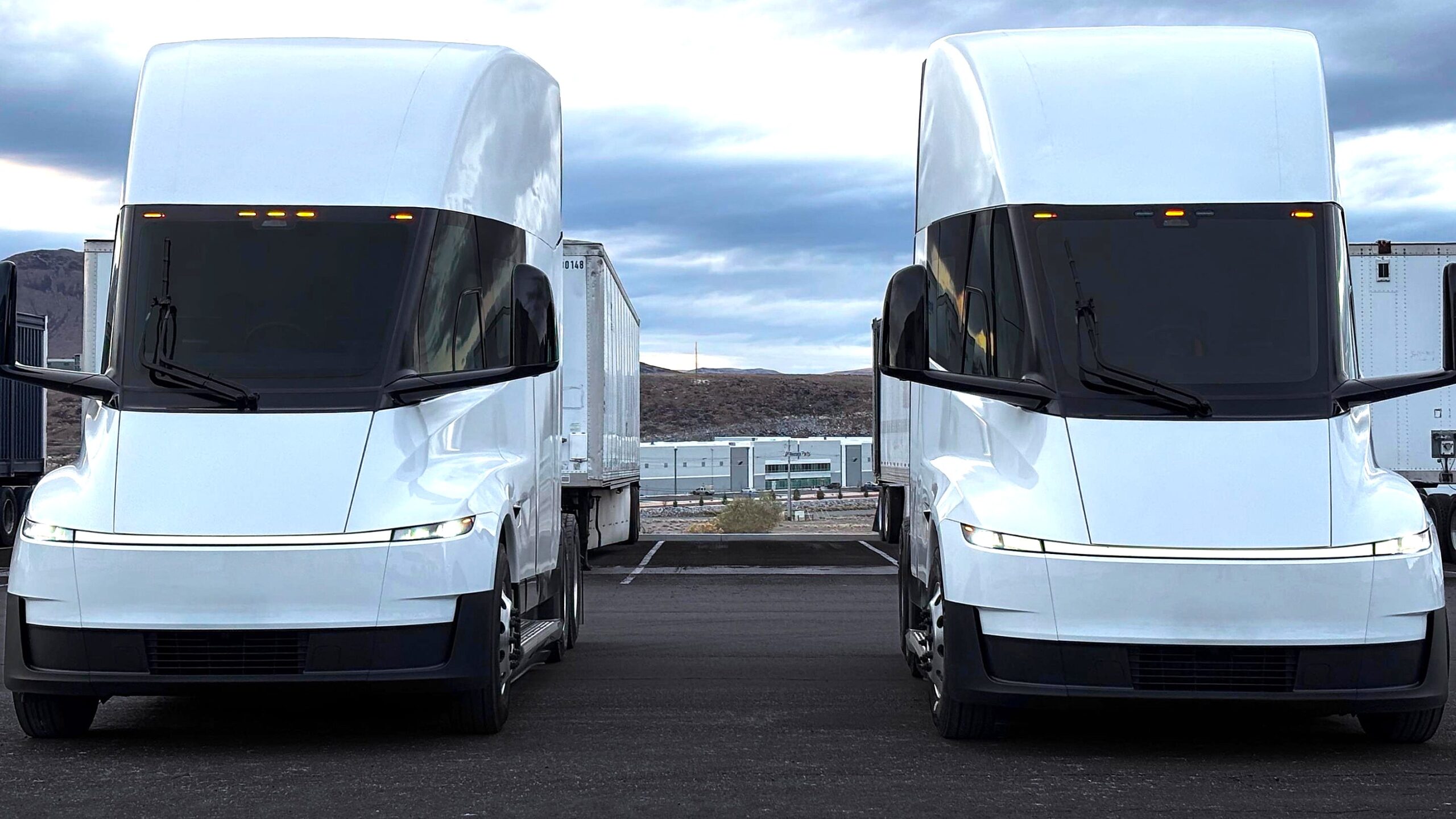
A viral claim is circulating that a California small fleet can buy a Tesla Semi for as little as $50,000, according to FreightWaves. The Tesla Semi carries a $290,000 sticker. The claim lays out how two California incentive programs stack to knock $240,000 off that price, leaving a net cost of roughly $50,000. For an owner-operator or small fleet, a number like that demands a hard look.
What the Claim Gets Right
The core of the claim holds up, FreightWaves reported. California does run two incentive programs that can be stacked on a single zero-emission truck, and together they can approach the figures in the post.
The first is HVIP (Hybrid and Zero-Emission Truck and Bus Voucher Incentive Project), administered by the California Air Resources Board. It provides a point-of-sale voucher—a direct discount at purchase, not a tax credit. For a qualifying zero-emission Class 8 truck like the Semi, the voucher has been worth up to $120,000, with enhanced amounts for small fleets, according to FreightWaves.
The second is the California Clean Fuel Reward (CCFR), announced by Governor Newsom on May 13, 2026, with applications opening in late June 2026. Funded through California’s Low Carbon Fuel Standard (LCFS)—not federal money—it is insulated from federal EV credit rollbacks. The program has $250 million available in its first year and more than $1 billion committed through 2030, according to the Governor’s office, as reported by FreightWaves.
The programs can be stacked. HVIP’s rules state that its vouchers can be combined with other eligible public incentives, with HVIP always paying last, up to 90% of the vehicle cost through combined public incentives. Industry analysts have confirmed the same. Ann Rundle, Vice President at ACT Research, noted that California allows the stacking of benefits so buyers can combine incentives, and that no other state’s programs are as comprehensive or as well funded, according to FreightWaves.
California allows the stacking of benefits so buyers can combine incentives. — Ann Rundle, ACT Research, as reported by FreightWaves.
Where the Number Needs an Asterisk
However, the claimed $50,000 figure depends on several conditions, FreightWaves noted. The CCFR rebate amount is not a flat $120,000; the state’s published structure describes rebates ranging from $7,500 up to $120,000 depending on vehicle class, with the top range reserved for the heaviest Class 8 vehicles. The exact amount depends on program rules and the specific vehicle and buyer.
Additionally, the $290,000 MSRP is itself soft. Tesla has not published firm, final pricing for the Semi; reporting has ranged from roughly $250,000 to $290,000 for production models. At least one major customer, Ryder, cut its order and cited “dramatic changes to” the platform, according to FreightWaves.
| Program | Type | Maximum Rebate | Notes |
|---|---|---|---|
| HVIP | Point-of-sale voucher | Up to $120,000 | Administered by CARB; enhanced for small fleets |
| CCFR | Rebate | $7,500–$120,000 | Funded by LCFS; depends on vehicle class |
Implications for Fleets
For manufacturing executives and fleet managers evaluating zero-emission truck purchases, the incentive stack is real but not automatic. The post’s claimed $50,000 price requires qualifying for both HVIP and CCFR, buying the right Class 8 vehicle (likely the heaviest configuration), and relying on a fluid MSRP. As FreightWaves noted, the combined incentives can cover up to 90% of the vehicle cost for a small fleet under ideal conditions, but the exact out-of-pocket cost will vary.
Production timeline: The CCFR program opens applications in late June 2026, with $250 million available in its first year. Fleets should verify their eligibility and the specific rebate tier before committing to a purchase order. The Tesla Semi’s production timeline remains subject to Tesla’s own announcements.
Sources: