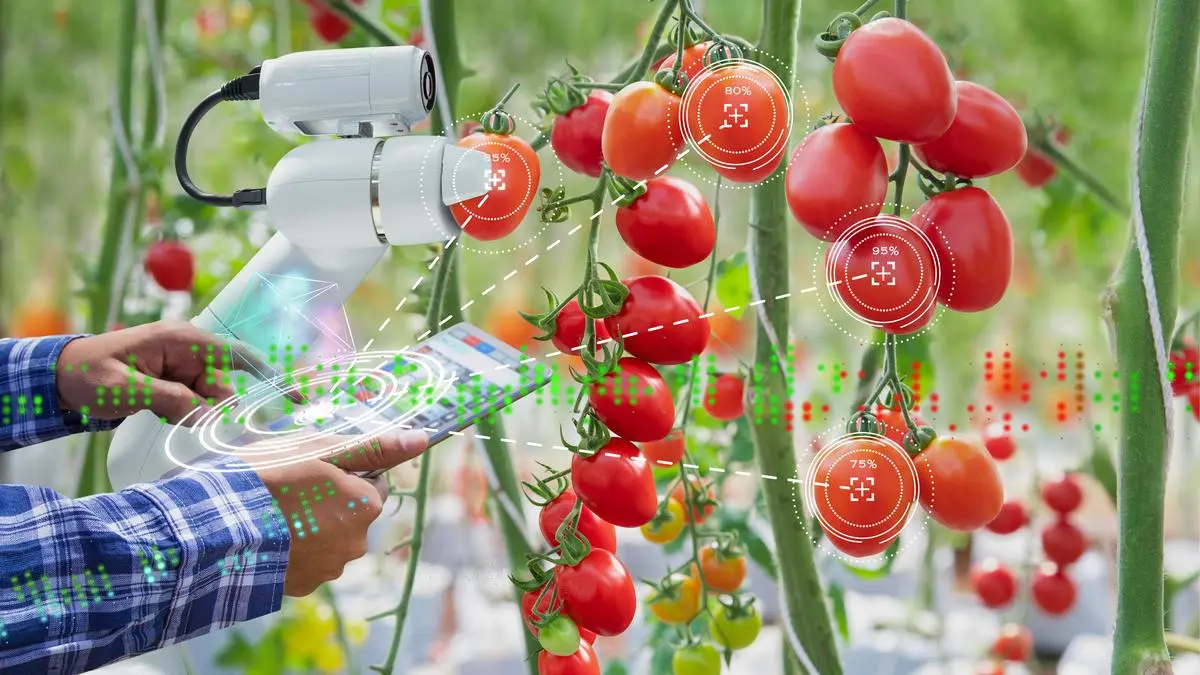
Agriculture has always been driven by choices: what to grow, when to sow, how much to irrigate, when to apply fertilisers, and how and where to move produce to market, according to The Hindu BusinessLine. In an article by Vinay Agastya, the publication reported that past decisions came mostly from experience and local knowledge, but the current agricultural world wants answers that are faster, more exact and increasingly guided by data rather than gut feeling. AI is stepping in as the enabling technology for this change, moving past simple automation to become an extra layer of understanding that supports farmers, agri-business teams and the technology providers working around them.
AI starts before the seed is in the ground
AI studies signals from connected sensors, satellite photos, weather predictions and older crop routines to point to better sowing windows, sensible irrigation plans and nutrient management approaches, according to The Hindu BusinessLine. As crops grow, AI monitors field conditions and flags early clues of pest infestations or plant diseases, suggesting timely action before problems get out of hand. The article reported that this helps improve output while optimising the use of water, fertilisers and other resources.
Faster innovation, harder selection
Farmers today can tap into a growing mix of technology, from precision farming tools and smart irrigation setups to drones, self-driving machinery and AI-powered advisory platforms, The Hindu BusinessLine reported. But the same fast innovation makes selection harder. Choosing the right option means checking technical specifications, confirming compatibility, estimating cost, thinking about likely returns and judging long-term operational value.
| Discovery task | How AI helps |
|---|---|
| Browsing multiple catalogues and dealing with dealers | Provides personalised recommendations shaped around landholding, crop type, local geography and daily operating needs |
| Wading through technical documentation | Weighs one option against another and spells out technical differences in plain terms |
| Estimating cost and future returns | Points to solutions that matter most for a farmer's real circumstances |
| Judging long-term operational value | Cuts information overload and makes adoption less intimidating for first-time users |
AI can handle these comparisons for the farmer, according to The Hindu BusinessLine, reducing the information overload and making new technology adoption less intimidating, especially for people using it for the first time.
Accessibility and post-harvest intelligence
Accessibility matters as much as capability. The Hindu BusinessLine reported that India's agricultural scene is wildly diverse, with different levels of digital literacy and shifting language preferences. Conversational AI and multilingual interfaces are making complicated farm information easier to digest, letting farmers use tools in a way that feels natural rather than like an intimidating maze.
The role of AI does not stop at cultivation. According to the article, AI is also stepping into post-harvest work — smart grading, quality checks, demand forecasting and market viewpoints. With those tools, farmers can cut down on waste, improve price realisation and take business decisions that are more grounded and less guessy.
Trust is the differentiator
The Hindu BusinessLine reported that trust will become the real differentiator once AI is woven more tightly into agriculture:
Farmers will put money and time into solutions they can rely on, where things are clear and reliability is not just promised.
AI should back human judgement by offering accurate, explainable and context-aware suggestions rather than trying to replace it, the article said.
Sources: