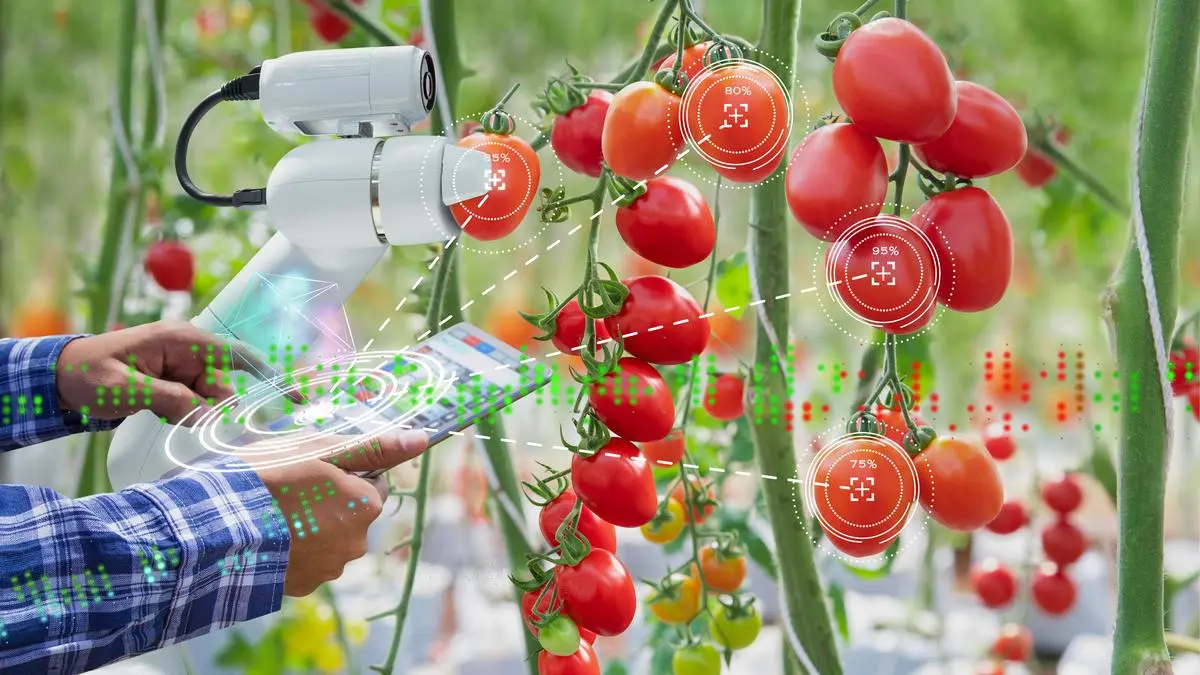
For decades, Indian farmers have relied on experience, intuition, and local knowledge for critical decisions—when to sow, irrigate, or sell. But as input costs rise, pests spread faster, and markets grow more volatile, that traditional wisdom needs a technological ally. According to a report by Alok Agrawal in The Hindu BusinessLine, artificial intelligence is emerging as that ally, not by replacing farmers but by providing a new kind of assistant that reads satellite images, analyzes crop photos, processes soil and weather data, and answers questions in local languages.
AI-Powered Advisory and Pest Monitoring
One of the most practical applications is answering farmers' queries quickly. The Government of India’s Kisan e-Mitra chatbot helps farmers get information on PM-KISAN and related scheme queries in multiple Indian languages. Instead of visiting offices or relying on intermediaries, farmers can digitally check eligibility, payment status, and grievance redressal.
AI tools also perform instant crop diagnosis. Some apps let farmers photograph a diseased crop and receive a diagnosis and treatment suggestion within seconds—acting as a “crop doctor” on the phone. Using AI-based image recognition, these systems identify pests and diseases early, reducing crop loss and unnecessary pesticide use. The National Pest Surveillance System uses AI for broader pest monitoring across the country.
Precision Farming: Optimizing Irrigation and Inputs
Water is one of the biggest challenges in Indian agriculture. AI-enabled precision farming platforms integrate sensors, weather stations, and farm-level data to guide irrigation, fertigation, and disease-risk decisions. By monitoring soil moisture, temperature, humidity, rainfall, and leaf wetness, these systems help farmers use water more efficiently while protecting crop health. The result is lower input costs and reduced risk.
Market Access and Logistics Improvement
Farmers need better market access, not just better production. The report highlights that some platforms are building AI-enabled technologies that connect farmers with inputs, advisory services, buyers, and other support. AI can help predict demand, improve logistics, reduce wastage, and strengthen market linkages. For enterprise supply chain managers, this means more predictable sourcing and reduced post-harvest losses.
| Aspect | Traditional Approach | AI-Enabled Approach |
|---|---|---|
| Pest monitoring | Farmer's visual inspection | National Pest Surveillance System with AI image recognition |
| Irrigation | Experience-based | Sensors, weather data, soil moisture monitoring |
| Market access | Intermediaries, local mandis | Platforms predicting demand, connecting buyers |
| Credit assessment | Limited collateral | Satellite imagery and AI models for risk assessment |
Credit and Insurance: De-risking Agriculture
AI is also improving farmers' access to credit and insurance. Satellite service companies use satellite imagery, climate data, and AI models to help banks assess farm productivity, crop health, and risk. This improves lending decisions and makes formal finance more accessible for small farmers. For fintech and insurance providers, this opens new underwriting opportunities in agricultural supply chains.
Enterprise Adoption Requirements
For AI to work in Indian agriculture at scale, the report emphasizes it must be simple, voice-enabled, and available in Indian languages. Farmers do not want complex dashboards; they need practical answers: What is happening to my crop? Should I irrigate today? Which pest is this? Has my PM-KISAN payment come? Where can I sell at a better price? AI tools must also be affordable, protect farmers’ privacy, and complement extension workers. The ultimate measure of success is real outcomes: higher income, lower costs, lower risk, and better resilience.
The most meaningful role of AI in Indian agriculture is not automation for its own sake. It is empowerment.
For enterprise technology buyers, the implications are clear. AI-driven demand prediction and logistics optimization can reduce supply chain volatility. Satellite-based credit scoring lowers risk for lenders. And government-backed platforms like Kisan e-Mitra demonstrate the scalability of AI for large, multilingual populations. As these tools mature, they offer a blueprint for integrating AI into agricultural supply chains across emerging markets.
Sources: