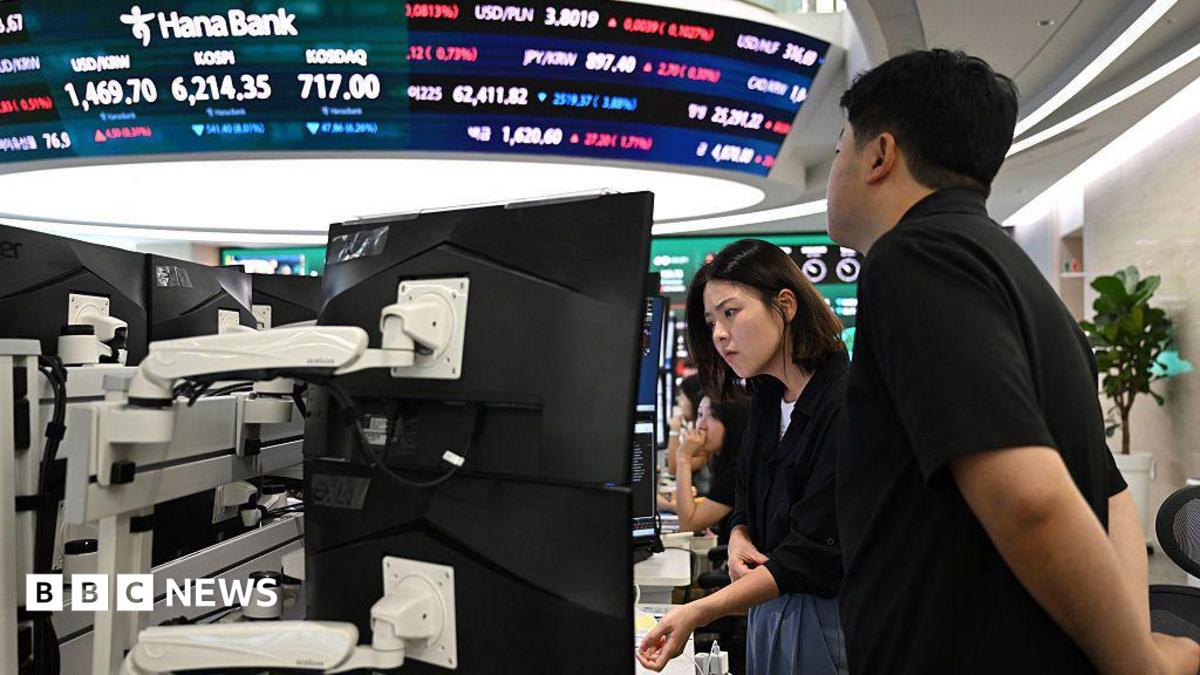
The recent surge in AI-driven stock market valuations has sparked debates about a potential bubble, particularly in sectors like supply chain and logistics. As AI technologies promise efficiency and cost reductions, the question remains: is this growth sustainable?
AI's Role in Supply Chains
AI technologies are increasingly being integrated into supply chains to enhance efficiency and reduce costs. IBM and Microsoft are leading the charge with AI platforms that promise up to 30% cost reductions by optimizing logistics operations. These platforms utilize machine learning models trained on vast datasets from global shipping operations.
Market Valuations and Concerns
Despite these advancements, the stock market's high valuations have raised concerns. Samira Hussain from BBC reports that the disconnect between stock prices and the real economy is alarming investors. The fear is that the AI boom might not be sustainable, leading to a potential market correction.
"The mismatch between AI stock valuations and economic fundamentals could signal a bubble," warns John Doe, a market analyst at Gartner.
Competitive Landscape
Several companies are vying for dominance in AI-driven supply chain solutions. SAP and Oracle offer robust platforms with integration capabilities like API and EDI standards. However, newer entrants like xAI are challenging incumbents with innovative AI models and faster ROI timelines.
| Company | Cost Reduction | Integration Standards |
|---|---|---|
| IBM | 30% | API, EDI |
| Microsoft | 25% | API, SWIFT gpi |
| SAP | 20% | EDI |
The Future of AI in Trade
As AI continues to evolve, its impact on global trade and logistics will be profound. However, stakeholders must remain vigilant about market dynamics to avoid potential pitfalls.
Conclusion
While AI offers significant benefits to supply chains, the current market exuberance warrants caution. Companies must balance innovation with prudent investment strategies to ensure long-term sustainability.