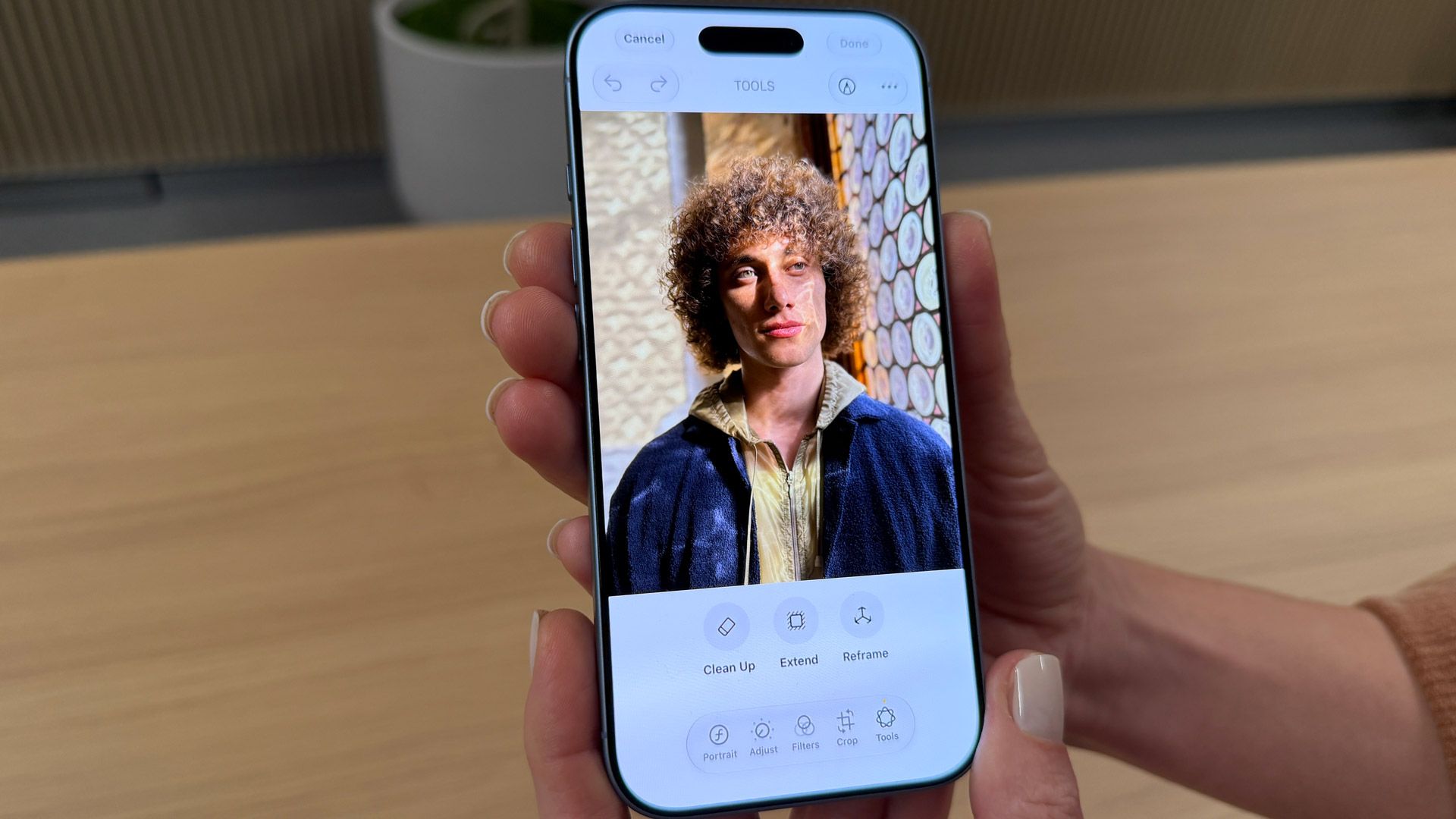
Apple Intelligence has taken a significant leap forward in generative image editing, now capable of creating entirely new content within photos—effectively generating fake images. According to a hands-on demo at WWDC 2026, the system, running on iOS 27 Dev Beta, can reconstruct parts of a scene that were never photographed, such as a child's socked foot obscured by a stuffed bear.
Generative Clean Up
The enhanced Clean Up tool goes beyond simple removal. In the demo, a child seated on the floor had one leg partially hidden by a large stuffed bear. Tracing over the bear and other distractions and tapping Clean Up removed them—but more strikingly, Apple Intelligence inferred and generated the rest of the child's leg and his other socked foot. As the demo noted, it is impossible to know whether the sock ever truly existed; the AI created it based on context.
Spatial Reframing and Expansion
Another new tool, Spatial Reframing, applies a 3D model to the image, allowing subtle rotation of the subject and background to improve composition. Users can even shift the subject slightly. The result is a better-framed photo, while an original imperfect version remains accessible.
The Expansion Tool extends the background of a photo—similar to Adobe Firefly—to fit a frame or wallpaper without altering the subjects. This feature is described as the least drastic of the new generative capabilities, but potentially the most practical.
| Feature | Capability | Business Relevance |
|---|---|---|
| Clean Up | Removes objects and generates missing content (e.g., a sock) | Enables enterprise image editing without photo reshoots |
| Spatial Reframing | 3D-based rotation and subject shift | Improves visual consistency in marketing assets |
| Expansion Tool | Extends background seamlessly | Useful for adapting product images to different formats |
Underlying Technology
These tools are powered by off-device models built in cooperation with Google—incorporating Google's generative models with Apple's interface. This marks a departure from Apple's previous cautious approach to AI, which left it trailing competitors. The update is part of Apple Intelligence on the upcoming iOS 27.
Implications for Enterprise
For technology leaders, the ability to generate realistic image content from inference raises questions about authenticity and trust in visual media. While Apple emphasizes that original photos are preserved, the new tools could streamline content creation for marketing, e-commerce, and training materials—reducing reliance on stock imagery or reshoots. However, the same generative power introduces risks of unintentional fabrication in professional documentation.
"Schrödinger sock. That's how I describe the child's foot apparel that was not visible but brought to photo-realistic life by Apple Intelligence."
As Lance Ulanoff of TechRadar observed, the generated elements exist in a liminal space between assumption and reality—a consideration for any enterprise deploying AI image editing at scale.
Apple's partnership with Google for model inference also highlights the growing trend of using external AI infrastructure. Enterprises should evaluate the data handling and privacy implications of such integrations.
The full set of tools—Clean Up, Spatial Reframing, and Expansion—represent a maturation of Apple Intelligence, which had previously been considered underwhelming. With this update, Apple positions itself as a serious player in generative image AI, directly competing with Adobe's Firefly and other platforms.
For CTOs and digital transformation leaders, the key takeaway is the balance between creative efficiency and the need for robust governance around AI-generated content. The ability to retrace to original images is a safeguard, but the technology's power to fabricate detail requires clear policies on acceptable use in professional contexts.
Sources: