
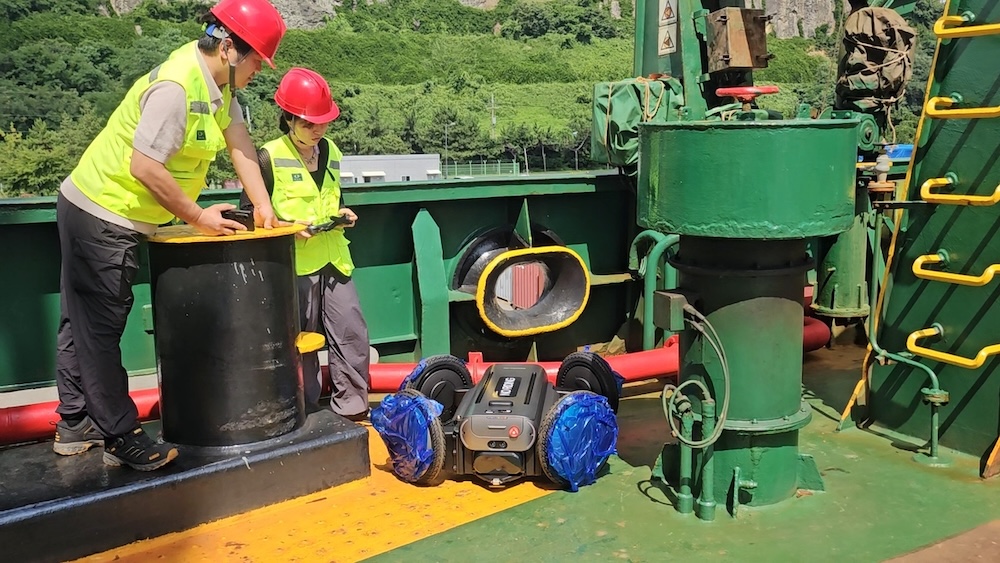
A mobile robot developed by Hyundai Motor and Kia has become the first in the world to drive autonomously aboard a working ship, according to Splash247. The demonstration, which took place on the multipurpose vessel Hyundai Dubai, is expected to accelerate the adoption of robotics on smart ships for safety inspections and material transport.
The MobED Platform and Its Capabilities
MobED is a mobile robot platform with four independently moving wheels using what Hyundai calls drive-and-lift technology. This allows the platform to keep its upper section level and drive stably over inclines and thresholds while compensating for a vessel's motion. The robot can be fitted with delivery equipment, inspection gear, or cameras, enabling a range of tasks depending on the purpose.
The trial set out to verify whether an autonomous robot developed primarily for land use could cope with the constantly rocking environment of a ship. The participating organisations included classification society Korean Register, Hyundai Motor and Kia, South Korean liner HMM, its shipmanagement arm HMM Ocean Service, and Goseong Engineering.
The Shipboard Trial
The demonstration was conducted aboard the Hyundai Dubai, berthed at CJ Logistics' dedicated steel pier in Changwon, South Gyeongsang province, South Korea. In the ship's cargo area, straight and curved driving, low- and high-speed running, route learning, and fully autonomous driving all functioned normally. In the vessel's narrow passageways, route learning and low-speed driving succeeded, but spatial constraints meant the robot had to be switched to remote manual control rather than driving autonomously.
| Organization | Role |
|---|---|
| Hyundai Motor | Robot developer |
| Kia | Robot developer |
| Korean Register | Classification society |
| HMM | Liner shipping company |
| HMM Ocean Service | Ship management |
| Goseong Engineering | Trial collaborator |
| CJ Logistics | Pier operator |
Implications for Maritime and Logistics Automation
The partners reported that the trial confirmed robots can be deployed in wide cargo areas without any separate modifications to the ship. The demonstration also showed potential for use in spaces difficult for crew to access, such as cargo zones loaded with explosive or toxic materials. One hurdle remains before robots roam further through the ship: engine rooms and tight passageways will require additional sensors or the development of a smaller platform, the organisations said.
Sources:


