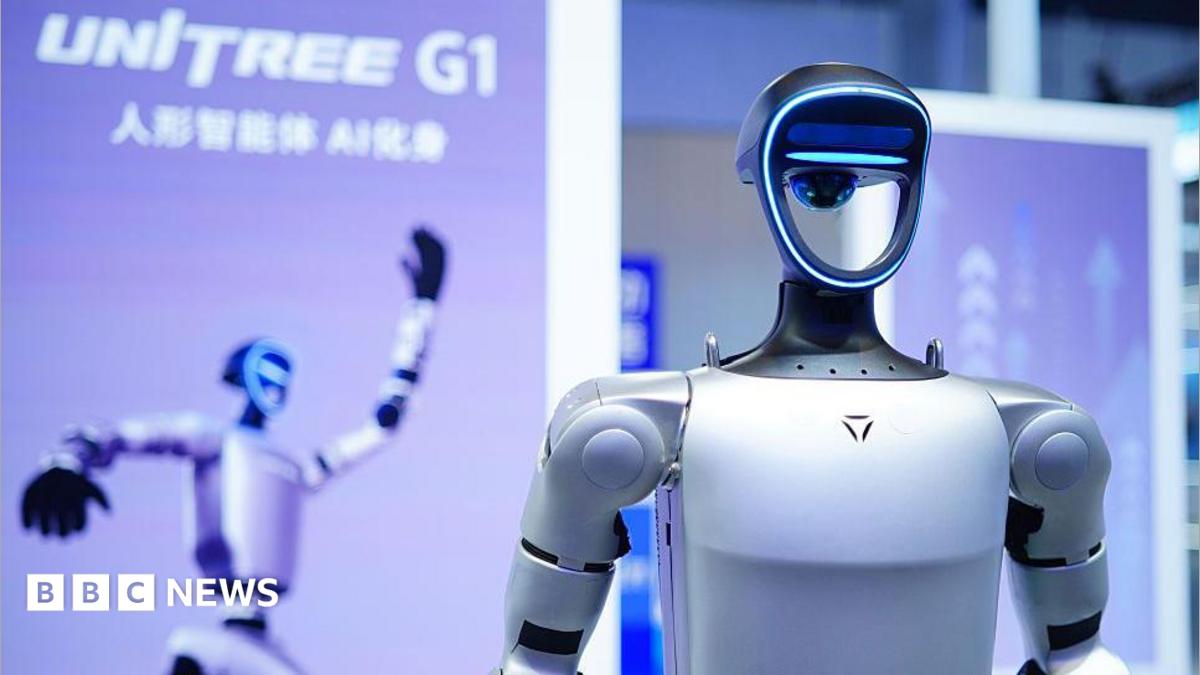
According to BBC News, Unitree Robotics, described as the world's biggest humanoid robot maker, made its stock market debut in Shanghai on Wednesday, with its shares soaring by more than 600%. The company's shares opened at 1,100 yuan (£120.60; $163.12), well above the 150.8 yuan offer price. The listing on the Star Market — a tech-focused board widely known as China's Nasdaq — marks a milestone for Beijing's ambitious plans for the country's robotics industry, BBC News reported.
A first-day surge of more than 600%
BBC News reported that the highly anticipated initial public offering (IPO) opened well above expectations. The table below summarises the key listing figures:
| Metric | Value |
|---|---|
| Offer price | 150.8 yuan |
| Opening price | 1,100 yuan (£120.60; $163.12) |
| First-day gain | More than 600% |
| Listing venue | Star Market, Shanghai |
Unitree was founded in 2016 and has become a robotics industry leader, selling a wide range of devices from sensors and automated arms to four-legged and human-like machines, according to BBC News. The company is based in Hangzhou, in eastern China, a region that is home to a so-called "golden cluster zone" of robotics firms supported by huge government investments.
Humanoid robotics and the US-China race
The listing comes as the US and China are locked in a battle to dominate the global market for robots and the artificial intelligence (AI) models that power them, BBC News reported. Robots such as automated industrial equipment and smart vacuum cleaners are already widely used in factories, warehouses and homes. The humanoid robotics segment is attracting large investments, with major companies including Tesla, BYD and Amazon developing two-legged machines capable of performing tasks usually carried out by people.
BBC News reported that US robots tend to have more user-friendly software, but Chinese manufacturers' lower prices are difficult to ignore. Harold Soh, a researcher from the National University of Singapore, told BBC News:
"They're not exactly comparable because some of Unitree's dogs are much smaller. But the price is a big difference."
The price gap is stark. According to BBC News, Unitree's robot dogs start at $2,700, a fraction of the roughly $70,000 price tag for Boston Dynamics' four-legged device, Spot.
| Robot | Price |
|---|---|
| Unitree robot dog | From $2,700 |
| Boston Dynamics Spot | Roughly $70,000 |
| Unitree G1 humanoid | $13,500 |
Strategic priority and government backing
Beijing considers the robotics sector a "strategic priority" in its pursuit of leadership in advanced technology, said Fei Qin, an associate professor at the University of Bath, as reported by BBC News. "Robots are where AI leaves the screen and enters the economy" in factories, hospitals and, potentially, the home, Qin added.
Government support helped drive a more than threefold increase in the number of Chinese robotics firms between 2020 and 2024, according to state-run China Daily. Robots are also seen as a potential solution to challenges posed by China's ageing population, which is expected to lead to a shortage of workers to support the economy's physically demanding manufacturing base, Qin said.
Unitree's product lineup and competitive position
Unitree has been selling humanoid robots since 2023, with its $13,500 child-sized G1 model hitting the market the following year, BBC News reported. Meanwhile, major US rivals — including Elon Musk's Tesla, which is developing a humanoid robot called Optimus — have yet to start delivering rival products. The G1, along with other Unitree robots, has been at the centre of a huge marketing push ahead of the firm's IPO, including a performance at a Lunar New Year showcase this year, according to BBC News.
Sources: