iGEN
Visit IGEN World Explore IGEN Expo
EXPLORE UPGRADE PLANS
BREAKING
UPS shift away from Amazon shows bigger payoff Lanesurf: 62% of Loads Get Vetted Carrier Offers Before Brokers Arrive India-China Border Trade Via Lipulekh Resumes Aug 1; China Permits 20 Traders Geopolitics Drives CMA CGM Q2 Profit Surge of 42% as Volumes and Rates Climb Benchmark Diesel Price Rises Third Week as Futures Plunge; Spread Hits Record Indian Government Limits Sugar Dealers to 400 Tonnes Stock Until November to Curb Hoarding Tenants signing longer leases for larger warehouses as 3PLs lock in capacity US stock market flat as S&P 500 and Dow barely move, Nasdaq slides over 1% on chip rout TruAlt Bioenergy Q1 Net Zooms to ₹59.27 Crore on Higher Revenues, Capacity Expansion India’s cotton sowing crosses 100 lakh hectares as monsoon picks up, area expands in key states UPS shift away from Amazon shows bigger payoff Lanesurf: 62% of Loads Get Vetted Carrier Offers Before Brokers Arrive India-China Border Trade Via Lipulekh Resumes Aug 1; China Permits 20 Traders Geopolitics Drives CMA CGM Q2 Profit Surge of 42% as Volumes and Rates Climb Benchmark Diesel Price Rises Third Week as Futures Plunge; Spread Hits Record Indian Government Limits Sugar Dealers to 400 Tonnes Stock Until November to Curb Hoarding Tenants signing longer leases for larger warehouses as 3PLs lock in capacity US stock market flat as S&P 500 and Dow barely move, Nasdaq slides over 1% on chip rout TruAlt Bioenergy Q1 Net Zooms to ₹59.27 Crore on Higher Revenues, Capacity Expansion India’s cotton sowing crosses 100 lakh hectares as monsoon picks up, area expands in key states
Home ›› Technology ›› Cloud ›› Microsoft Emissions Jump 25% as AI Data Center Expansion Fuels Greenhouse Gas Rise

Microsoft Emissions Jump 25% as AI Data Center Expansion Fuels Greenhouse Gas Rise

Microsoft’s greenhouse gas emissions rose 25% in the last fiscal year, driven primarily by data center expansion for AI workloads. The company matched 100% of electricity with carbon-free sources but has signed new fossil-fuel-powered deals. Google and Amazon reported similar double-digit increases, highlighting the sustainability challenge of the AI race.

iG
iGEN Editorial
July 10, 2026
Microsoft Emissions Jump 25% as AI Data Center Expansion Fuels Greenhouse Gas Rise

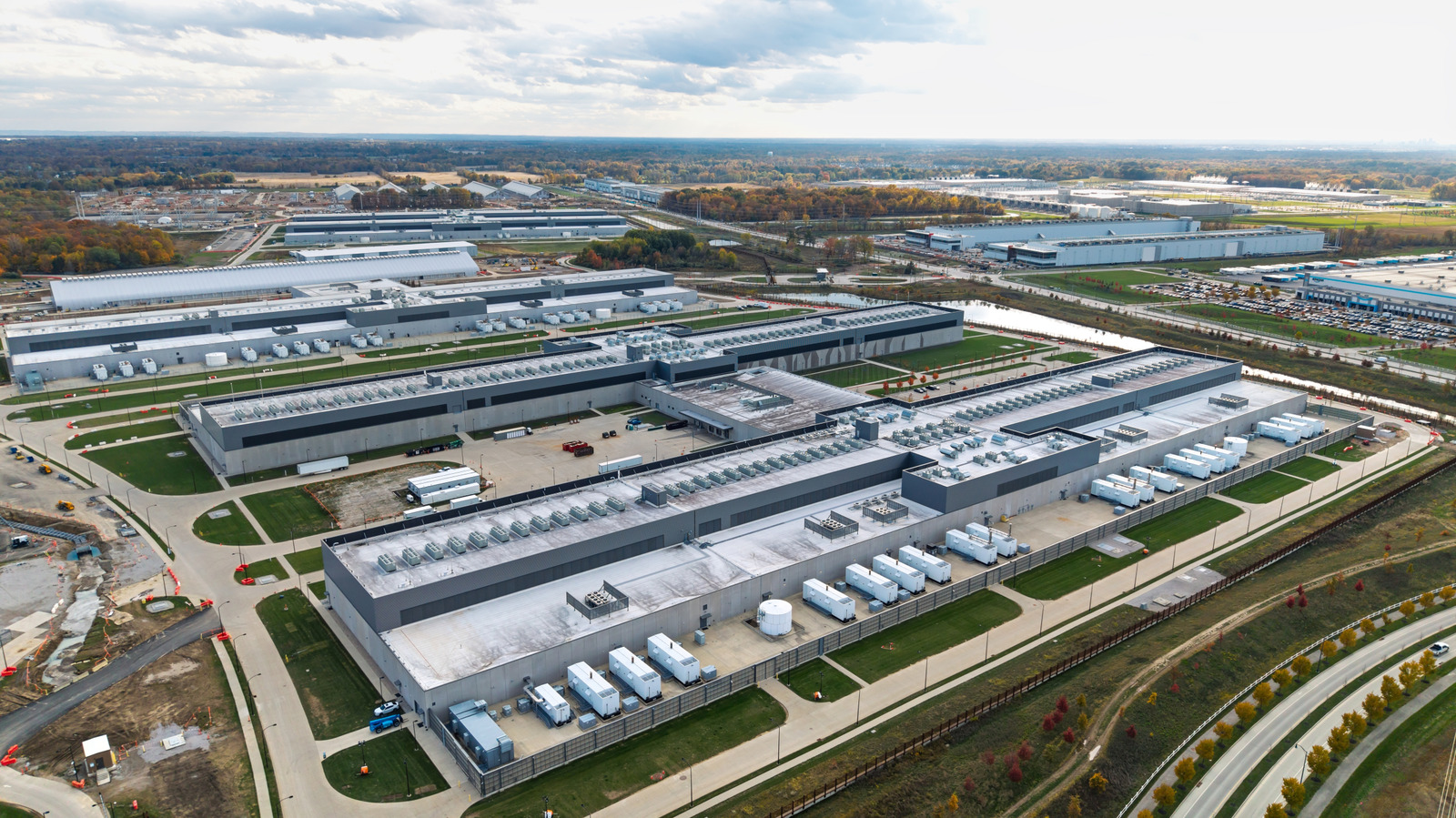
Microsoft’s greenhouse gas pollution increased by roughly 25 percent last year, the company disclosed in its new sustainability report released Thursday. The rise is primarily driven by the expansion of its datacenter infrastructure to meet surging demand for AI compute, according to a blog post by Microsoft vice chair and president Brad Smith and chief sustainability officer Melanie Nakagawa.

The Scale of the Increase

Emissions tied to energy the company purchased or acquired to run its operations—known as Scope 2 emissions—accounted for 13 percent of Microsoft’s total. The report covers the 2025 fiscal year, which ended last June. Microsoft highlighted that it had matched 100 percent of its electricity consumption with carbon-free sources, but the data center build-out is set to accelerate.

Industry-Wide Emissions Surge

The report follows similar ones released by Google and Amazon last week. Amazon disclosed a 16 percent increase in its CO2 emissions, while Google said its annual greenhouse gas emissions rose 18 percent last year compared to 2024—the biggest single-year increase it has recorded. Together, the disclosures show a troubling trend of rising tech company emissions driven by the global race to build out power-hungry data centers.

Company Emissions Increase Key Driver
Microsoft 25% Datacenter infrastructure expansion, Scope 2 up 13%
Amazon 16% Overall CO2 increase (per sustainability report)
Google 18% Biggest single-year increase; added fossil fuel for some data centers

Fossil Fuel Power Deals

Microsoft has made a number of deals since the fiscal year ended involving gas-powered data centers. Last month, the company officially announced a partnership with Chevron, which is building a power plant to supply a future data center in West Texas. Permits show that power plant could emit more than 11.5 million tons of CO2 equivalent annually—an amount greater than the entire state of Rhode Island. Microsoft has also leased buildings on the Stargate campus in Abilene, Texas, which will be powered by an onsite power plant that could emit more than 7.8 million tons of CO2e each year. Additionally, it signed a nonbinding letter of intent for compute at a West Virginia data center that would be powered by off-grid gas and could emit more than 11 million tons of greenhouse gases.

“Microsoft’s strategy includes exploring a variety of options for mitigating the emissions from its electricity consumption, consistent with our sustainability ambitions,” Nakagawa said in a statement to WIRED.

Shifting Offset Strategy

Microsoft stopped purchasing unbundled renewable energy certificates (RECs), a move that contributed in part to the rise in Scope 2 emissions. Unbundled RECs have been criticized as greenwashing because they don’t necessarily add more clean power to the grid. Danny Cullenward, a researcher at the University of Pennsylvania, called them “a paper transaction that is physically disconnected from real-world consequences.” Cullenward, who is also a visiting faculty member at Google but was not speaking on behalf of the company, added: “I think it's highly commendable that [Microsoft] is moving away from unbundled RECs and prioritizing investments in new clean electricity, where power purchase agreements and other long-term offtake agreements can and do cause new clean electricity to come online.”

2030 Carbon-Negative Goal Remains

Despite the rise in emissions and its continued investments in AI, Microsoft still says it plans to become “carbon negative” by 2030. Smith and Nakagawa wrote that the global race for AI is “increasing demand” for data centers. The coming years will test whether the company can reconcile its AI ambitions with its climate commitment.


Sources: WIRED – Top Stories

Keep Reading

Recommended Stories

Microsoft inks 37,000-ton carbon removal deal with Indian startup Alt Carbon Technology

Microsoft inks 37,000-ton carbon removal deal with Indian startup Alt Carbon

Microsoft signed a three-year agreement to purchase nearly 37,000 metric tons of carbon removal credits from Alt Carbon, an Indian startup using enhanced rock weathering. The deal marks Microsoft's first enhanced-rock weathering purchase in Asia and highlights the increasing role of Global South suppliers in the carbon removal market.

June 13, 2026
Seattle Nears Approval of Data Center Moratorium Technology

Seattle Nears Approval of Data Center Moratorium

Seattle's City Council has approved a year-long moratorium on new large data centers, pending the mayor's signature. This decision aims to address concerns over electricity, water usage, and noise pollution. The ban primarily affects developers, as major tech companies do not operate data centers within the city.

June 10, 2026
Nvidia Positions Vera Rubin CPU-GPU System as All-in-One AI Data Center Solution Technology

Nvidia Positions Vera Rubin CPU-GPU System as All-in-One AI Data Center Solution

Nvidia is expanding beyond GPUs with its Vera Rubin system, offering a combined CPU and GPU platform for AI data centers. The company claims a tenfold increase in tokens per watt and a "cable-free" design that reduces installation time from hours to minutes. OpenAI has deployed one Vera Rubin rack.

July 21, 2026
Green AI Carbon Optimizer Recommends Carbon-Efficient Training Locations and Forecasts Global AI Energy Demand Technology

Green AI Carbon Optimizer Recommends Carbon-Efficient Training Locations and Forecasts Global AI Energy Demand

The Green AI Carbon Optimizer, presented in a new arXiv paper, offers two tools: a carbon-aware cloud region recommender for AI training and a power-law forecasting pipeline for global AI energy demand. By combining grid carbon intensity, renewable share, and PUE across 100+ regions, optimal region selection can reduce emissions by 97.2% versus the worst region. The forecasting model, based on 26 anchor models, projects 2030 AI energy demand between 7 TWh and 1,436 TWh depending on scenario assumptions.

June 16, 2026