iGEN
Visit IGEN World Explore IGEN Expo
EXPLORE UPGRADE PLANS
BREAKING
Relay Q: London Startup's AI Microphone Puts Hands-Free Voice Dictation on the Desktop Google Pixel 10a Crowned Best Budget Pixel in WIRED's Updated 2026 Buying Guide Global Steel Wire seeks fresh Santander terminal concession Veritas Shipmanagement books fresh ultramax pair at COSCO yard, Splash247 reports Seanergy linked to fresh newcastlemax at Hengli as dry bulk orderbook grows Weaker rupee may push foreign assets over FAST-DS Rs 1 crore limit, raising tax bill 45 Indian power plants face critically low coal stocks as monsoon hits supply SFL Makes Fresh $363m Car Carrier Play With Four LNG Dual-Fuel Newbuilds Iran Blacklist Threatens Hormuz Shuttle Tanker Lifeline for Gulf Crude Keyfield International Enters Dredging Market with $24.7m Vessel Acquisition Relay Q: London Startup's AI Microphone Puts Hands-Free Voice Dictation on the Desktop Google Pixel 10a Crowned Best Budget Pixel in WIRED's Updated 2026 Buying Guide Global Steel Wire seeks fresh Santander terminal concession Veritas Shipmanagement books fresh ultramax pair at COSCO yard, Splash247 reports Seanergy linked to fresh newcastlemax at Hengli as dry bulk orderbook grows Weaker rupee may push foreign assets over FAST-DS Rs 1 crore limit, raising tax bill 45 Indian power plants face critically low coal stocks as monsoon hits supply SFL Makes Fresh $363m Car Carrier Play With Four LNG Dual-Fuel Newbuilds Iran Blacklist Threatens Hormuz Shuttle Tanker Lifeline for Gulf Crude Keyfield International Enters Dredging Market with $24.7m Vessel Acquisition
Home ›› Technology ›› Ai ›› AI to help planes avoid climate-warming contrails above North Atlantic

AI to help planes avoid climate-warming contrails above North Atlantic

A £5m UK trial, Operation Blue Skies, will test whether AI can predict where climate-warming contrails form above the North Atlantic and adjust aircraft altitudes by around 2,000ft to avoid them. Led by Google, NATS, the Met Office and UK universities, the 30-month project targets the Shanwick Oceanic airspace, which accounts for about 5% of global contrail warming.

iG
iGEN Editorial
August 18, 2026
AI to help planes avoid climate-warming contrails above North Atlantic

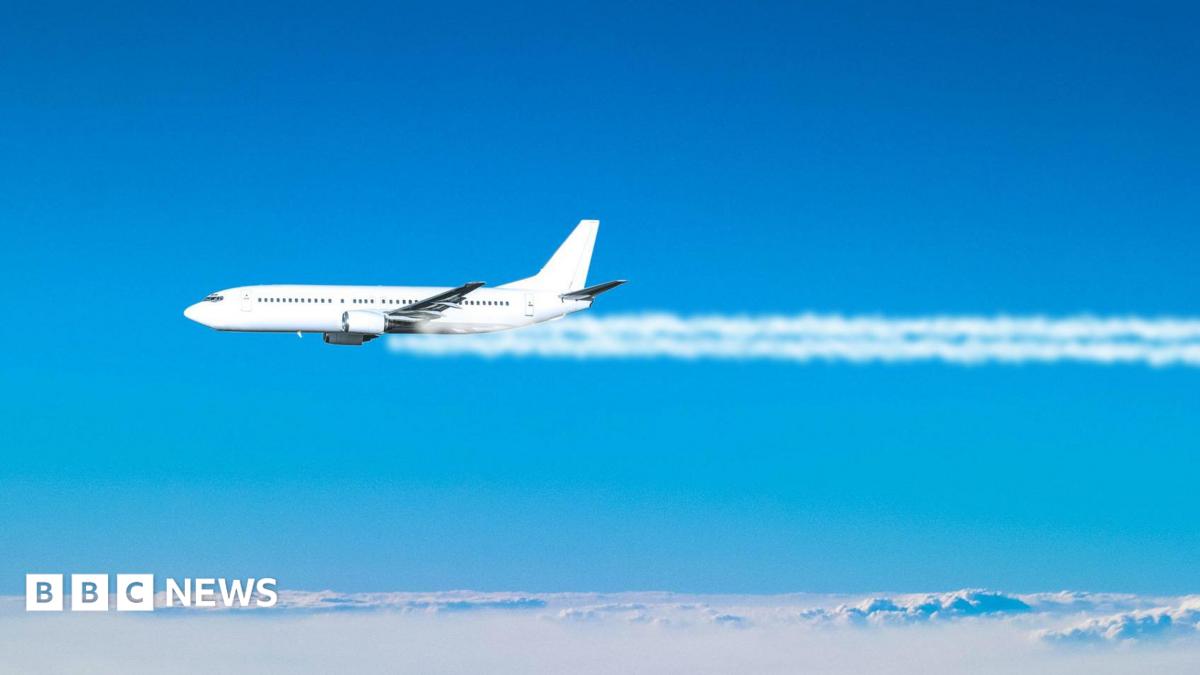
Contrails, the white lines trailing from aircraft at high altitude, are more than a skyward curiosity. In cold, humid conditions they persist and spread into clouds that trap heat that would otherwise escape from the Earth, according to the BBC. To tackle this, a £5m UK trial will test whether artificial intelligence can predict where climate-warming contrails are likely to form and get planes to avoid those areas.

Why contrails matter

Contrails are formed when hot exhaust from aircraft engines meets cold air at high altitude, creating ice crystals. Many disappear quickly, but in particularly cold and humid conditions they can persist and spread, forming clouds that trap heat, the BBC explained.

Dr Paul Hodgson, Google’s technical lead for the operation, told the BBC’s Tech Life programme that contrail warming is “responsible for something like a third of all aviation climate warming”. He acknowledged there was uncertainty around the precise figure, but said scientists were confident it was “either quite a large problem or a very large problem”. He also noted his five-year-old has a more colourful description for the white lines: “sky graffiti”.

The trial will focus on the Shanwick Oceanic airspace in the eastern half of the North Atlantic corridor, which accounts for approximately 5% of global contrail warming.

How AI will reroute flights

The idea behind the trial, according to the BBC, is that if scientists can predict areas of the atmosphere where contrails are likely to form, aircraft could avoid them. The AI system works like this:

  • Google uses satellite images and flight data to identify where planes have previously produced contrails.
  • This is combined with weather patterns to forecast where conditions for new contrails are likely to occur.
  • The information is passed to NATS, the UK air traffic control provider, where controllers can direct pilots to avoid those areas.
  • Most adjustments involve changing an aircraft’s altitude by around 2,000ft — something that already happens routinely to avoid turbulence and bad weather.

According to the BBC, passengers are unlikely to notice the changes. Ian Jopson, director of sustainability at NATS, said it should be “pretty much business as usual using existing procedures for the operators on the North Atlantic”.

Operation Blue Skies partners and funding

The 30-month project, named Operation Blue Skies, brings together Google, the UK government, the Met Office, NATS, and researchers at the University of Cambridge and Imperial College London.

Partner Role Contribution
Google AI research, engineering, computing infrastructure £1.4m
Department for Transport Government funder £2.65m
Met Office Weather forecasting Not stated
NATS Air traffic control Not stated
University of Cambridge Research Not stated
Imperial College London Research Not stated

The BBC noted that the Department for Transport is providing £2.65m towards the programme, while Google is contributing £1.4m through AI research, engineering and computing infrastructure. The trial comes as the government backs expansion of UK airports, raising the question of whether tech solutions can sufficiently reduce aviation’s environmental impact as demand for flying grows. Google is also one of many big tech companies spending billions on new data centres, which environmentalists are concerned will contribute more to climate change. The BBC’s report also identifies Aviation Minister Keir Mather.

Trial scale and schedule

Testing will take place during selected evenings and nights in the winters of 2026-27 and 2027-28, when air traffic is lower. Around 10,000 flights are expected to pass through the airspace during the trial periods, although only a fraction will need to change altitude specifically to avoid contrails.

The central premise is that predicting contrail formation areas allows aircraft to make small, routine altitude changes that avoid the most warming clouds.


Sources: BBC-Business

Keep Reading

Recommended Stories

AI Could Help Fossil Fuel Firms Add Emissions Equal to Russia's, Study Finds Technology

AI Could Help Fossil Fuel Firms Add Emissions Equal to Russia's, Study Finds

New research in npj Climate Action finds that AI's productivity gains for the oil and gas industry could increase global energy-related emissions by 1.2 to 4.8 percent, equal to Mexico's or Russia's annual emissions. The study, by former Microsoft sustainability workers, argues tech companies must measure 'enabled emissions' from their tools, not just operational emissions.

August 11, 2026
Microsoft Emissions Jump 25% as AI Data Center Expansion Fuels Greenhouse Gas Rise Technology

Microsoft Emissions Jump 25% as AI Data Center Expansion Fuels Greenhouse Gas Rise

Microsoft’s greenhouse gas emissions rose 25% in the last fiscal year, driven primarily by data center expansion for AI workloads. The company matched 100% of electricity with carbon-free sources but has signed new fossil-fuel-powered deals. Google and Amazon reported similar double-digit increases, highlighting the sustainability challenge of the AI race.

July 10, 2026
IndiGo Trials AI-Powered OptiClimb by SITA to Cut Fuel Burn During Take-Offs Technology

IndiGo Trials AI-Powered OptiClimb by SITA to Cut Fuel Burn During Take-Offs

IndiGo begins trials of SITA's AI-powered OptiClimb solution to reduce fuel consumption during the climb phase. The airline aims to save 60-65 kg per takeoff, with potential daily savings of tens of tonnes across its 2,000-odd flights. The trial runs on its Airbus fleet starting Thursday.

June 24, 2026
Shipowners and Airlines Urge EU to Use ETS Revenues for Green Fuel Transition Logistics

Shipowners and Airlines Urge EU to Use ETS Revenues for Green Fuel Transition

European shipowners and airlines jointly called on the EU to channel Emissions Trading System (ETS) revenues back into shipping and aviation for green fuels and technologies. Shipping contributes around €9bn and airlines €2.3bn annually, but the funds are not being reinvested, risking decarbonisation efforts. Europe lags Asia in fuel production capacity.

June 23, 2026