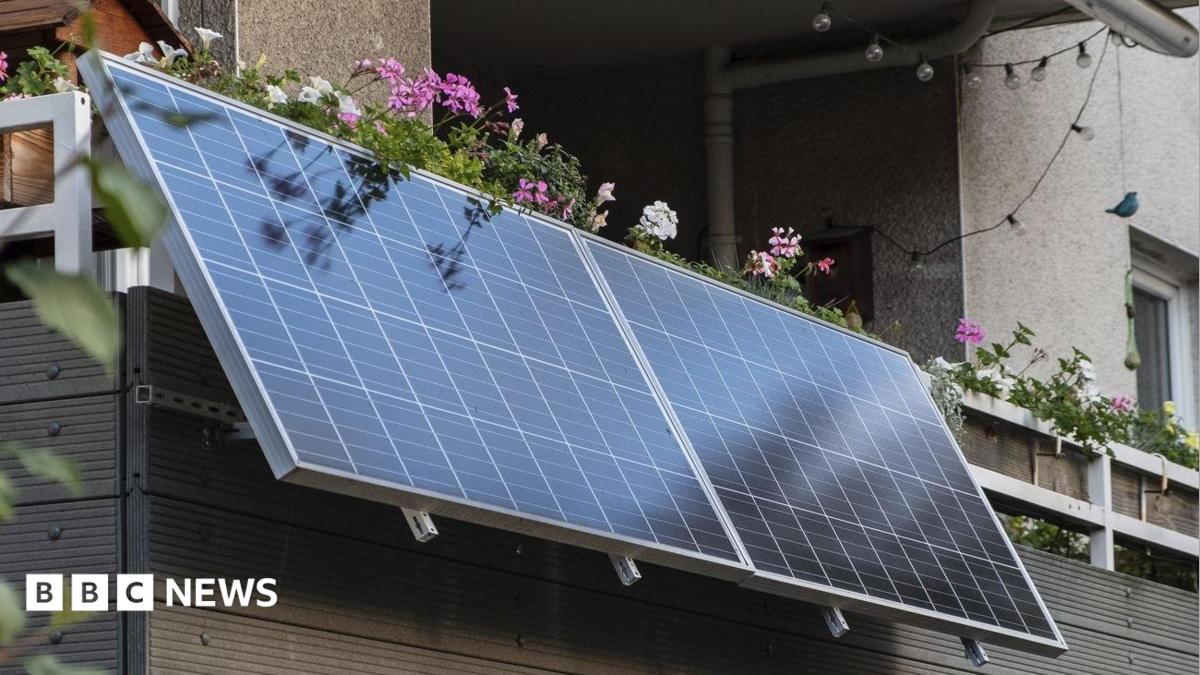
Plug-in solar panels are set to appear on the shelves of DIY shops and High Street retailers after the UK government changed the rules to allow them to be legally sold, according to the BBC. Retailers including Argos will stock the products from Thursday, and the government expects other shops to follow. The kits are significantly cheaper than roof panels, can be installed without an electrician, and suit properties with outdoor space including balconies — though savings will be lower because they generate less power. The government hopes the panels will help households cut bills and reduce reliance on overseas fuel sources, whose price fluctuated in recent months because of the Middle East conflict, the BBC reported.
Price and expected savings
A one-panel kit will cost £699, while a two-panel kit will sell for £1,089, according to UK solar company UKSOL. The government expects prices to settle at £400 to £600 as competition increases and more products are developed.
Government research cited by the BBC shows a household could save between £70 and £110 a year on energy bills. The precise amount depends on how the panels are oriented and how long they run — an unshaded south-facing spot is best. Households that use energy during daylight hours will benefit most, because the electricity must be used as it is generated. Any power not consumed will flow back to the grid, but it is unlikely that homes will receive cash for it.
| Metric | Figure |
|---|---|
| One-panel kit price | £699 (UKSOL) |
| Two-panel kit price | £1,089 (UKSOL) |
| Expected retail price range | £400–£600 |
| Estimated annual savings | £70–£110 |
| Maximum power output to home | 800 watts |
How plug-in panels work
Each kit comes with a microinverter that limits output to the home to 800 watts, even if the attached panel is capable of generating more. The constraint is deliberately modest for safety reasons, the BBC reported. Eight hundred watts is enough to cover "always-on" appliances such as fridges and devices left on standby, and the government says it should power about a fifth of the average household's electricity use while the sun is shining.
A kettle, which needs 3 kilowatts, will be powered through a mix of the 800 watts flowing from the panel with the rest drawn from the national grid.
British Gas said plug-in panels won't solely power a home but can meaningfully reduce how much electricity you need to buy during the daytime.
Safety and certification
Unlike rooftop solar systems, plug-in panels do not have to be certified under the Microgeneration Certification Scheme (MCS), the UK's official quality mark for small-scale renewable energy. That also means they will not normally qualify for the Smart Export Guarantee, which pays homeowners for excess solar power.
Government tests found that sample systems could operate with no unacceptable heating or unsafe energy flows, according to the BBC. Each device's microinverter constantly monitors the connection to the grid and shuts down in milliseconds if the electricity cuts out or if the panel is simply unplugged. Experts nonetheless advise customers to have their wiring checked by a professional to ensure it is safe before parting with cash.
Sources: