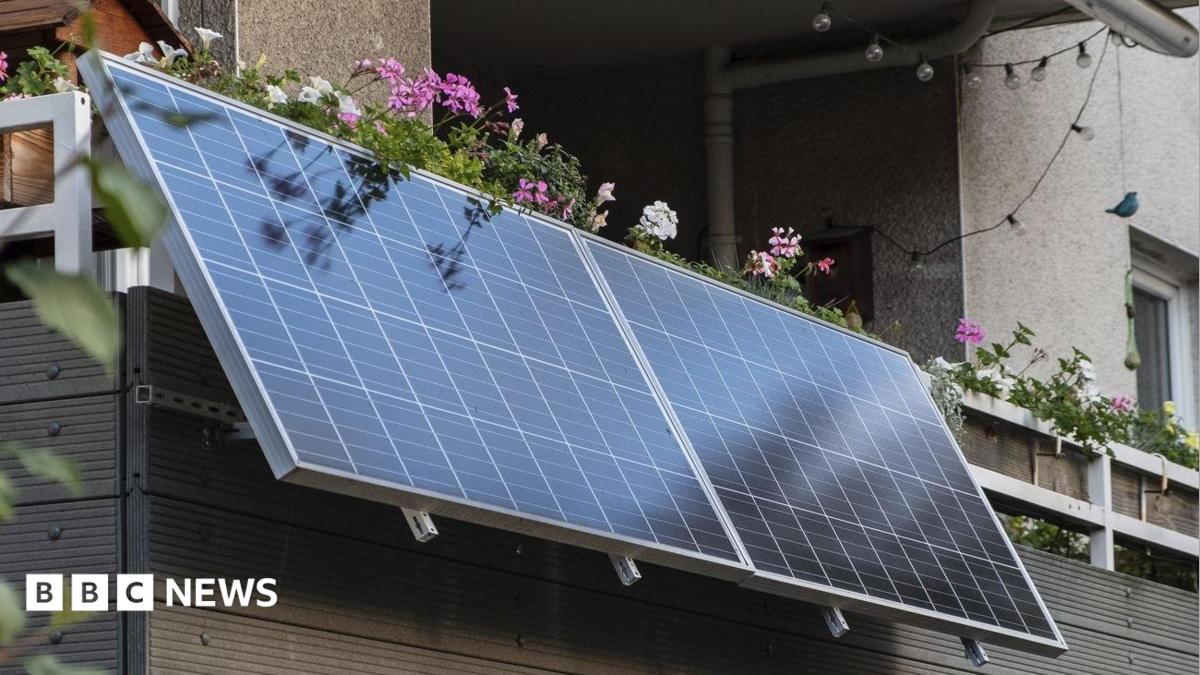
Installing fixed rooftop solar is expensive and often impossible for renters or properties with complex roofs, a gap that portable solar panels fill by converting sunlight to electricity in any setting, according to WIRED technology writer Simon Hill. Hill has tested portable solar panels for several years and published his latest recommendations in 2026, naming Jackery's Solar Saga models the most effective he has tested, with Bluetti's high-wattage panels as alternatives for larger loads. The review pairs the panels with solar generators and portable power stations, and includes specific output, efficiency, and durability data.
Jackery Solar Saga 200 Leads the Field
According to Hill, the 200-watt Solar Saga 200 consistently delivered around 140 watts in real-world testing, sometimes reaching up to 170 watts. In one test, the panel fully recharged the 4,085-watt-hour Explorer 2000 Plus portable power station from roughly 20 percent in two scorching days. The current version of the Solar Saga 200 is bifacial, with conversion efficiency up to 26.7 percent, up from 24 percent in the model Hill tested, and carries an IP68 rating for rain and dust resistance.
Hill reported that both the 100-watt Solar Saga 100 and the 200-watt Solar Saga 200 generated "a relatively good amount of power" in full sun and overcast conditions. Neither folds down very small, but strong molded-plastic handles in Jackery's signature bright orange allow one-handed carrying. Both fold flat with magnetic pads, and their legs attach with Velcro, making them very quick to put up or away compared to panels that use metal fasteners, according to Hill. The company now offers various versions of the Solar Saga 100.
Bluetti 350-W and 500-W Panels for Higher Output
For more power in a single panel, Hill recommended the Bluetti 350-W and Bluetti 500-W panels, noting they are expensive at RRP but commonly discounted. In Hill's testing, the 350-W panel delivered a maximum of around 290 watts at 23.4 percent conversion efficiency, while the 500-W panel produced around 490 watts in ideal conditions at 25 percent efficiency. Each weighs just over 30 pounds and carries an IP67 rating, and both come with MC4-to-XT60 cables.
Setup experience differs significantly between the two. The 350-W panels are fairly easy to set up, though the metal fasteners on the kickstands take some fiddling. The 500-W panels are "downright finicky," in Hill's words, folding into twelve separate sections that require wrestling to stabilise, particularly at higher angles in wind.
Portable Solar Panel Comparison
| Model | Rated Wattage | Max Output in Testing | Conversion Efficiency | Weight | IP Rating |
|---|---|---|---|---|---|
| Jackery Solar Saga 200 | 200 W | ~140 W (up to 170 W) | 26.7% (bifacial) | Not disclosed | IP68 |
| Bluetti 350-W | 350 W | ~290 W | 23.4% | Just over 30 lbs | IP67 |
| Bluetti 500-W | 500 W | ~490 W | 25% | Similar to 350-W | IP67 |
The table compiles data from Hill's review. The Solar Saga 200's weight is not specified in the source.
Connectors, Efficiency, and Practical Considerations
Hill flagged compatibility as a key consideration: Jackery uses a proprietary DC8020 barrel connector designed for its own power stations, while most portable panels ship with MC4 connectors and an XT60 adapter, the most common solar charging port on solar generators. Jackery solar generators often include two barrel ports, letting users plug in two panels. Hill stressed that angling panels correctly is vital, and the fold-out legs on the Jackery panels make positioning easy.
The review also notes that both Jackery models performed well in overcast conditions, and that the latest Solar Saga 200's IP68 rating means it can be used without concern about rain or dust. For technology and procurement teams evaluating portable power hardware, Hill's measured output figures, charging times, efficiency ratings, and environmental tolerances offer concrete performance baselines for field-deployment decisions.
Sources: