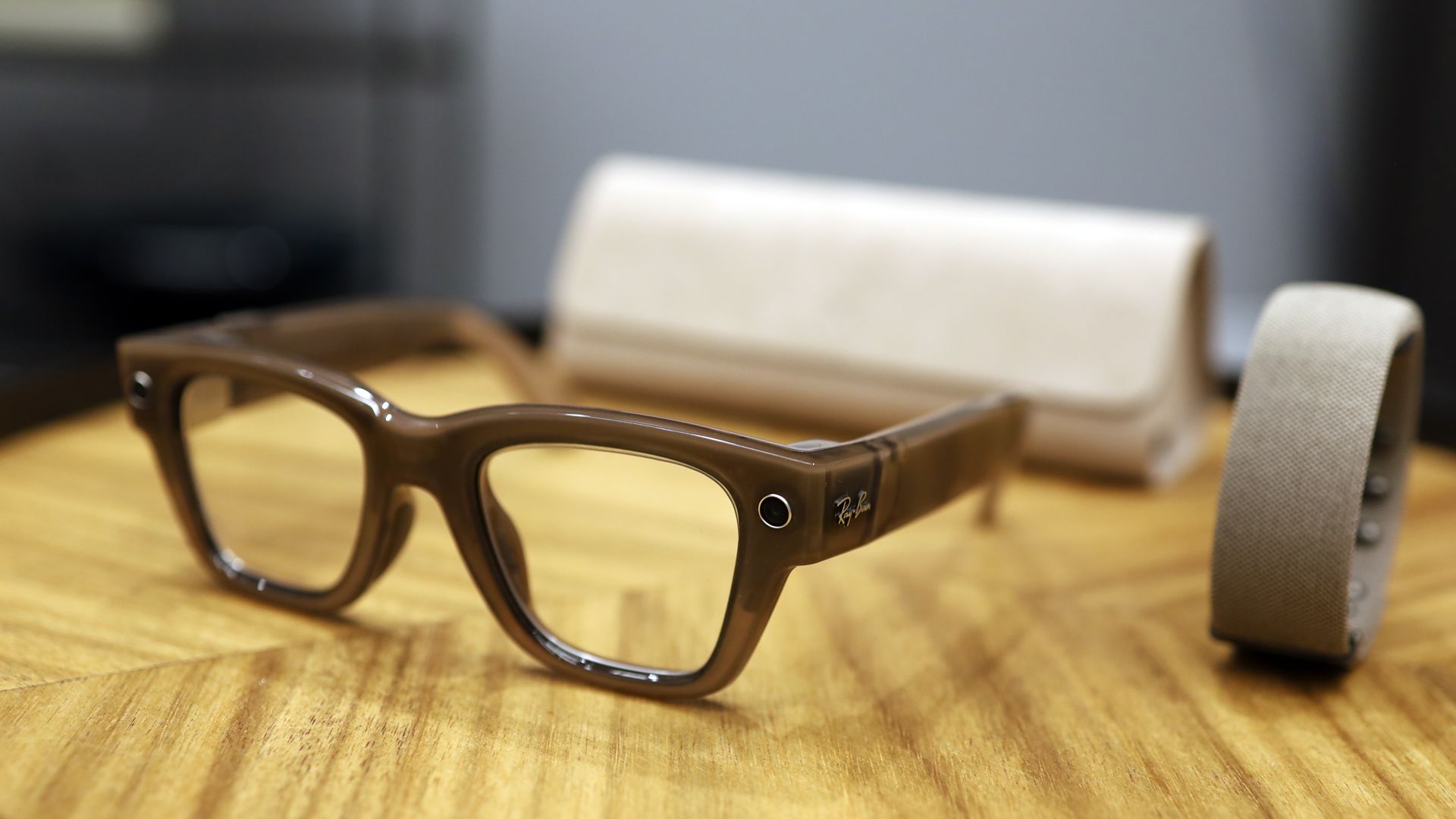
Smart glasses maker Solos has long focused on audio-only wearables, but on Tuesday it announced two new pairs that aim to offer alternatives to Meta's popular camera-equipped spectacles. The new models—AirGo A6 (audio-only) and AirGo V2 (camera-enabled)—arrive with a notable accessory: a clip-on privacy shield that lets users physically block the camera, according to WIRED.
Solos’ New Smart Glasses: Audio-Only and Camera-Enabled
The Solos AirGo V2 is the second iteration of its camera-enabled glasses, first announced last year as an effort to directly “outshine Meta,” per WIRED. Priced at $299, the AirGo V2 does “just about everything you’d expect from Meta’s new $299 Meta Smartglasses,” including photo and video capture, music playback, and an AI-powered assistant that can see what the user sees. The glasses can be fitted with prescription lenses and offer a 10- to 12-hour battery life, WIRED reported.
The audio-only AirGo A6 complements the lineup for users who prefer no camera at all.
Privacy Kit: A Clip-On Shield for Cameras
A key differentiator for the AirGo V2 is the Privacy Kit, a set of clip-on accessories sold separately for $79. The kit includes a privacy shield that blocks the cameras from view and from recording the world, allowing wearers to keep the glasses in audio-only mode. A clip-on polarized lens is also included. WIRED noted that the modular design requires users to attach and detach the shield each time they want to enable or disable the camera—a process that “will likely keep people from bothering with privacy at all.” Additionally, the clip-on blockers could be removed surreptitiously by a bad actor after an interaction.
Market Context: Meta and Other Competitors
Meta has been “the dominant force in the smart glasses market,” WIRED reported. The company’s glasses have faced criticism, being called “creepy ‘pervert glasses’” and after Meta silently added face recognition code that was later removed following a WIRED report. Recently, Meta announced it would start charging for features that were previously free. Meta CTO Andrew Bosworth acknowledged in a private Q&A that there is “market demand for that product for sure” referring to audio-only smart glasses, but Meta has not yet released such a model.
Other large companies are entering the space: Google and Samsung have a partnership to build Android XR, with new glasses arriving later this year from Warby Parker and Gentle Monster. Apple has reportedly been developing its own smart glasses. Among smaller vendors, Even Realities offers camera-free glasses, directly targeting privacy-conscious users.
Solos’ first camera-enabled glasses, the Solos AirGo Vision, launched in 2024. WIRED placed them in the “Don’t Bother” section of its Best Smart Glasses gallery, citing “middling media capture quality, frustrating touch controls, and a power-hungry app.” The new AirGo V2 aims to improve on that foundation while addressing privacy head-on.
“Solos’ reemphasis on privacy comes after a period of widespread criticism of Meta’s glasses,” WIRED reported.
As the market for smart glasses grows, the trade-off between functionality and privacy remains a central challenge. Solos’ Privacy Kit offers a physical—if somewhat cumbersome—solution for users who want the benefits of a camera but need to disable it in certain settings. Whether this approach gains traction among enterprise users who may require strict data-handling protocols will depend on how naturally the shield integrates into daily use.
Sources: