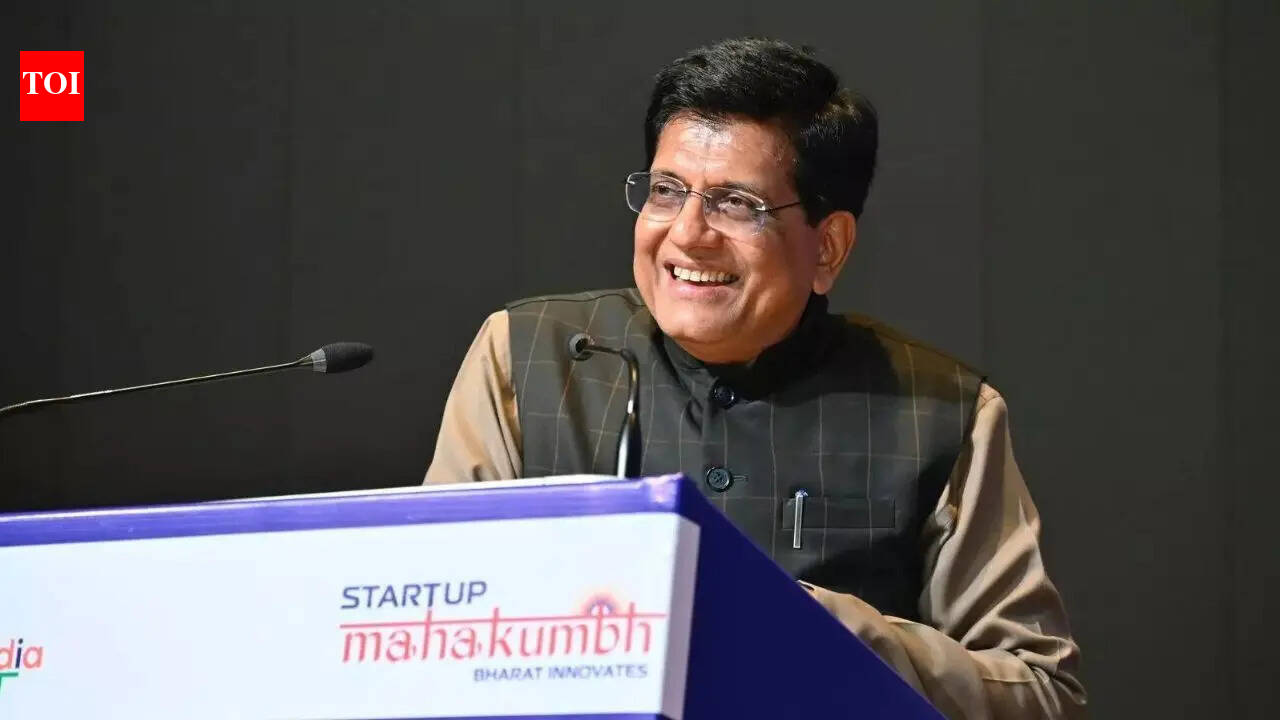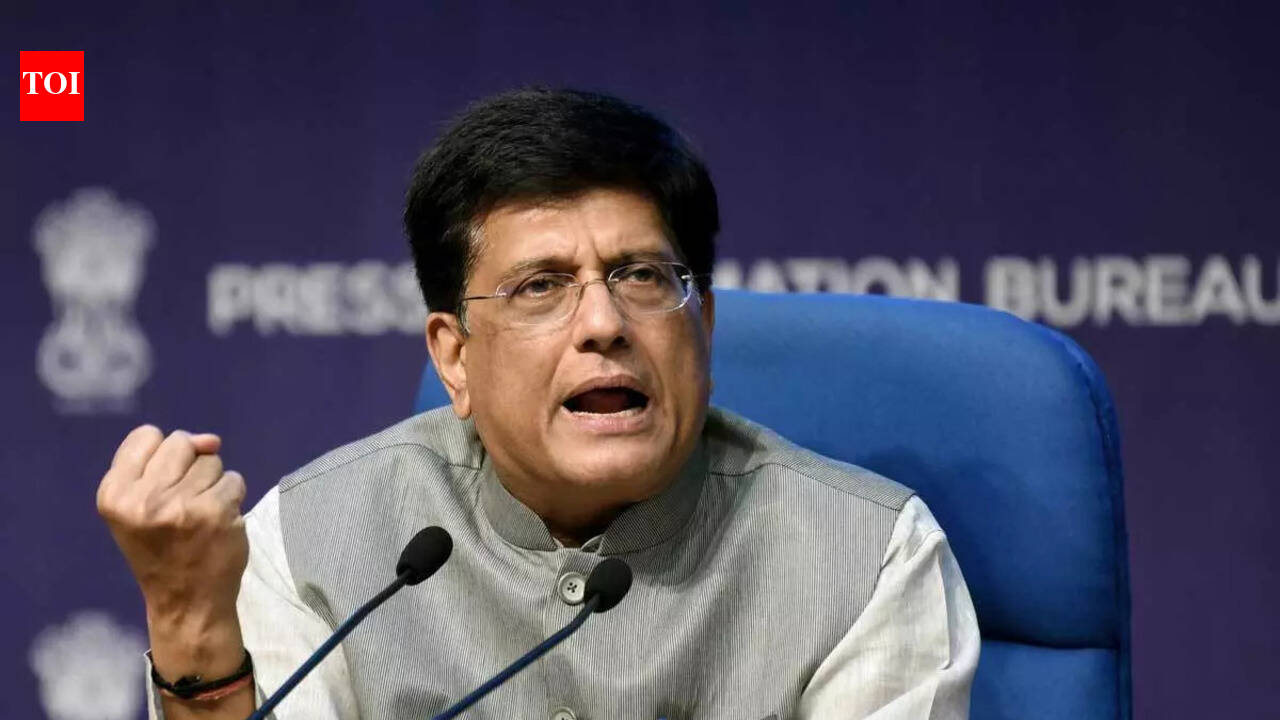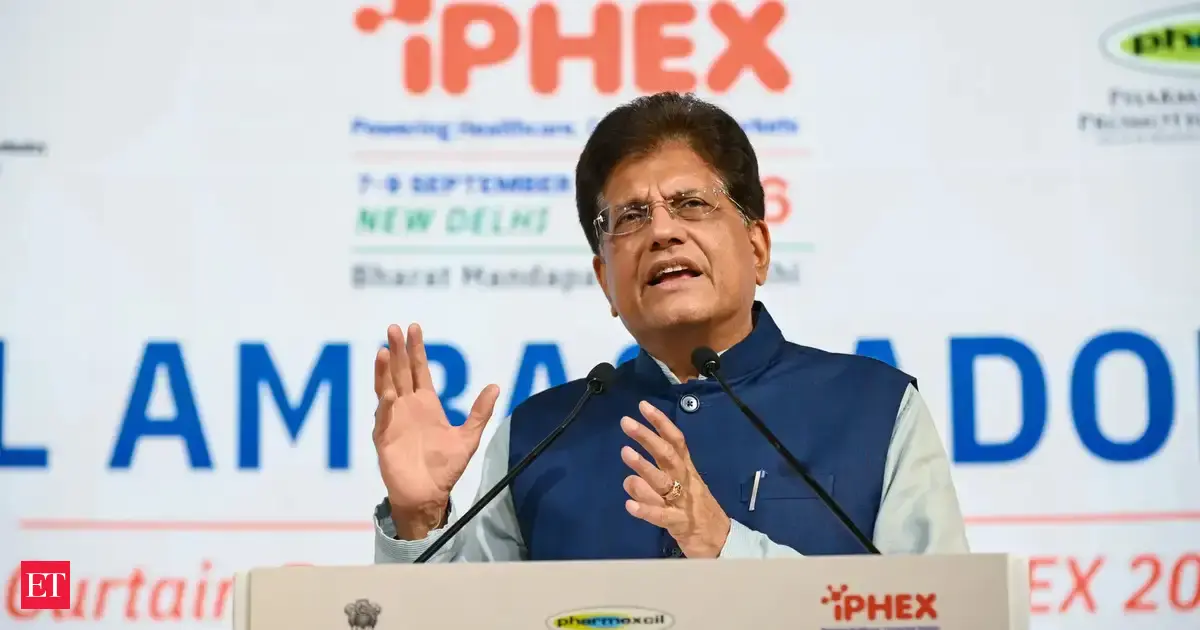
Commerce and Industry Minister Piyush Goyal on Thursday said India is protecting its economy from unfair trading practices of certain geographies where overcapacity, dumping of goods into India at predatory pricing are observed, according to news agency PTI. Speaking at the annual meeting of India Global Innovation Connect, Goyal stated that such measures are part of global trade realities and not unique to India.
Global Steel Protectionism and India's Response
Goyal specifically cited the European Union (EU), the United States (US), and the United Kingdom (UK) as examples of economies trying to safeguard their domestic steel industry against competition. "When the EU, the US, and the UK are trying to safeguard their domestic steel industry against competition, or even India for that matter, protecting our economy from unfair trading practices of certain geographies, where we find overcapacity, dumping of goods into India at predatory pricing. These are the realities of life you have to confront," he said, as reported by PTI.
He explained that in such situations, countries typically try to find ways to mitigate the challenges, ignoring some practices while taking action against others. "Usually in these situations you try to find ways to mitigate it, you ignore some, you take action against some countries," Goyal added.
WTO Framework Still in Place Despite Challenges
Acknowledging the weakening of multilateral institutions, the minister said the World Trade Organization (WTO) is currently "not very effective right now." However, he maintained that international trade largely continues under its framework. "Fortunately, the WTO as a forum is not very effective right now. So action has to be almost bilateral… but all world trade, at the aggregate, is still very much in its place, still working under the WTO framework," Goyal stated.
He noted that while countries may adopt different standards and protection measures for domestic reasons, global trade continues to function within a rules-based system.
India's FTA Strategy and Investments
Goyal highlighted India's proactive trade policy, noting that the country has signed nine free trade agreements (FTAs) in the last three to three-and-a-half years, covering 38 countries. Many of these are developed economies with higher per capita incomes. He also referred to the Trade and Economic Partnership Agreement (TEPA) with the European Free Trade Association (EFTA), under which member countries have committed to invest USD 100 billion in India over 15 years. According to him, such arrangements are part of a broader strategy to deepen economic engagement, attract investment, and strengthen supply chain integration.
Focus on Innovation, IPR, and Infrastructure
On domestic policy, the minister said India is working to strengthen innovation capacity and improve the investment environment. The government is engaging with companies and partner countries to identify sectors where innovation-led investments can be encouraged, while also reviewing intellectual property rights (IPR) laws to make them more contemporary. "We are continuously looking at IPR laws to make it contemporary," he added.
Goyal also highlighted infrastructure expansion and regulatory reforms as key drivers of investment inflows, including work on airports, ports, highways, and power systems. He said India’s economic growth ambitions are tied to deeper global integration, adding that long-term expansion would depend on higher standards, technological advancement, and stronger participation in global trade networks.
The minister emphasized that while incentives have a role to play, creating a supportive ecosystem is equally important for attracting research and development activities. He acknowledged that India must invest more deeply in building an innovation culture.
Sources: