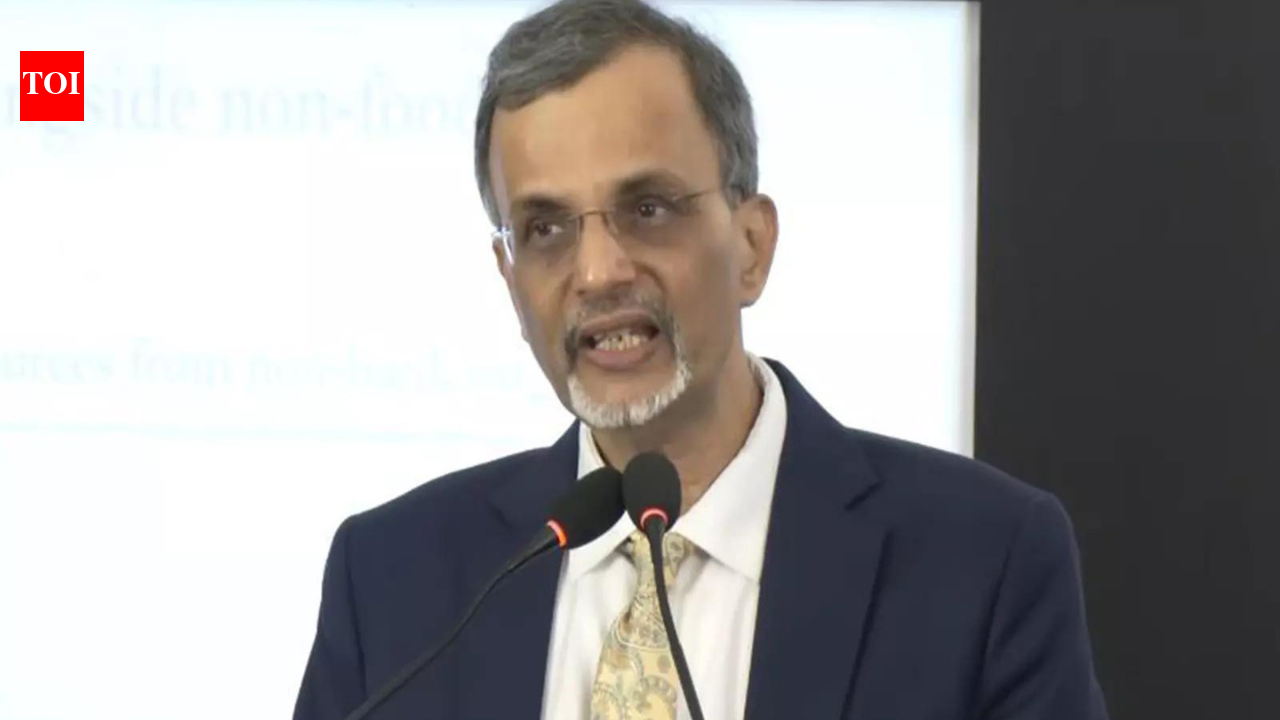
Chief Economic Adviser V Anantha Nageswaran has defended the credibility of India's GDP statistics, asserting that the country does not use revisions in methodology or base years to artificially boost economic growth figures, according to a report by Business Today citing an interview with news agency ANI.
Defending GDP Methodology
Responding to concerns raised by some economists over India's GDP estimates, Nageswaran stated that GDP measurement is an estimate in every country and that India follows internationally accepted statistical practices. "GDP is an estimate. No country can pretend that they have an accurate way of measuring the GDP," he said, as quoted by ANI.
Nageswaran argued that India's recent GDP rebasing exercise itself demonstrates that the government is not attempting to inflate economic output through statistical revisions. "If they had said Indian GDP was no longer 354 lakh crores but 384 lakh crores, people would have accepted that. That is what many countries do. In fact, we are the only country which brought it down," he said, referring to the revision following the change in base year and methodology. "So we are not trying to use any of these methodological changes to bump up our numbers," he added.
| Key Point | CEA's Statement |
|---|---|
| Methodology use | "We don't use the GDP methodological revisions to bump up numbers artificially." |
| Rebasing outcome | India brought down its GDP estimate, unlike many countries. |
| Philosophy | "We let the statistics speak for themselves." |
International Scrutiny
Addressing observations from international institutions, Nageswaran said questions raised by organizations such as the International Monetary Fund (IMF) have largely related to methodology rather than the credibility of India's data. "IMF, for example, they only questioned us not on the reliability, but on the fact that some of the methodologies need improvement," he said, adding that such improvements have since been undertaken.
Criticism Rooted in Expectations
Nageswaran also argued that criticism of GDP estimates often stems from expectations about the economy rather than concerns over the quality of the data. "I think the problem with some of these critiques is that if the number doesn't meet their expectations, then they are willing to call it, 'I don't have trust in that number,'" he said, as quoted by ANI.
Recalling the sharp economic contraction during the Covid-19 pandemic, he noted that India's GDP figures were widely accepted when they reflected a steep decline. "In the first quarter, April to June 2020, Indian GDP went down by 25 per cent year on year. At that time, nobody said this is a much exaggerated fall. I don't trust the Indian GDP numbers," he said. "If the statistics doesn't confirm my belief or wish that the Indian economy is actually in a bad state, then the statistics are unreliable. So I find this inconsistency difficult to accept," Nageswaran added. The CEA concluded that India's statistical framework is focused on producing reliable data rather than numbers that support any particular narrative. "We produce reliable statistics. We follow internationally accepted methods and we don't use the GDP methodological revisions to bump up numbers artificially," he said.
Sources: