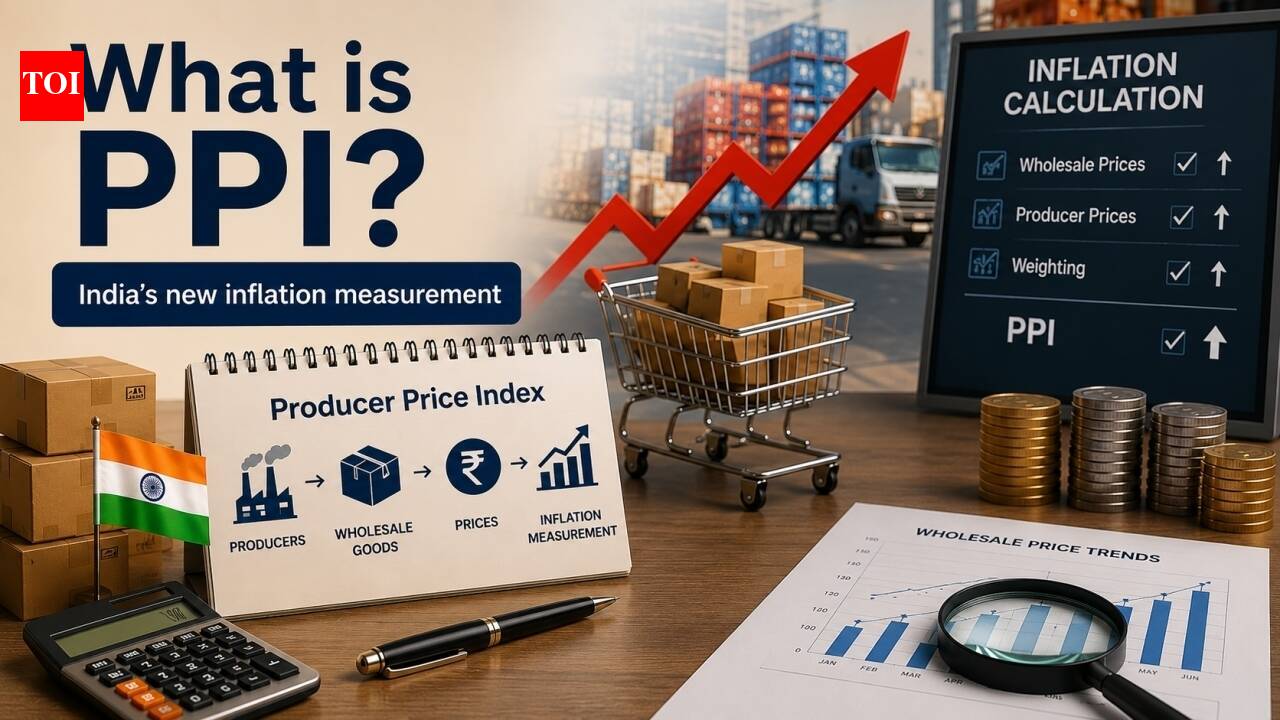
India on Monday released its producer price index (PPI) data for goods and services for the first time, paving the way for the gradual replacement of the wholesale price index (WPI) over the next five years, according to a PTI report. The move aligns India with practices in advanced economies and follows recommendations from the International Monetary Fund (IMF), the report said.
Policy Shift to PPI
The Commerce and Industry Ministry announced that the release of the WPI index would be discontinued after five years. Along with the May wholesale inflation data, the government released output and input PPIs for the first time. "It also explains how inflation experienced by producers on input items is passed through the output being produced," the ministry said. The availability of both output and input PPIs would provide a better understanding of price movements in output items as well as the inputs used by industries, it added.
PPI Structure and Coverage
The revised base year for both WPI and PPI is 2022-23, covering 957 items. The All-India Output PPI for all commodities stood at 109.6 in May 2026, compared with 108.6 in April 2026. Output PPI inflation rose to 9.4% in May from 8.1% in April, in line with the increase in wholesale inflation to 9.68% from 8.26% over the same period.
The All-India trial Input PPI for the manufacturing sector stood at 104.9 in May 2026. The ministry said the input PPI is being published on an experimental basis to assess data quality and obtain feedback from stakeholders and users.
In the first phase, Service PPI covers banking, securities transactions, insurance, pension fund management, railways, air passenger transport and telecom services. The remaining services will be covered in the next phase using data collected through price surveys and GSTN.
Weightage and Sectoral Breakdown
Manufactured items carry the highest weight in Output PPI (Goods) at 69.93%, followed by agriculture, forestry and fishing at 22.16%, electricity at 4.49%, and mining and quarrying at 3.42%. For Service PPI, no weights have been assigned because the seven services do not yet cover the entire services sector.
| Component | Output PPI (Goods) Weight | WPI Weight |
|---|---|---|
| Manufactured products | 69.93% | 63.12% |
| Agriculture, forestry, fishing | 22.16% | 22.76% (primary articles) |
| Electricity | 4.49% | — |
| Mining and quarrying | 3.42% | — |
| Fuel and power | — | 14.11% |
The revised WPI and Output PPI (Goods) series cover representative goods transacted in the economy, while Input PPI (Goods) covers representative goods consumed by the manufacturing sector, according to the ministry.
Transition Timeline and Expert Views
The transition follows the submission in April of a report by a working group headed by former NITI Aayog member Ramesh Chand. The panel was tasked with revising the WPI base year from 2011-12 to 2022-23 and compiling a PPI series with 2022-23 as the base year.
"Unlike WPI, the PPI — comprising a set of indicators such as Output PPI (Goods) and Services PPI — provides a more accurate measure of price changes from producers' perspective, thereby enhancing its suitability for use in National Accounts/GDP compilation and estimation of real value addition," Chand said in the report.
The data was released by the Commerce and Industry Ministry. The PPI's inclusion of services and its coverage of both output and input prices makes it a more comprehensive measure of price changes at the producer level, according to the ministry. The five-year phase-out period gives businesses and analysts time to adapt to the new index, which better reflects economic conditions in line with global standards.
Sources: