iGEN
Visit IGEN World Explore IGEN Expo
EXPLORE UPGRADE PLANS
BREAKING
New Senate bill targets 'chameleon carriers' that reopen to escape penalties Werner Enterprises Posts Highest Revenue Per Truck Growth in One-Way Segment in a Decade CMA CGM and Stonepeak Launch United Ports LLC in $2.4 Billion Terminal Joint Venture UPS shift away from Amazon shows bigger payoff Lanesurf: 62% of Loads Get Vetted Carrier Offers Before Brokers Arrive India-China Border Trade Via Lipulekh Resumes Aug 1; China Permits 20 Traders Geopolitics Drives CMA CGM Q2 Profit Surge of 42% as Volumes and Rates Climb Benchmark Diesel Price Rises Third Week as Futures Plunge; Spread Hits Record Indian Government Limits Sugar Dealers to 400 Tonnes Stock Until November to Curb Hoarding Tenants signing longer leases for larger warehouses as 3PLs lock in capacity New Senate bill targets 'chameleon carriers' that reopen to escape penalties Werner Enterprises Posts Highest Revenue Per Truck Growth in One-Way Segment in a Decade CMA CGM and Stonepeak Launch United Ports LLC in $2.4 Billion Terminal Joint Venture UPS shift away from Amazon shows bigger payoff Lanesurf: 62% of Loads Get Vetted Carrier Offers Before Brokers Arrive India-China Border Trade Via Lipulekh Resumes Aug 1; China Permits 20 Traders Geopolitics Drives CMA CGM Q2 Profit Surge of 42% as Volumes and Rates Climb Benchmark Diesel Price Rises Third Week as Futures Plunge; Spread Hits Record Indian Government Limits Sugar Dealers to 400 Tonnes Stock Until November to Curb Hoarding Tenants signing longer leases for larger warehouses as 3PLs lock in capacity
Home ›› Business ›› Economy ›› India's Transition from WPI to PPI: Strengthening Inflation Measurement for Better Policy Making

India's Transition from WPI to PPI: Strengthening Inflation Measurement for Better Policy Making

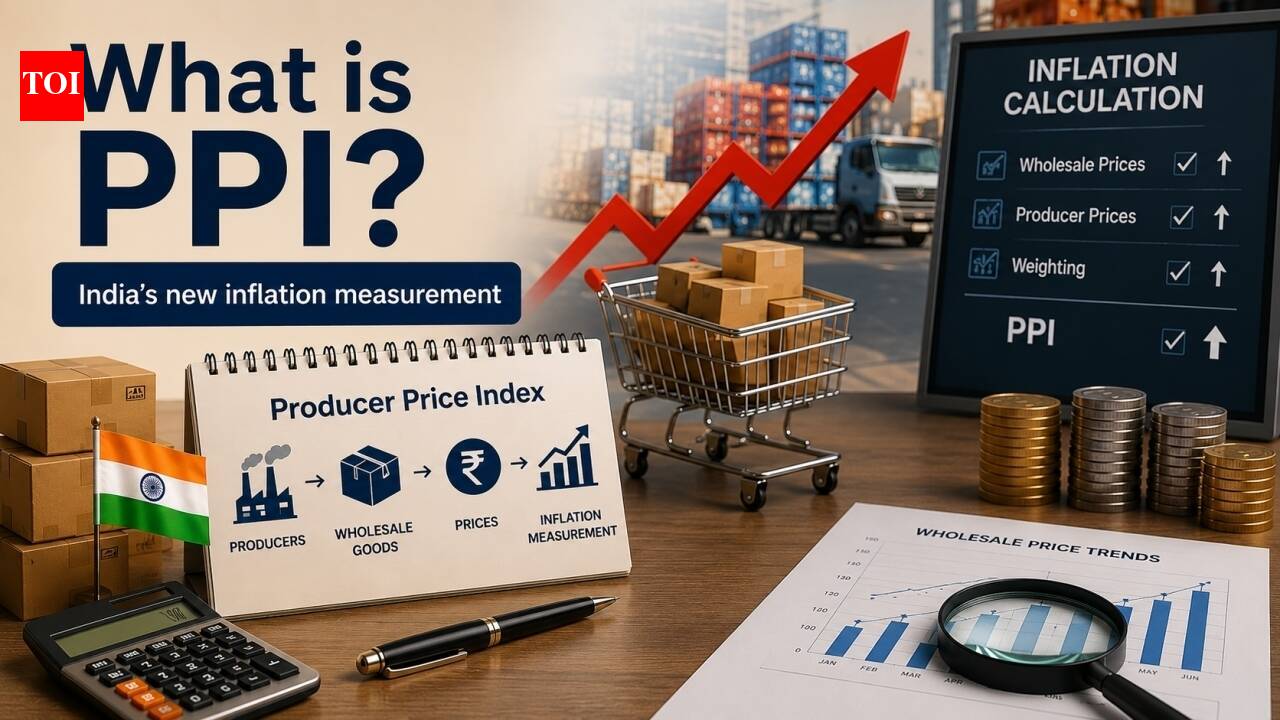
India is transitioning from the Wholesale Price Index (WPI) to a Producer Price Index (PPI), with the first release based on the 2022-23 base year. The PPI addresses WPI's shortcomings, including inclusion of indirect taxes and lack of service sector coverage, and will improve inflation measurement for policy making. Businesses using WPI for indexation and contracts have a five-year transition period to adjust.

iG
iGEN Editorial
July 8, 2026
India's Transition from WPI to PPI: Strengthening Inflation Measurement for Better Policy Making

India is set to replace its long-standing Wholesale Price Index (WPI) with a more comprehensive Producer Price Index (PPI), a shift that will refine inflation measurement and enhance monetary policy transmission, according to DK Srivastava, Chief Policy Advisor at EY India. The first PPI release will use the 2022-23 base year, the same as the latest WPI series, compiled by the Office of the Economic Adviser under the Ministry of Commerce and Industry.

Why the Shift from WPI to PPI?

WPI, which has been published alongside the Consumer Price Index (CPI), suffers from two major shortcomings, Srivastava explained. First, WPI includes indirect taxes and wholesale margins, making it a poor reflection of pure production-stage prices. Second, WPI does not capture the movement of prices in the services sector, which now accounts for a significant share of India's output. "As the economy has become more complex and the share of services in overall output has increased, there is a need to also capture movement in service prices," stated the article. PPI, in contrast, captures prices relevant to the production process without the distortion of indirect taxes net of subsidies or wholesalers' margins, providing a clearer view of technological relations in production.

Components of the New PPI

The PPI comprises three sub-indices:

  • Output Producer Price Index (OPPI) – measures prices received by producers for their goods outputs.
  • Input Producer Price Index (IPPI) – measures prices paid by producers for their inputs (currently covering only the manufacturing sector on a trial basis).
  • Service Producer Price Index (SPPI) – reflects prices received by producers of services. Initially, SPPI covers seven major services: banking, securities transactions, insurance, management of pension funds, railways, air passenger services, and telecom.

All three indices exclude indirect taxes and profit margins, though production subsidies are included.

Implications for Businesses and Contracts

WPI has been widely used by businesses, government agencies, and contracting authorities for indexation, cost escalation, and contract pricing due to its close linkage with input costs, tradable goods prices, energy prices, and supply-side shocks. Indexation to WPI directly affects projected cash flows, tariff revisions, valuation outcomes, and risk allocation between contracting parties. To allow a smooth transition, the WPI compilation will be continued for another five years, giving parties time to adapt contractual arrangements from WPI to PPI.

Weight Structure and Improved Coverage

The PPI is expected to better reflect production cost conditions, including sectoral cost differences. The capture of production structure under PPI is wider than under WPI, and the weight structures are also different, noted the article. This broader coverage will help policymakers and analysts track price movements across both goods and services, strengthening the measurement of inflation for monetary and fiscal policy decisions.

Next Milestone

The first official PPI release with the 2022-23 base year is the immediate milestone, after which the five-year transition period for contractual indexation begins. Businesses and analysts will watch for further methodological details and regular publication schedules from the Office of the Economic Adviser.


Sources: Business-Today

Keep Reading

Recommended Stories

RBI Governor Malhotra Signals Patience on Inflation, Credit Growth Spurt Business

RBI Governor Malhotra Signals Patience on Inflation, Credit Growth Spurt

RBI Governor Sanjay Malhotra signaled the central bank is unlikely to tighten policy in response to elevated inflation and strong credit growth, attributing price pressures to supply-side factors and noting no immediate distress in fast-growing loan segments. CPI is projected at about 5.1% this year, slightly above target but driven by specific sectors.

July 18, 2026
India launches producer price index; wholesale inflation gauge to be phased out in five years Business

India launches producer price index; wholesale inflation gauge to be phased out in five years

India on Monday launched its producer price index (PPI) for goods and services, replacing the wholesale price index (WPI) over five years. The new index, with a base year of 2022-23, covers 957 items and provides both output and input PPI data. Output PPI inflation stood at 9.4% in May 2026, in line with rising wholesale inflation.

June 15, 2026
India inflation likely rose to 4% in May as food, fuel costs climb Business

India inflation likely rose to 4% in May as food, fuel costs climb

A Reuters poll of 38 economists forecasts India's consumer price inflation rose to 4.0% in May, up from 3.48% in April, driven by rising vegetable prices and four fuel price hikes by state-owned retailers. The Reserve Bank of India kept rates unchanged last week, but raised its inflation forecast for the fiscal year to 5.1%. Economists warn that wholesale price inflation, which accelerated to a 3-1/2-year high of 8.3% in April, will feed through to consumer prices gradually.

June 15, 2026
RBI MPC to Adjust Inflation and Growth Forecasts Amid Rupee Slide Business

RBI MPC to Adjust Inflation and Growth Forecasts Amid Rupee Slide

The Reserve Bank of India's Monetary Policy Committee is expected to adjust its inflation and growth forecasts in response to ongoing geopolitical tensions and a depreciating rupee. The central bank may raise its inflation forecast to 5% and lower GDP growth to 6.5%.

June 1, 2026