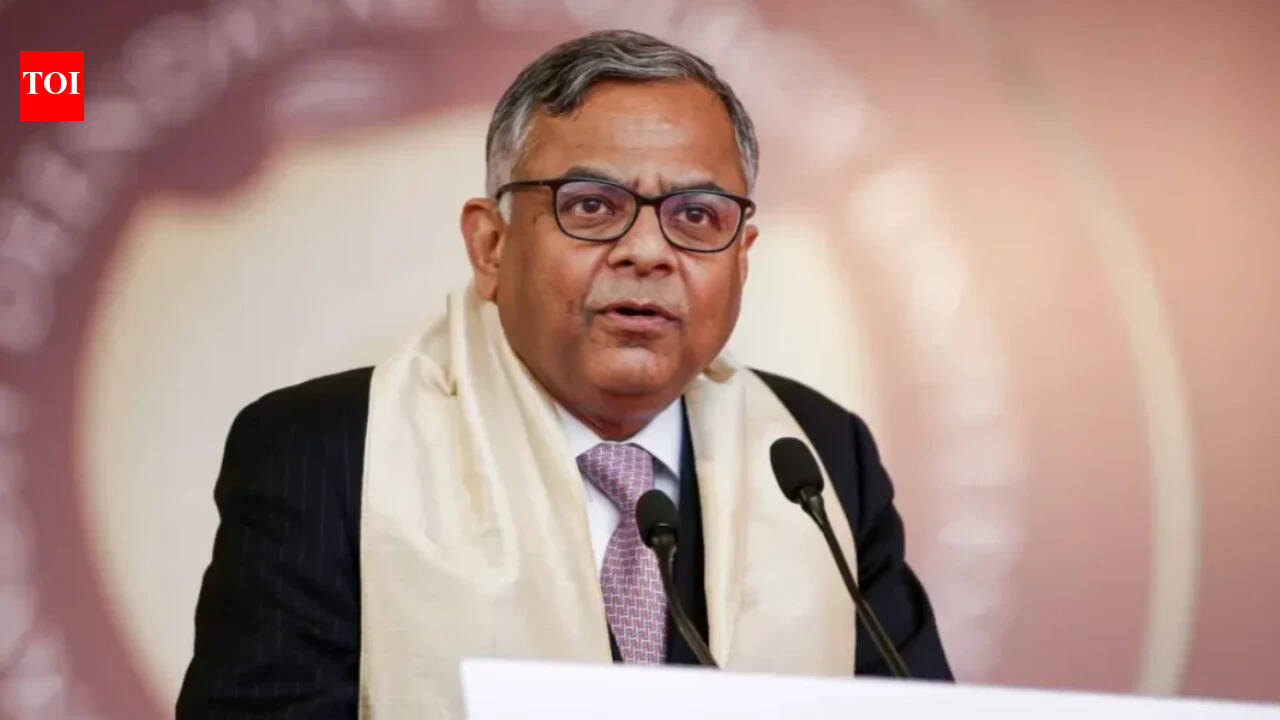
Tata Consumer Products has crossed Rs 20,000 crore in annual revenues, marking what chairman N Chandrasekaran called the completion of its transformation into a multi-category consumer goods group, according to the company's annual report.
Financial Milestone
The company, which began as a tea joint venture with British firm Finlay, crossed the Rs 20,000 crore revenue mark in FY26. The achievement represents a significant scaling from its origins as a single-product tea business.
Growth Drivers and Acquisitions
Tata Consumer has built its newer “growth” businesses — packaged foods, pantry staples and ready-to-drink beverages — through a mix of organic expansion and acquisitions. These now account for more than 30% of its India portfolio, according to the company's statement to shareholders.
Chandrasekaran told shareholders he expects recent acquisitions — Capital Foods, Soulfull and Organic India — to grow at 25% a year. The three acquired companies operate at gross margins of 48%, compared with 35–36% for the rest of the portfolio.
| Metric | Value |
|---|---|
| Annual revenue (FY26) | Over Rs 20,000 crore |
| Growth businesses share of India portfolio | >30% |
| Expected CAGR of recent acquisitions | 25% |
| Gross margin of acquired companies | 48% |
| Gross margin of rest of portfolio | 35–36% |
Margins and Investment
Innovation accounts for 4.5% of sales, against a target of 5%. Research & development spending remains modest, around Rs 70 crore, or less than 0.5% of revenues, though Chandrasekaran said investment would increase. Capital expenditure typically runs at 2.4–2.5% of turnover, and combined with R&D amounts to around 3% of revenues.
Capex will rise to Rs 700 crore in FY27, driven by a new tea extraction unit. The chairman said Tata Consumer would continue to acquire to fill portfolio gaps and that margins would remain a focus.
The company launched around 80 products in FY26, demonstrating its commitment to innovation despite modest R&D spend.
Tata Starbucks Expansion
Tata Starbucks, the company's joint venture with the American coffee chain, turned EBIT and EBITDA positive in FY26 and now operates 502 stores in India. Chandrasekaran said the JV plans to add 50 to 100 stores a year, and that he and his Starbucks partner believed the business could eventually scale to 8,000 stores in India.
Implications for Trade and Supply Chain
For international trade executives and logistics professionals, Tata Consumer's rapid expansion — especially through acquisitions and new product launches — signals rising import demand for raw materials such as tea, coffee, grains and packaging inputs. The company's focus on packaged foods and ready-to-drink beverages will increase its reliance on global commodity supply chains. The new tea extraction unit (capex of Rs 700 crore in FY27) will likely require specialised equipment imports, creating opportunities for foreign machinery suppliers. Additionally, Tata Starbucks' aggressive store build-out (50–100 stores annually) will drive steady demand for coffee beans, equipment and food service supplies from international sources. With gross margin discipline (48% for acquired units vs 35–36% for legacy), the company is expected to maintain stringent procurement criteria, favouring suppliers who can offer both quality and cost efficiency. Customs and logistics firms serving Tata Consumer should prepare for higher containerised imports of food ingredients and industrial machinery in the coming fiscal years.
Sources: