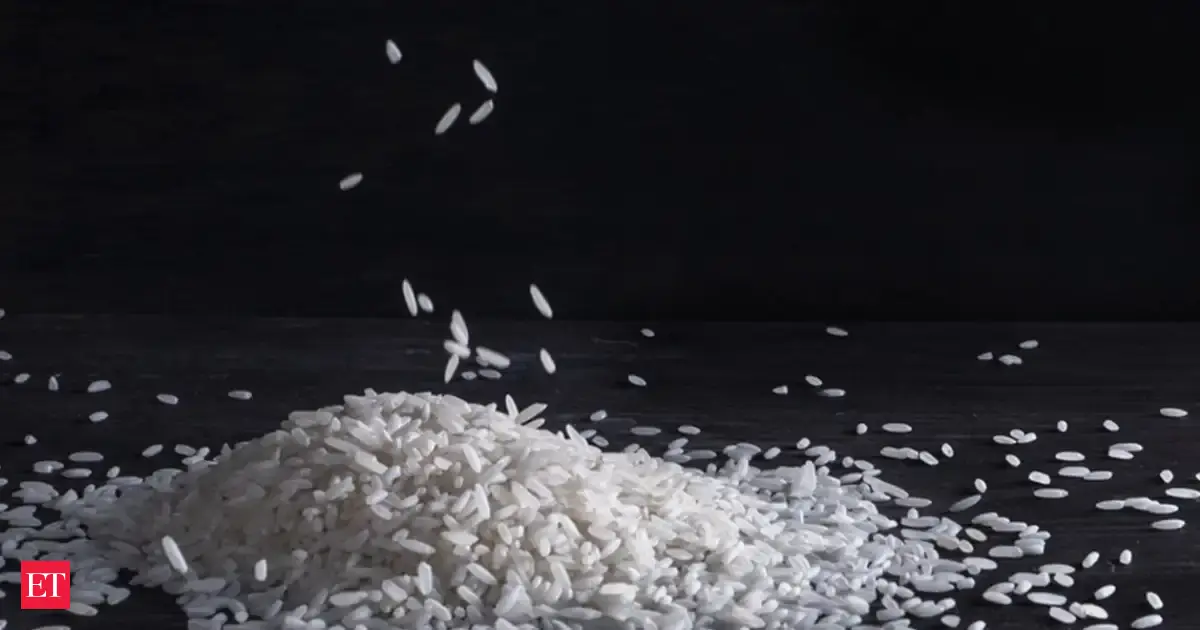
Indian non-basmati rice prices have climbed by over $18 per tonne over the past few weeks in the global market, driven by the El Nino weather pattern, but they remain the most competitive on a free-on-board (f.o.b.) basis, according to a report in The Hindu Business Line.
Price Drivers: El Nino and Monsoon Deficit
BMI, a research agency of Fitch Solutions, has raised its annual average price forecast for rice, expecting prices to remain supported at $14.1/cwt in Q3 and $14.3/cwt in Q4, as concerns over a potentially intensifying El Nino keep a floor under prices. Over 80% of global rice exports originate from South and South-East Asia, the region where El Nino-related weather disruptions are most pronounced. Despite this, BMI noted that sizeable carryover inventories accumulated during the 2025-26 season will prevent prices from returning to historical peaks.
Domestic rice prices in India have also risen, with M Madan Prakash, president of the Tamil Nadu Agri Commodities Exporters Association, stating: “The price of domestic rice has increased from ₹30 a kg to ₹34.” The increase follows a 37% deficient South-West monsoon in June; though the monsoon has since gathered pace, it remains 15% deficient as of July. As of July 24, the area sown was 2% down at 234.43 lakh hectares. However, rice stocks with the Food Corporation of India (FCI) stood at 40.31 million tonnes as of July 1, along with paddy that can yield an additional 38.74 million tonnes of rice.
Competitive Dynamics: f.o.b. vs. CFR
While Indian rice remains cheapest on an f.o.b. basis, the cost-and-freight (CFR) picture is different. New Delhi-based exporter Rajesh Paharia Jain explained: “Though Indian rice f.o.b prices are lower than competing nations, on a CFR basis, it is $20 a tonne higher. Hence freight charges to Africa are lower” from Pakistan. Pakistani rice benefits from cheaper container availability at Gwadar port, which is “fully under the control of China, resulting in quick loading and unloading,” Jain added. In contrast, container availability from Indian ports such as Kakinada, Kandla, Visakhapatnam, Tuticorin, and Chennai is tight. However, Pakistan has only limited volumes of rice for export.
Global Tenders and Industry Fragmentation
Three global tenders are currently active — from Mauritius, Malaysia, and the UN’s World Food Programme. Jain noted that Indian exporters are being “hit by the CFR rate” in these tenders. Despite the f.o.b. advantage, a trade source observed that Indian exporters are not trying to set a price narrative, questioning “We are at least $30 a tonne cheaper than even Pakistan. Is the quality of our rice bad than other countries?” Jain blamed a lack of industry unity, stating: “Some of the cash-rich big companies are looking only at volume and not prices. This is a problem.” Nevertheless, India is expected to retain its 42% market share in the global rice market.
Supply-Demand Outlook
The International Grains Council (IGC) estimates rice production for the 2026-27 season (September-August) at 543 million tonnes, down 3 million tonnes from 2025-26. Consumption is forecast to rise by 6 million tonnes to 544 million tonnes, while trade is seen increasing by 2 million tonnes to 62 million tonnes. Ending stocks are projected to fall by 2 million tonnes to 195 million tonnes. This tighter balance, combined with El Nino risks, suggests prices are unlikely to decline sharply in the coming months, though ample carryover stocks should cap extreme upside.
| Metric | 2025-26 | 2026-27 (est.) | Change |
|---|---|---|---|
| Production (mt) | 546 | 543 | -3 |
| Consumption (mt) | 538 | 544 | +6 |
| Trade (mt) | 60 | 62 | +2 |
| Ending stocks (mt) | 197 | 195 | -2 |
Source: International Grains Council (IGC)
Sources: