
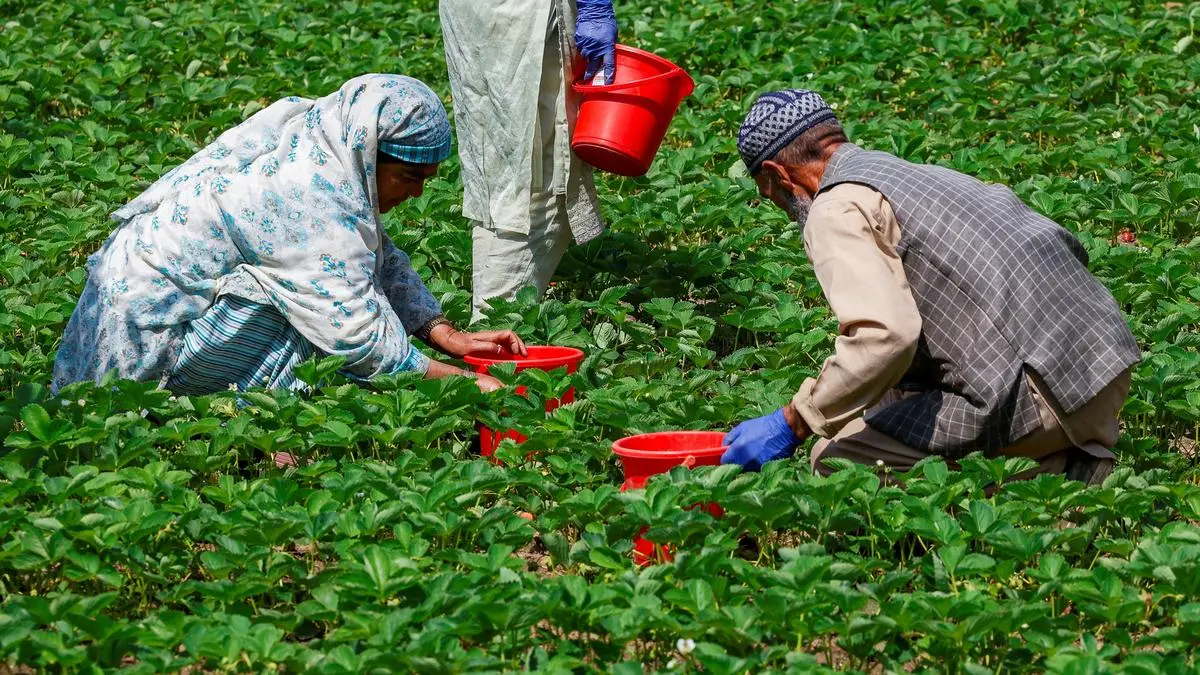
India's agricultural sector is at a crossroads, with smallholder farmers representing the backbone of the industry. Despite this, mechanisation levels remain low, averaging around 45%, compared to over 90% in Europe and North America. This gap highlights a critical need for reform in small-farm mechanisation.
The Mechanisation Gap
The average landholding in India is just 1.06 hectares, with nearly 86% of holdings classified as small and marginal. Mechanisation levels drop to 33% for weeding and 34% for harvesting, far below the desired benchmark of 5 kW per hectare. This lack of mechanisation is compounded by a declining agricultural workforce, which fell from 46.5% in 2020–21 to 45.5% in 2021–22.
Supply-Side Challenges
The primary challenge for smallholder farmers is affordability. Institutional credit is skewed towards crop loans, leaving little room for mechanisation loans. Land mortgage requirements further exclude lessee farmers. Without access to affordable machinery, productivity stagnates, trapping farmers in a cycle of low output and limited resources.
Demand-Side Dynamics
Despite these challenges, demand for mechanisation is strong. When affordable equipment becomes accessible, adoption rates increase rapidly. However, the lack of awareness, distribution, and financing options limits access for many farmers. Innovative solutions like leasing models, group ownership, and pay-as-you-use systems could help bridge this gap.
Future Outlook
Mechanisation has the potential to transform Indian agriculture, impacting decisions on crop selection, harvest timing, and risk management. As the sector evolves, the focus must shift towards making compact, affordable machinery accessible to smallholder farmers. Upcoming data releases from the USDA and FAO will provide further insights into global agricultural trends and their implications for India.
| Region | Mechanisation Level (%) | Farm Power (kW/ha) |
|---|---|---|
| India | 45 | 2.48 |
| Europe | 90+ | 5+ |
| North America | 90+ | 5+ |
"The missing middle in Indian agriculture is not about innovation but about access and affordability," says Ravindra Agrawal.


