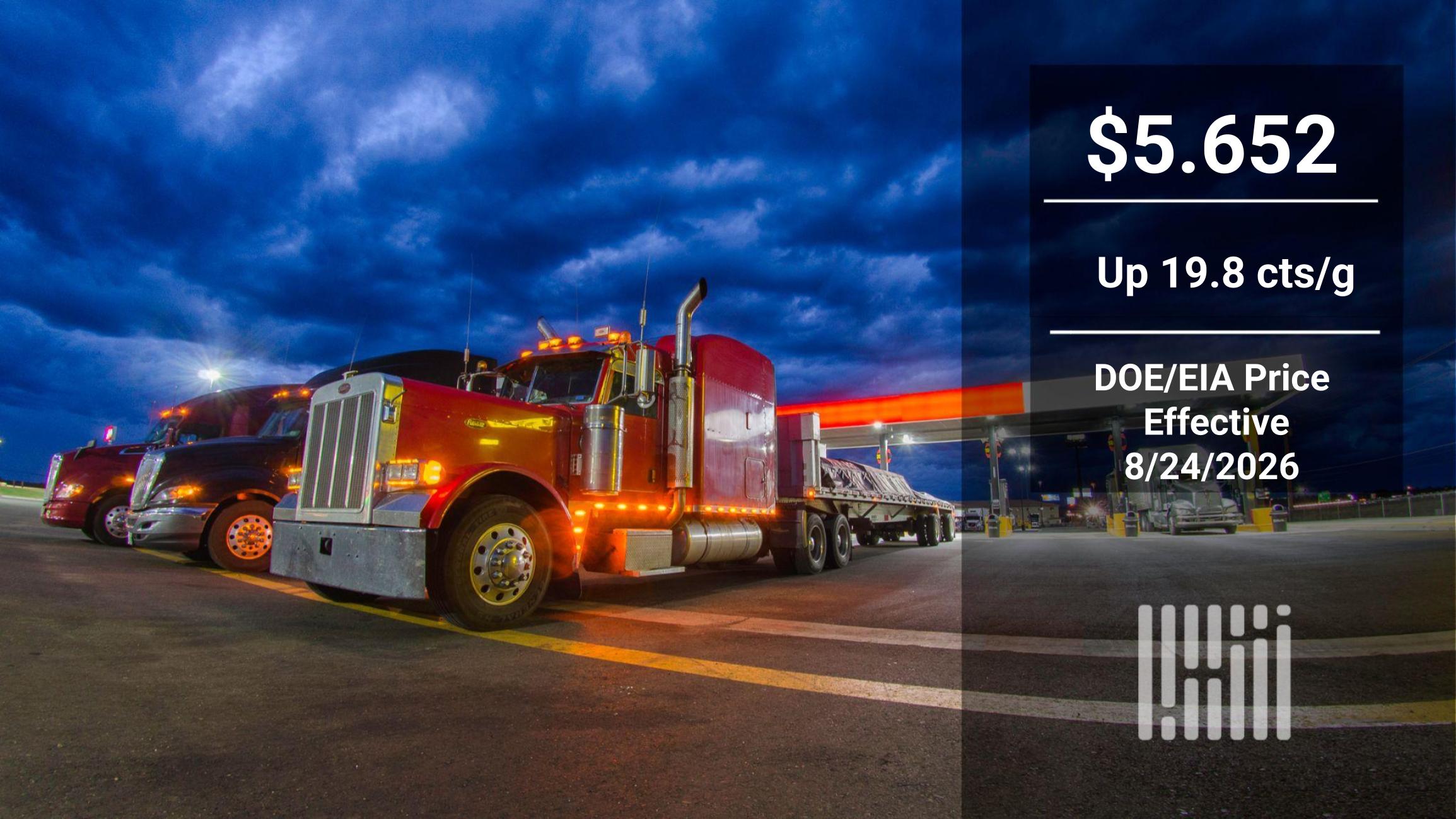
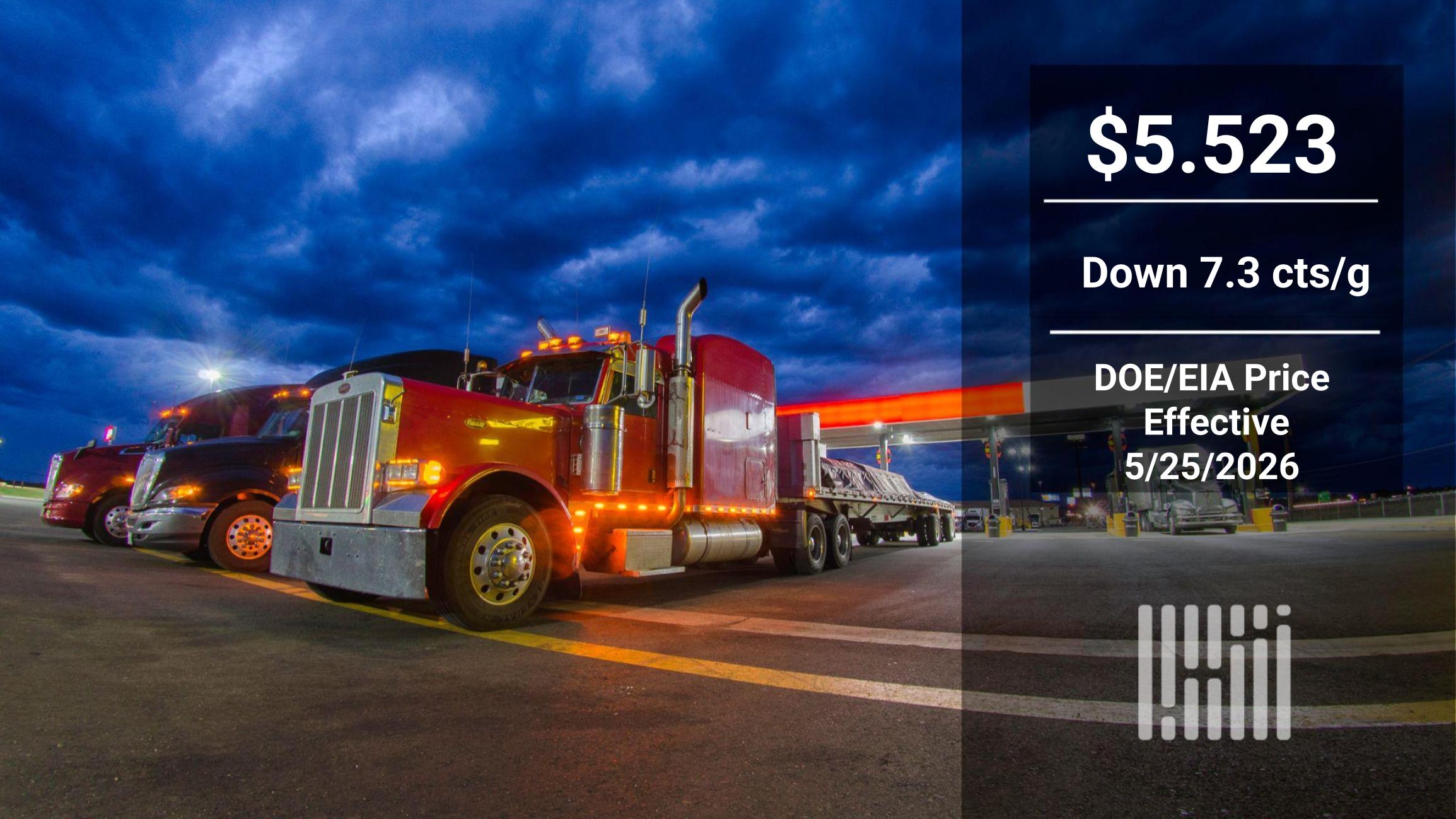
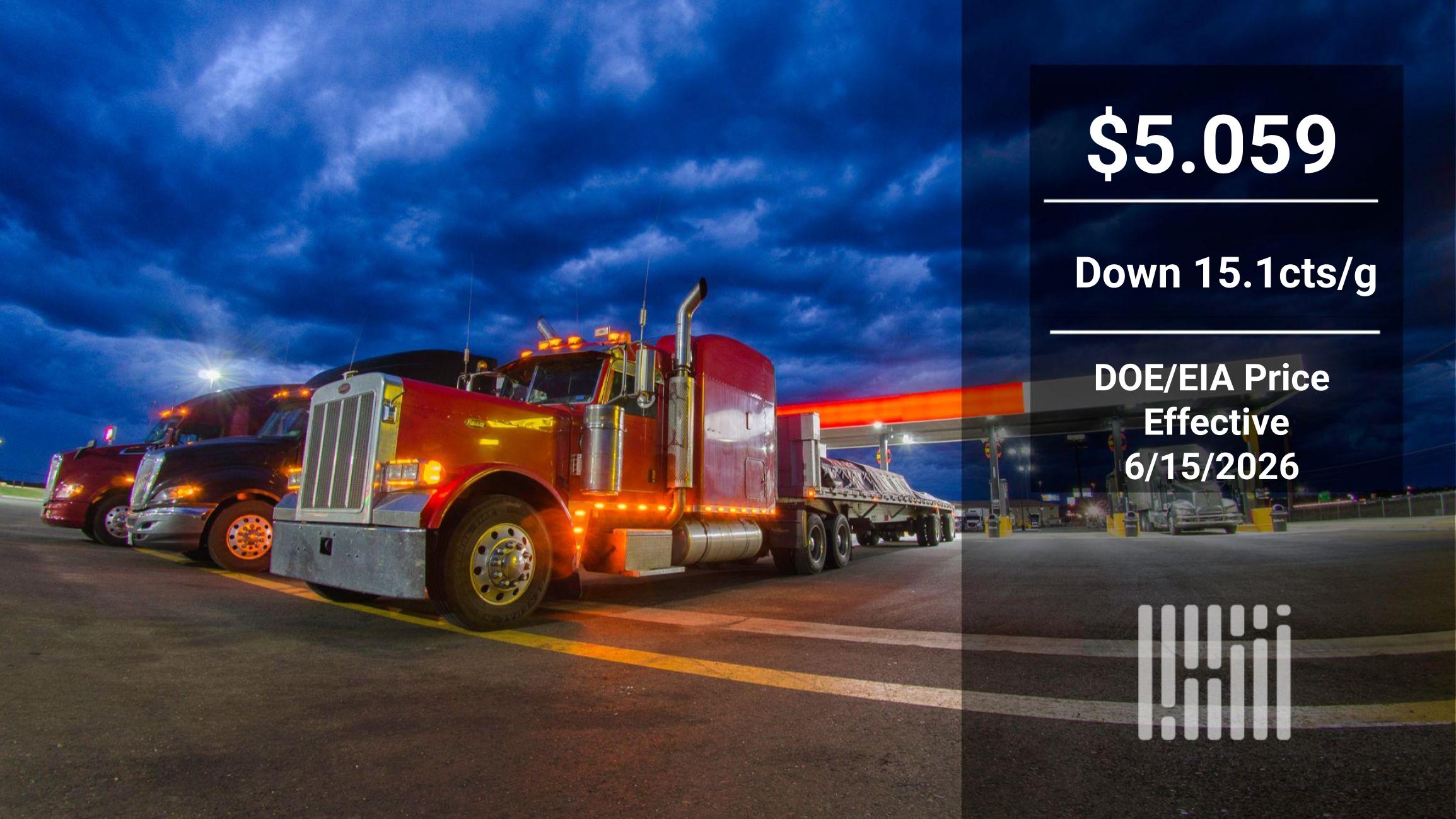
The benchmark diesel price used as the basis for most fuel surcharges rose this week by the second-largest amount since the start of the Iran war, according to the Department of Energy/Energy Information Administration (DOE/EIA). The average retail diesel price climbed 33.8 cents/gallon to $5.134/g, published Tuesday but effective Monday. This increase is second only to the 96.2 cts/g jump on March 9, the first full week after the launch of military action against Iran by the U.S. and Israel.
Price Surge Details
With the benchmark price moving up sharply two weeks in a row, it is now 55.6 cts/g higher than where it stood just three weeks ago. Retail prices are reacting after the fact to increases in ultra low sulfur diesel (ULSD) on the CME commodity exchange, and they likely reflect only a part of the increases since last week’s posting due to the normal lag.
The pace of change in the futures market could add $1/gallon to ULSD in the next few days. ULSD’s low settlement in the recent cycle was $3.1822/g on July 2. In the 11 settlements since then, ULSD rose in seven of those days, with increases as high as just over 39 cts/g, 27 cts/g, and 19 cts/g. The biggest one-day decline was 8.59 cts/g. The result: ULSD on CME settled Monday at $4.119/g, up 5.44 cts/g on the day and the highest since May 19. Tuesday trade showed a slight further gain of less than 2 cts/g.
| Key ULSD Settlement Dates | Price ($/g) |
|---|---|
| July 2 (recent low) | $3.1822 |
| July 21 (Monday) | $4.119 |
| Change | +$0.9368 |
Supply Disruptions Drive Rally
Bullish voices are becoming more prominent as military action resumes. Adding to market sentiment Tuesday were reports of possible Houthi attacks on Saudi Arabia and the Bab el-Mandeb strait on the southern end of the Red Sea. Such attacks could impact Saudi exports of oil out of Yanbu, the western terminus of the east-west pipeline that allows the Kingdom to divert exports from the Persian Gulf.
Matt Smith, lead energy analyst at Kpler, said in a CNBC interview Monday that oil tanker exports out of the Strait of Hormuz have fallen to as little as ten ships total over the prior three days.
"And it's mainly the Iranian stuff. So for all intents and purposes the strait is basically closed. There may be an odd one that is managing to get through (without its transponder on) but essentially we're ground to a halt here again."
Smith noted that some lost crude production from Persian Gulf countries shutting in production—because they couldn’t export—has been offset by a loss of refining capacity in the region, resulting in an absence of products from the market.
Jeff Currie, former head of commodity research at Goldman Sachs, has consistently been among the most bullish voices on the war’s impact. Both Smith and Currie pointed to the strength of product markets. A comparison of the front month contract for Brent crude and ULSD has been either side of $2/gallon for several days, versus less than $1/gallon just before the war began.
Market Outlook
With the benchmark diesel price rising sharply and ULSD futures continuing to climb, the market remains focused on geopolitical disruptions around the Strait of Hormuz and Red Sea. The combination of reduced crude and product exports, coupled with potential Houthi strikes on Saudi infrastructure, supports a bullish outlook for diesel and refined products in the near term. Traders will watch upcoming DOE/EIA inventory data for further confirmation of tightening supply.
Sources: