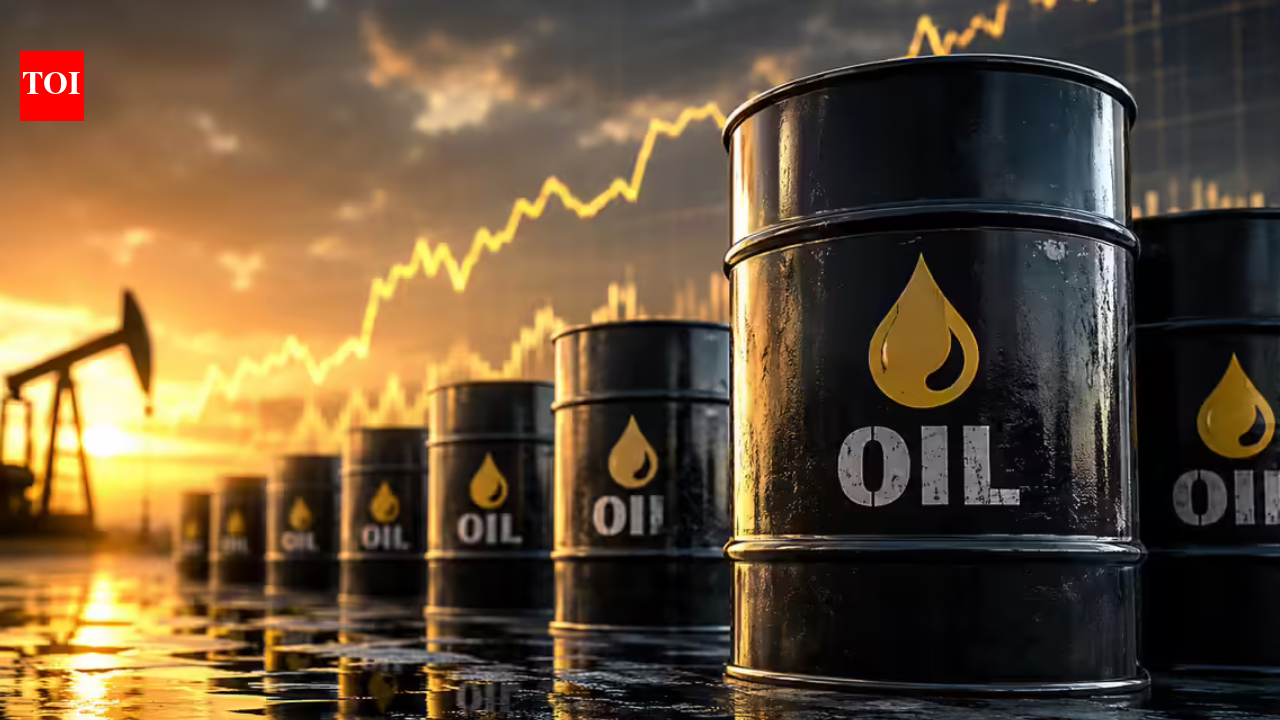
Brent crude oil fell under $80 per barrel on Tuesday for the first time in three months, according to the Times of India. This decline offers potential relief to Indian consumers and government finances, provided the gains on crude hold. The drop comes amid peace talks between the US and Iran, which have boosted market sentiment despite policymakers' caution.
Impact on Indian Economy
DK Joshi, chief economist at Crisil, described the move as a "relief rally" but noted that sustainability depends on demand and supply. "Oil marketing companies are still losing money and govt has given a substantial relief through excise cut. If oil prices come down and stay at a lower level for some time, then the benefit of softening prices can be transmitted to consumers," Joshi said. While Brent dropped to $83 a barrel on Monday, the cost for Indian refiners was estimated at $82.84, narrowing the gap. However, consumer prices are tied to international petrol and diesel rates, which in June were 22% and 43% higher, respectively, than crude.
Supply Dynamics from Iran Talks
The recent de-escalation in the US-Iran conflict is a key driver. Sakshi Gupta, principal economist at HDFC Bank, stated: "The recent de-escalation in the conflict and moderation in oil prices bodes well for both inflation and growth outlook for India." Markets have rallied, with oil marketing company stocks gaining over the last two days alongside softening global prices.
Demand and Inflation Implications
Gupta quantified the macroeconomic impact: with every $10 per barrel increase in oil, inflation tends to rise by 20-30 basis points and growth is dragged by 20 basis points. She added that if oil moves toward $70 per barrel over coming months, it could stabilize the rupee and reduce rising fiscal pressures from higher subsidy costs. Oil marketing companies are losing around Rs 700 crore daily on fuel and cooking gas, resulting in zero direct tax contribution.
Outlook for Prices and Fiscal Policy
Madan Sabnavis, chief economist at Bank of Baroda, provided insights on government finances. He expects the fertiliser subsidy to overshoot but not double, and the LPG subsidy to increase. "There will be no fresh price hikes by oil companies, provided the peace deal works out. We expect the fiscal deficit to be higher than what was budgeted," Sabnavis said. The easing of oil and fertiliser prices offers significant relief to the government, which faces pressure to double support for soil nutrients and bear losses on subsidised gas cylinders.
| Impact Factor | Magnitude | Source |
|---|---|---|
| Brent price fall | Under $80/barrel, first time in 3 months | Times of India |
| Oil marketing company losses | ~Rs 700 crore daily | Times of India |
| Inflation impact per $10 oil rise | +20-30 bps | Sakshi Gupta, HDFC Bank |
| Growth drag per $10 oil rise | -20 bps | Sakshi Gupta, HDFC Bank |
| Petrol price premium over crude (June) | 22% | Times of India |
| Diesel price premium over crude (June) | 43% | Times of India |
The key upcoming data to watch includes the outcome of US-Iran talks and weekly inventory reports. If peace holds and prices sustain below $80, the benefit to Indian consumers and the government's fiscal position could be substantial.
Sources: