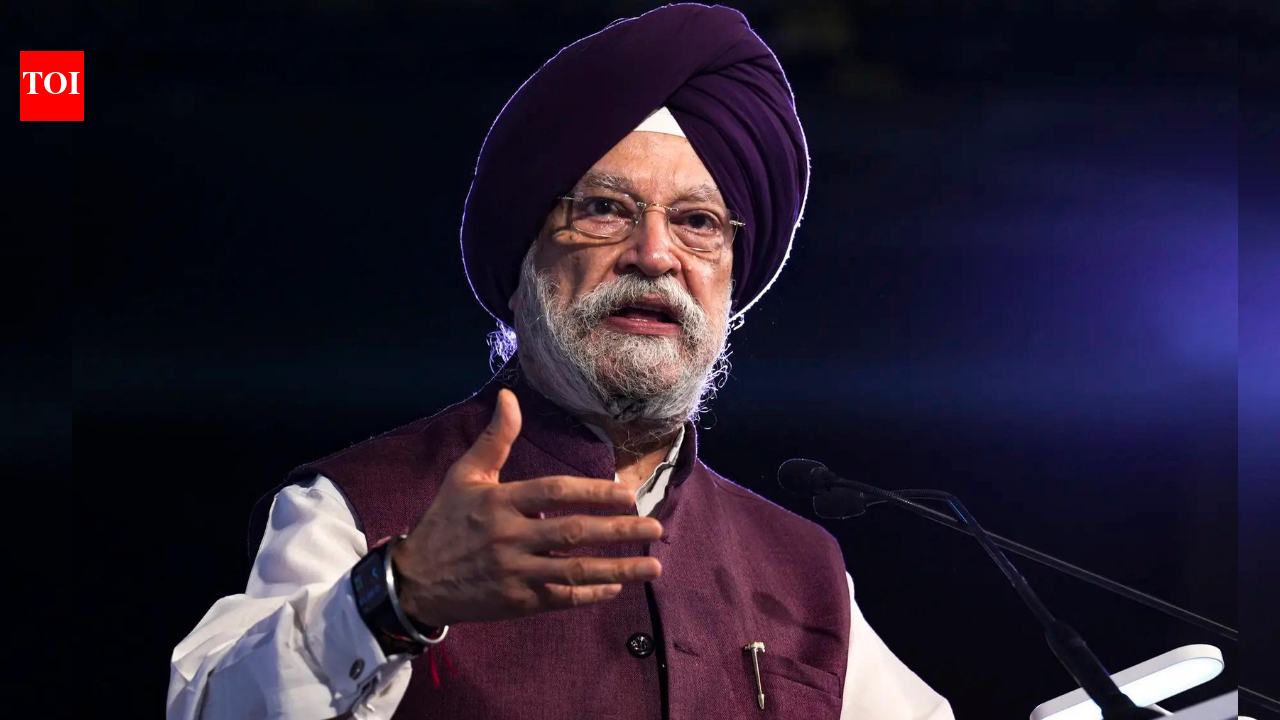
Union Petroleum and Natural Gas Minister Hardeep Singh Puri on Saturday indicated that petrol and diesel prices could be reduced if lower-priced crude oil purchased recently reaches Indian refiners, while asserting that domestic fuel prices have seen only a limited increase despite sharp volatility in global oil markets, according to a report by The Times of India.
Supply-Side Intelligence: Crude Procurement and OMC Margins
Addressing a press conference in Uttar Pradesh's Sonbhadra district, Puri said oil marketing companies (OMCs) were currently processing crude bought at higher prices and any benefit from softer international crude rates would take time to reflect in retail fuel prices. "At present, companies have stocks of crude oil bought at higher prices. When crude purchased at lower prices reaches them, there is a possibility of a reduction in fuel prices," he said, as reported by The Times of India.
The minister highlighted that the Narendra Modi government had reduced central excise duties on petrol and diesel in November 2021, May 2022 and again recently, absorbing a burden of around Rs 10 per litre on both fuels. He also noted that OMCs were currently losing around Rs 1,000 crore per day, but the government had ensured consumers were shielded from the full impact of rising crude prices.
Demand-Side Intelligence: Consumer Impact and Inflation Concerns
Fuel prices have increased sharply in recent weeks as geopolitical tensions in West Asia disrupted global energy markets. Petrol and diesel prices have risen by around Rs 7.5 per litre since the Middle East crisis began, with multiple revisions announced over a short period. The increases have raised concerns about inflation, transport costs and pressure on household budgets, while higher fuel prices have also affected logistics and supply chains. Industry experts have warned that elevated crude prices and a weaker rupee continue to put pressure on OMC margins, despite recent fuel price revisions, according to the report.
Puri defended the government's record, stating: "If we look at the situation in real terms, there has been no increase in petrol and diesel prices in the country." He added that the overall rise in petrol and diesel prices had been limited to about Rs 7.60 and claimed that compared with levels prevailing during the Russia-Ukraine conflict in 2022, fuel prices had effectively not increased. Responding to a question on domestic fuel prices, Puri said, "There are 193 countries in the United Nations and only Japan has seen a lower increase in petroleum prices than India."
Government's Tax Adjustments
| Measure | Date(s) | Impact per litre (Rs) |
|---|---|---|
| Excise duty cut | November 2021 | ~10 (total across cuts) |
| Excise duty cut | May 2022 | Included in above |
| Recent excise duty cut | 2025-26 (unspecified) | Included in above |
Puri's remarks suggest that once the higher-cost crude stocks are processed, retail prices could ease, providing relief to consumers and lowering input costs for transport and logistics. However, the timing of any reduction remains uncertain and depends on global crude prices and the pace of inventory turnover at OMCs. The minister also highlighted broader economic progress, noting that Sonbhadra district had secured the top position in the Government of India's Delta Ranking programme and that its per capita income had increased from Rs 43,000 in 2018 to around Rs 1.2 lakh currently. Uttar Pradesh's gross state domestic product rose from about Rs 13 lakh crore in 2016-17 to nearly Rs 36 lakh crore, Puri said, adding that India's economy was moving steadily towards becoming the world's third-largest economy.
Sources: