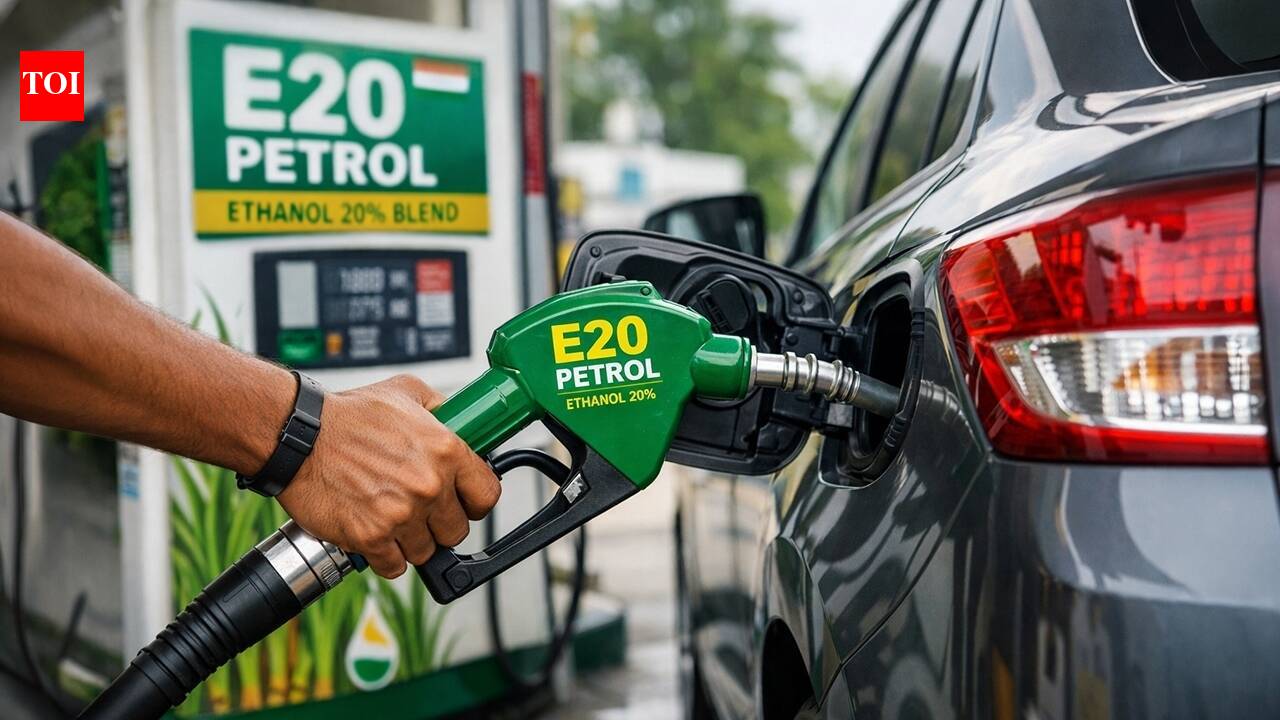
The Indian Sugar and Bio-Energy Manufacturers Association (ISMA) has pushed back against mounting public concern over E20 ethanol blended petrol, urging that the debate be anchored in scientific evidence, verified data, and official clarifications rather than social media misinformation, according to a statement issued on Wednesday.
Mileage drop controversy
Recent discussions have focused on a perceived drop in fuel mileage attributed to E20 adoption. Automakers maintain the reduction is marginal at 3-3.5%, but social media users claim a far larger decline of 20-30%. One user on X stated: "Hybrid system is inherently highly efficient, boasting an official fuel economy to 23.24 kmpl. However, because ethanol delivers lower thermal energy per litre than pure petrol, real-world E20 mileage drops to around 16–18 kmpl depending on driving conditions." Several others have shared experiences of a reduced mileage of 2-3 km (or 20-30%) after shifting to E20.
Former Delhi chief minister and AAP national convenor Arvind Kejriwal on Wednesday wrote to 29 automobile manufacturers, seeking their response on the impact of E20 fuel on vehicle mileage and performance, and asked them to reply within seven days. In a letter shared with Toyota Kirloskar Motor's Vikram Gulati, Kejriwal questioned whether a pre-2023, non-E20-compliant vehicle that experiences a mileage drop of more than 10% after using E20 fuel would be compensated for the loss.
Scientific backing and official support
According to ISMA, the Ministry of Petroleum and Natural Gas (MoPNG) has stated that India's Ethanol Blending with Petrol Programme (EBP) is "scientifically validated, rigorously tested, and continuously monitored" in consultation with oil marketing companies (OMCs), automakers, fuel testing agencies, and other stakeholders. The government said no incidents of engine failure or vehicle breakdown had been linked to E20 petrol since its rollout.
Fuel-grade ethanol is produced through industrial processes such as fermentation and distillation and does not resemble its original agricultural feedstock, ISMA noted. It is made from multiple sources, including sugarcane juice, molasses, broken rice, and maize, and must meet fuel-quality standards before blending.
Select automobile manufacturers, Society of Indian Automobile Manufacturers (SIAM), Federation of Indian Petroleum Industry (FIPI), and Automotive Research Association of India (ARAI) have publicly defended E20, saying concerns about vehicle breakdowns stem from "hearsay, misinformation and misunderstanding." Industry representatives said mileage variation, where observed, was marginal, while E20 helps cut emissions, reduce oil imports, save foreign exchange, and support farmer incomes.
| Claim | Source | Value |
|---|---|---|
| Mileage drop (automakers) | Automakers, SIAM, FIPI, ARAI | 3-3.5% |
| Mileage drop (social media users) | Public on X | 20-30% (2-3 kmpl) |
| Foreign exchange savings | Government estimates | Over Rs 1.4 lakh crore |
| Engine failures linked to E20 | MoPNG | None reported |
Foreign exchange and farmer welfare
ISMA Director General Deepak Ballani called the ethanol programme "one of the country's most successful examples of aligning energy security, farmer welfare and cleaner mobility." He added that E20 had been introduced through a calibrated, science-backed process involving the government, OMCs, automakers, and testing agencies, and that claims the fuel was unsafe or unregulated were not supported by evidence.
"Misinformation of this nature risks undermining a programme that has helped India reduce crude import dependence, save foreign exchange and create value for the rural economy," Ballani said. According to government estimates, ethanol blending has helped India save more than Rs 1.4 lakh crore in foreign exchange by reducing crude oil imports, while generating demand for agricultural feedstocks and providing additional income for farmers.
Implications for sugar and ethanol markets
For commodity traders and analysts tracking the sugar-ethanol complex, this policy defence reinforces the Indian government's commitment to the Ethanol Blending Programme, which directly affects demand for sugarcane, molasses, and grains. Any policy shift driven by public backlash could alter ethanol production targets and sugar diversion rates. As of the July 8, 2026 publication, no official change in policy has been indicated, and the industry continues to back E20. The next key data points will be Kejriwal's responses from the 29 automakers and any subsequent government or regulatory action.
Sources: