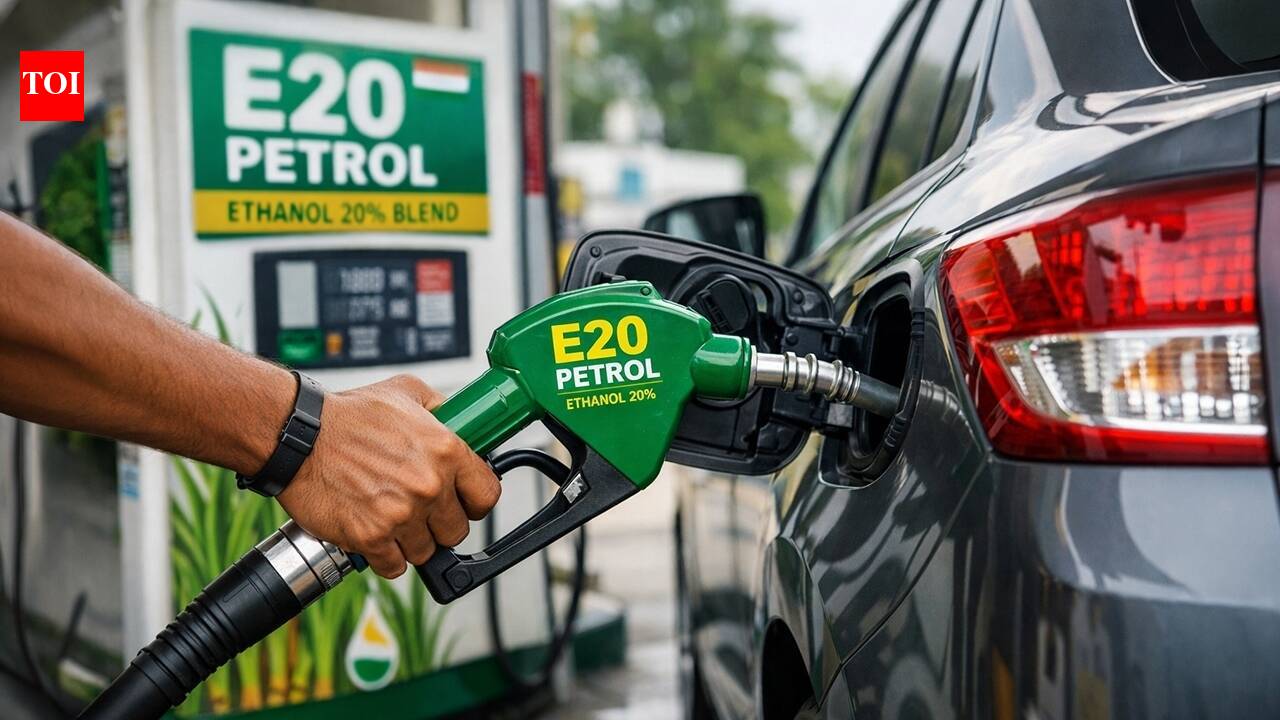
India has formally cleared the regulatory framework for the use of 100% ethanol (E100) as a vehicular fuel, a move that could accelerate the rollout of ethanol-powered cars and two-wheelers while deepening the country’s push to cut crude oil imports, according to a report by The Hindu BusinessLine.
Union Road Transport and Highways Minister Nitin Gadkari on Saturday said he had signed the regulations authorising E100 fuel, creating a legal framework for automakers, fuel retailers and testing agencies to begin commercial deployment of pure ethanol-powered mobility solutions. “I signed the file at 8 pm today,” Gadkari said while addressing the Sugar, Ethanol & Bio-Energy India Conference in Nagpur. The approval, he said, would help reduce India’s dependence on imported fossil fuels and expand the use of domestically produced biofuels.
Beyond E20: A New Regulatory Pathway
The decision marks a significant step beyond India’s ethanol-blending programme, which has focused on increasing ethanol content in petrol and is now nearing nationwide implementation of E20. By creating a regulatory pathway for E100, the government is effectively enabling vehicles designed to run entirely on ethanol, opening a new technology route alongside electric, CNG, hybrid, and hydrogen-powered mobility.
Gadkari said flex-fuel vehicles are already entering the market. “Maruti Suzuki has launched the WagonR flex-fuel vehicle, and Hero has introduced motorcycles that can run on 100% ethanol,” he said. The minister added that more automakers are preparing to enter the segment. “Toyota and Hyundai are also expected to launch vehicles that can run on 100% ethanol,” he said.
Opportunities for Automakers and Supply Chain
For the automotive industry, the move creates an additional decarbonisation pathway at a time when manufacturers are investing across multiple technologies. Unlike conventional petrol-powered vehicles, E100-compatible vehicles require specialised engine calibration and fuel-system components because ethanol absorbs moisture more readily and can be more corrosive than petrol. The approval could spur fresh investments in dedicated flex-fuel platforms, localisation of components and ethanol-compatible powertrains, particularly among manufacturers seeking alternatives to full electrification.
Table: Key Automakers Mentioned and Their Ethanol Plans
| Automaker | Vehicle/Product | Fuel Type | Status |
|---|---|---|---|
| Maruti Suzuki | WagonR flex-fuel | E100-compatible (likely) | Already launched |
| Hero | Motorcycles | 100% ethanol | Already launched |
| Toyota | Vehicle (model TBD) | 100% ethanol | Expected to launch |
| Hyundai | Vehicle (model TBD) | 100% ethanol | Expected to launch |
Farm Economy Boost and Import Bill Reduction
The government also views ethanol as a strategic tool for agricultural policy. Describing the sugar and bio-energy sector as “the backbone of rural development,” Gadkari said expanding ethanol production could strengthen farm incomes by creating additional demand for sugarcane, maize and other feedstocks used in biofuel production. Higher ethanol consumption could provide an outlet for surplus agricultural production while supporting investments in bio-refineries and rural industrial infrastructure. The minister also urged the industry to focus on more water-efficient sugarcane cultivation as ethanol production scales up.
The move is also aimed at reducing India’s dependence on imported oil. The country imports more than 85% of its crude requirement, making fuel one of the largest contributors to the import bill. By increasing the use of domestically produced ethanol, the government hopes to lower exposure to volatile global crude prices while creating additional demand for agricultural feedstocks and biofuel production.
Infrastructure and Certification Hurdles
While the regulatory approval removes a key hurdle, nationwide adoption will depend on fuel availability and supporting infrastructure. Oil marketing companies are expected to gradually roll out dedicated E100 dispensing stations, while storage and transportation systems may require upgrades due to ethanol’s moisture-absorption properties and handling requirements. Vehicle homologation standards, emission certification protocols and fuel-distribution systems will also need to be adapted for E100.
What to Watch
Automakers will now seek final homologation for E100 models, while oil marketing companies publish rollout plans for dedicated dispensing stations in key sugar-producing states.
Sources: