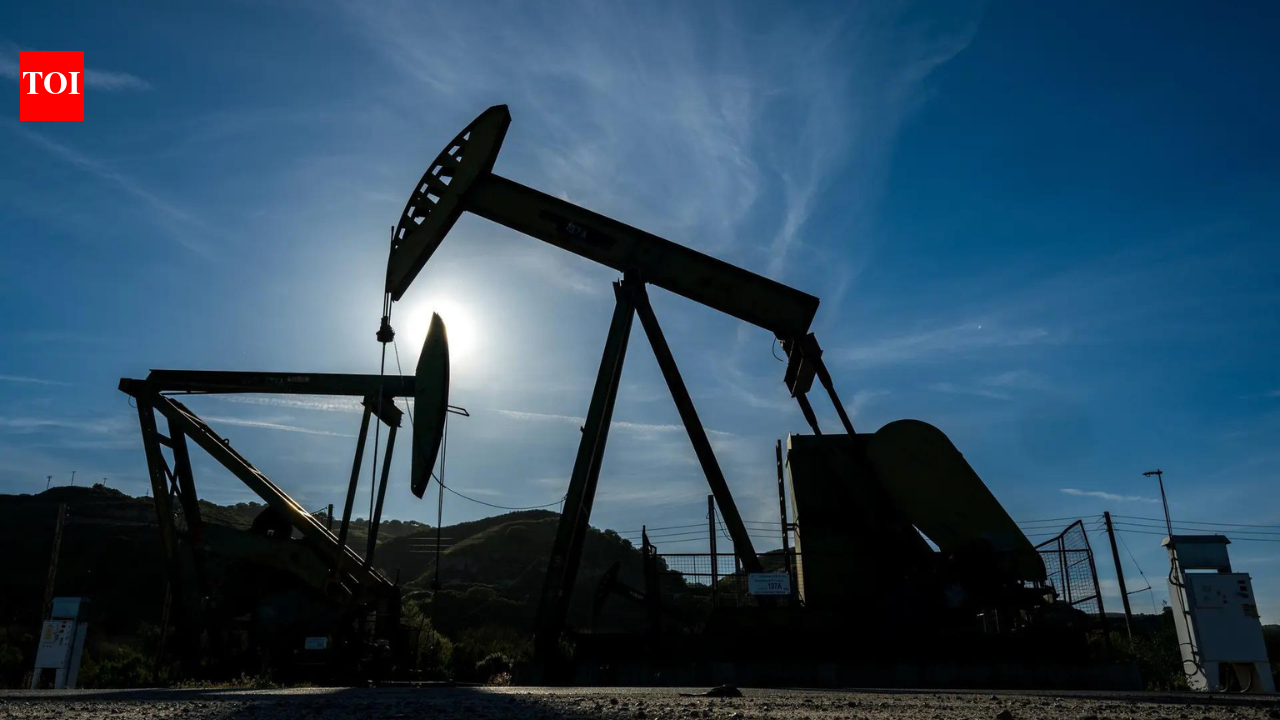
Oil prices turned volatile once again after recent comments from US Vice President JD Vance raised concerns over the stability of the Middle East peace deal, according to Business-Today. Brent crude was down 0.65% at $79.33 a barrel, after touching $79.85 level. At the same time, WTI crude fell 0.46% to $75.50.
Vance's Warning and Market Reaction
The move came after Vance warned Israel against carrying out further attacks on Iran-backed Hezbollah in Lebanon, prompting doubts over the durability of the accord. Pointing to Israel's criticism of the peace deal, Vance said, "I guess my response to them would be: What is your exact proposal? You’re a country of nine million people. You can’t just kill your way out of solving every single national security problem that you have." He further added that Israel should "give a little bit of credit to the United States of America, which I think has been an incredible partner for the Israeli government for a long time."
In earlier sessions, Brent crude had fallen to its lowest level since March 2, the first trading day after the initial US-Israeli strikes on Iran. US benchmark WTI crude also touched its lowest level since March 4.
Strait of Hormuz at the Center
Now, the market is focused on the Strait of Hormuz, a critical oil transit route through which 20% of the world's oil flowed before the conflict began. Under the 14-point memorandum of understanding signed by the United States and Iran, Tehran has agreed to allow toll-free passage through the Strait of Hormuz during a 60-day negotiation period. The agreement also aims to restore traffic through the waterway to full capacity within 30 days.
The accord is binding on the allies of both countries in the Middle East and specifically applies to Lebanon, where Israel has been conducting air and ground operations against Hezbollah. However, several key issues still remain unresolved under the preliminary agreement, including Iran's nuclear programme. The deal also requires the United States and its partners to develop a $300-billion plan to support Iran's recovery.
Analyst Forecasts on Oil Prices
While analysts cited by Reuters expect oil flows through the Strait of Hormuz to recover gradually, industry experts have cautioned that prices may not see a sharp decline as demand rebounds and inventories are replenished.
| Bank | Forecast | Key Details |
|---|---|---|
| Goldman Sachs | Gulf oil exports return to pre-war levels by end July; crude production by October | Restoring exports to pre-war levels requires a 13 million barrel-per-day increase in Hormuz flows, taking them to around 70% of pre-war volumes |
| BNP Paribas | Oil prices will not return to pre-war levels; $75/barrel is a 'durable floor' | Views $75 per barrel as floor due to continuing supply losses and stronger demand. Pre-war Brent traded $60-$70 per barrel |
Goldman Sachs expects Gulf oil exports to return to pre-war levels by the end of July, with crude production recovering by October. According to the bank, restoring exports to pre-war levels could be achieved through a 13 million barrel-per-day increase in Hormuz flows from current levels, taking them to around 70% of pre-war volumes.
BNP Paribas, meanwhile, does not expect oil prices to return to levels seen before the conflict. In a note, the bank said it views $75 per barrel as a "durable floor for the foreseeable future" due to continuing supply losses and stronger demand. Before the war, Brent crude had traded in the $60-$70 per barrel range during the first two months of the year.
Supply Disruptions Since February
Meanwhile, oil supplies across the globe had remained under pressure since February end, since the US and Israel launched joint strikes on Iran. In retaliation, the country choked the crucial Strait of Hormuz, squeezing energy supplies and sending ripples to economies worldwide.
The combination of geopolitical tensions, supply constraints, and recovering demand continues to keep the oil market volatile. Traders are closely watching the implementation of the US-Iran agreement and any further developments regarding Israel-Hezbollah hostilities. The upcoming data on inventory levels and demand from major economies will provide additional direction for prices in the near term.
Sources: