Oil prices jumped more than 2% on Monday, July 20, 2026, as the intensifying conflict between the United States and Iran raised fresh concerns about crude supplies from the Middle East, particularly shipping through the Strait of Hormuz. According to sources, Brent crude climbed above $90 a barrel, rising 2.30% to $90.13, while the US benchmark WTI crude gained 2.07% to $84.20. This move extended last week's sharp rally, when Brent surged 15.9% — its biggest weekly gain since April — and WTI rose 15.5%, its strongest weekly advance since early March.
Geopolitical Escalation Drives Crude Rally
The latest gains followed another night of US military action against Iran. The US launched strikes for the ninth consecutive night, while Iran continued attacks across the region, with Bahrain and Kuwait reporting fresh missile and drone strikes, according to the source. The US announced another round of strikes after confirming the death of another American service member, who it said was killed in Iraq during the "controlled detonation" of a downed Iranian drone. The military also said "unidentified remains" found on Sunday were being examined after one service member went missing following Friday's attack in Jordan. It said 17 US service members have been killed since the conflict began.
In a statement, US Central Command said, "The strikes will continue degrading Iranian military capabilities used to attack commercial vessels and civilian mariners transiting the Strait of Hormuz." Iran, meanwhile, continued retaliatory attacks across the region. Bahrain, Jordan and Kuwait activated their air defences against incoming drones and missiles, while Israel warned that missiles fired towards Jordan could spill into Israeli territory.
Strait of Hormuz Disruption
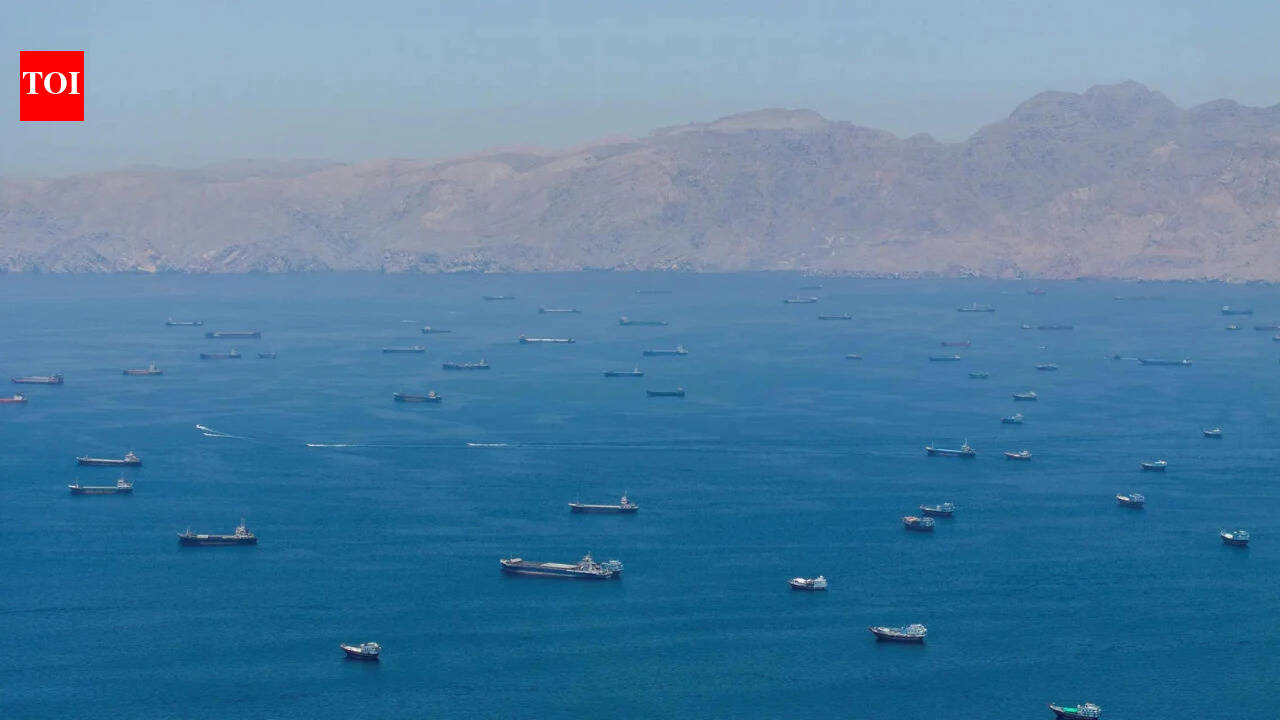
The growing hostilities have disrupted movement through the Strait of Hormuz, a key maritime route that normally carries around one-fifth of global oil trade. The US said it was enforcing a naval blockade on Iranian ports, while Iran has maintained that it is targeting ships that violate its navigation rules in the strategic waterway. Shipping activity through the strait has already slowed. LSEG data showed only four vessels passed through the route on Sunday, compared with eight a day earlier. Since Friday, three oil products tankers and one Very Large Crude Carrier have entered the strait to load crude.
Adding to concerns, a vessel reportedly caught fire near Oman's coastline. The United Kingdom Maritime Trade Operations (UKMTO) agency reported the incident northwest of Kumzar and said the cause of the blaze was not immediately known. The British military also confirmed that a ship was on fire in the Strait of Hormuz. The US military has been urging commercial vessels to follow a route closer to Oman while transiting the strait. Iran, however, has responded by attacking ships using that route, insisting it should control navigation through the waterway.
| Metric | Value | Change (%) |
|---|---|---|
| Brent crude (ICE, front-month) | $90.13/bbl | +2.30% (daily) |
| WTI crude (NYMEX, front-month) | $84.20/bbl | +2.07% (daily) |
| Brent weekly gain (July 13-17) | - | +15.9% |
| WTI weekly gain (July 13-17) | - | +15.5% |
| Vessels through Strait of Hormuz (Sunday) | 4 | -50% vs. Saturday |
| US service members killed since conflict began | 17 | - |
"The coming days and weeks will provide a clearer picture of the sustainable level of oil exports from the region under renewed dual blockades," Barclays analyst Amarpreet Singh said in a note cited by Reuters. "As things stand, we think oil markets are still too complacent about the potential fallout for inventories, which, unlike at the beginning of the war, are at the tightest of the past five years."
Market Outlook and Inventory Concerns
Despite the recent rally, crude remains well below the peak of $126 a barrel reached during the early phase of the conflict, according to the source. However, the analyst's warning about tight inventories adds a bearish undertow to the supply outlook. The dual blockades — US naval blockade on Iranian ports and Iranian interference in the Strait of Hormuz — could further constrain exports from the region, which already faces reduced shipping activity. For commodity traders and procurement teams, the key risk is the potential for a sustained disruption that draws down global crude inventories at a time when they are already at the tightest in five years. The lack of a diplomatic off-ramp, combined with continued military strikes on both sides, suggests that supply risks will remain elevated in the near term.
Sources: