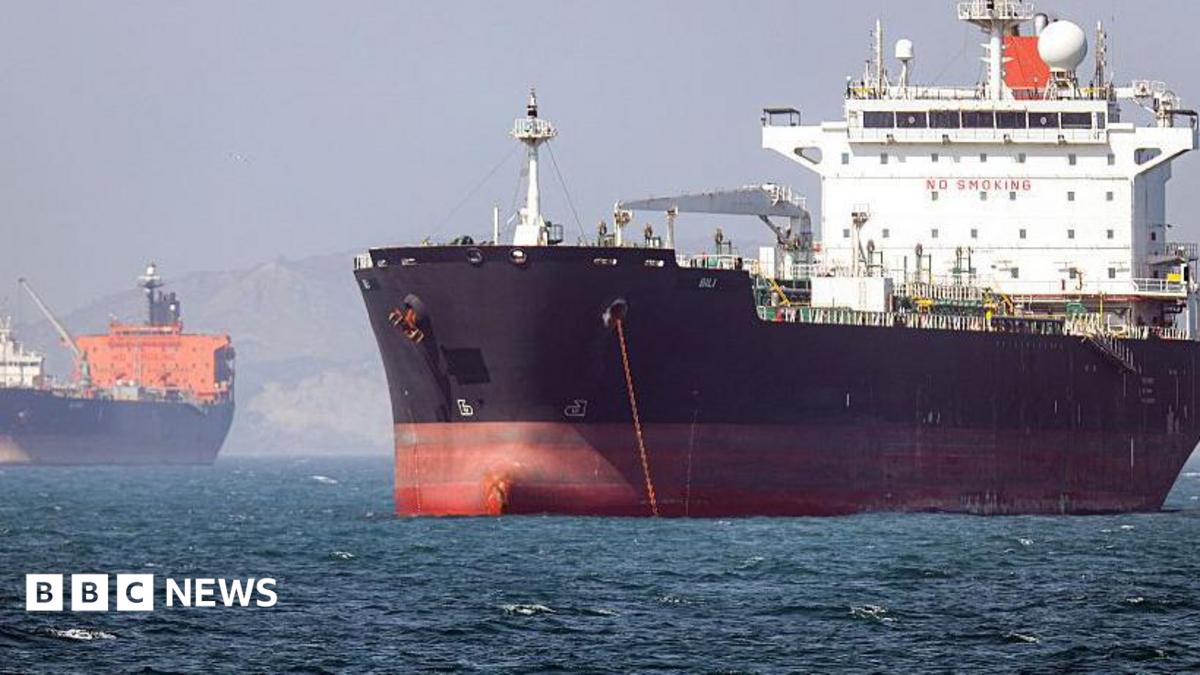
US President Donald Trump on Tuesday claimed that 19 million barrels of oil transited the Strait of Hormuz on Monday, calling it an all-time record, according to The Hindu BusinessLine. Brent crude futures, the international benchmark, fell 45 cents to $77.45 a barrel, while West Texas Intermediate (WTI) futures declined 34 cents to $73.52, The Hindu reported. "Oil prices are tumbling down, and the world is a much safer place," Trump wrote on Truth Social, as quoted in the same report.
Sanctions Waiver and Market Reaction
The price movement comes amid a significant geopolitical development. On Monday, the US formally waived sanctions on Iranian oil for a 60-day period, in line with the memorandum of understanding agreed to by Washington and Tehran last week, the source said. The Office of Foreign Assets Control (OFAC) published General License X, which authorises a broad array of transactions pertaining to shipments of Iranian crude, petroleum products and petrochemical products through to August 21, 2026. The Hindu reported that Trump has been asserting that continuing the war against Iran would have caused economic catastrophe, effectively acknowledging Iran's leverage in negotiations through the potential closure of the Strait of Hormuz.
Strait of Hormuz Status
Over the weekend, Iran had declared the Strait of Hormuz closed, but US Central Command stated that the strait remained open to ships, creating confusion about the status of the critical sea lane, according to the report. The Trump administration's sanctions waiver appears aimed at de-escalating tensions and ensuring continued oil flows through the chokepoint, which handles about a fifth of the world's petroleum consumption.
| Commodity | Contract | Price | Change |
|---|---|---|---|
| Brent crude | Futures | $77.45/bbl | -$0.45 |
| WTI crude | Futures | $73.52/bbl | -$0.34 |
Source: The Hindu BusinessLine, June 24, 2026
Implications for Traders
For commodity traders, the twin developments of a record transit volume and a temporary sanctions waiver suggest increased supply availability from Iran in the near term. The 60-day license (through August 21) provides a window for Iranian crude exports to resume more freely, potentially adding further downward pressure on prices. However, the underlying geopolitical risk remains: any renewed confrontation could quickly reverse the flow. The week-over-week and year-over-year price comparisons were not provided in the source, but traders will watch for US EIA inventory data and OPEC+ responses. The key data point to monitor is whether the record flow reported by Trump is sustained in the coming days, as independent tanker tracking services verify the volume.
Sources: