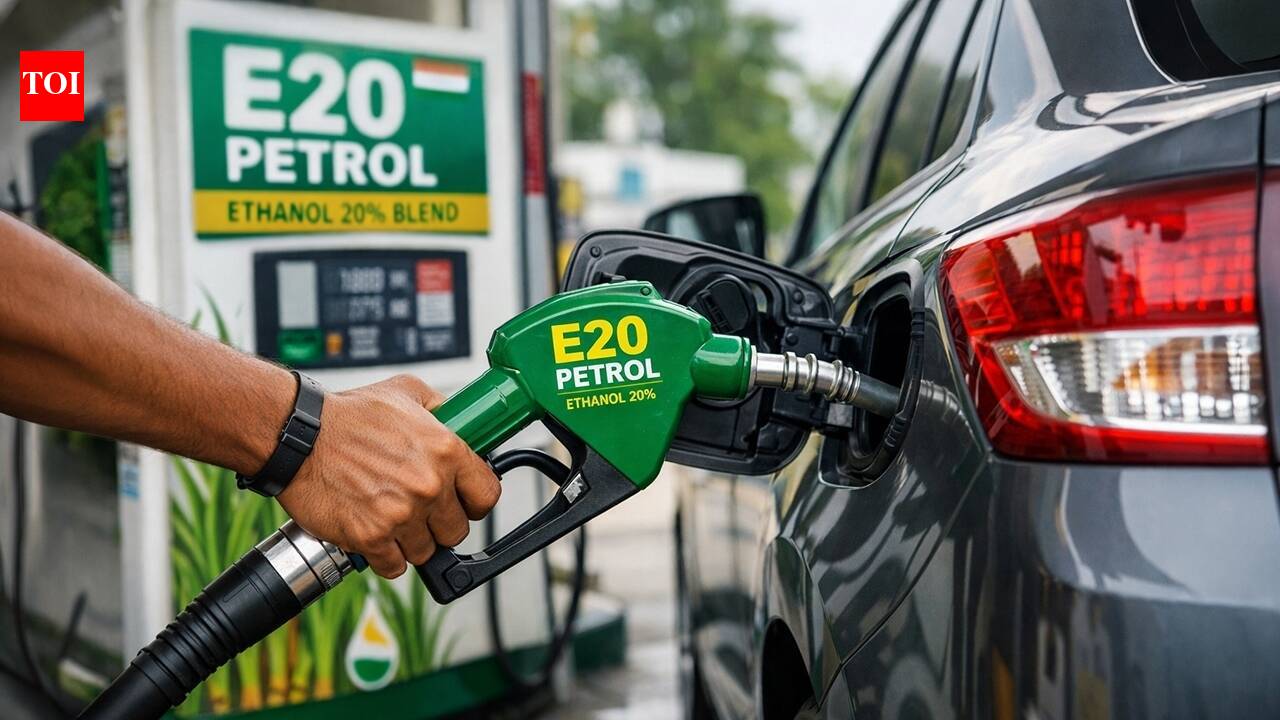
India, the world's third-largest oil importer and consumer, has waived excise duty on blended petrol, according to a finance ministry notification. The exemption covers E22, E25, E27, and E30 fuel blends, which contain varying proportions of motor spirit and ethanol — specifically 78%, 75%, 73%, and 70% motor spirit mixed with 22%, 25%, 27%, and 30% ethanol by volume, respectively.
The duty waiver is part of the government’s broader push to expand ethanol use, with plans to open 50–100 ethanol fuel stations in Delhi-NCR, Pune, Mumbai, and Nagpur, and scale up the network to 500 by the end of 2026, the source reported.
Middle East Crisis and Fuel Price Impact
The move comes as petrol and diesel prices in the country have jumped over Rs 7.5 per litre since the Middle East crisis began, after remaining largely unchanged for almost four years. The conflict, which began on February 28 after the US and Israel launched joint strikes on Iran, has intensified even as peace efforts continue. Energy supplies across the globe remain under stress.
Global crude oil prices have climbed from around $70 per barrel to above $100. Despite a cumulative increase of over Rs 7.5 per litre in retail prices, oil marketing companies are still facing significant under-recoveries — losing around Rs 12 per litre on petrol and Rs 21 per litre on diesel, according to the source.
E85 Discount and Compatibility
Minister Puri earlier stated that state-run oil marketing companies are preparing to offer E85 fuel at a discount of Rs 20 per litre compared with E20 petrol. The discount is aimed at offsetting the lower energy content of the fuel. E85 is a blend comprising 85% ethanol and 15% petrol. Since ethanol has around one-third lower energy content than petrol, the price reduction compensates users for the difference.
E20 petrol, which contains 20% ethanol and 80% petrol, will continue to be available at all fuel stations, as most vehicles on Indian roads are compatible with ethanol blends of up to 20%.
Implications for International Trade
For importers and exporters of petroleum products and ethanol, the excise duty waiver signals India’s intensifying commitment to ethanol blending, which could reduce the country's reliance on crude oil imports over time. India is the world's third-largest oil importer and consumer, so any shift in domestic blending policy has global trade implications. Ethanol suppliers — particularly from major producers like Brazil and the United States — may see increased demand as India scales up its blending targets. However, the source does not provide specific import data.
Timeline and Infrastructure Rollout
The government plans to establish 50–100 ethanol fuel stations initially in key urban centres: Delhi-NCR, Pune, Mumbai, and Nagpur. By the end of 2026, the network is expected to expand to 500 stations nationwide. This infrastructure build-out will require coordination among oil marketing companies, fuel retailers, and ethanol producers.
What to Watch
Market participants should monitor the pace of ethanol station rollout and any further policy signals on blending mandates, as well as crude oil price movements driven by the Middle East conflict.
Sources: