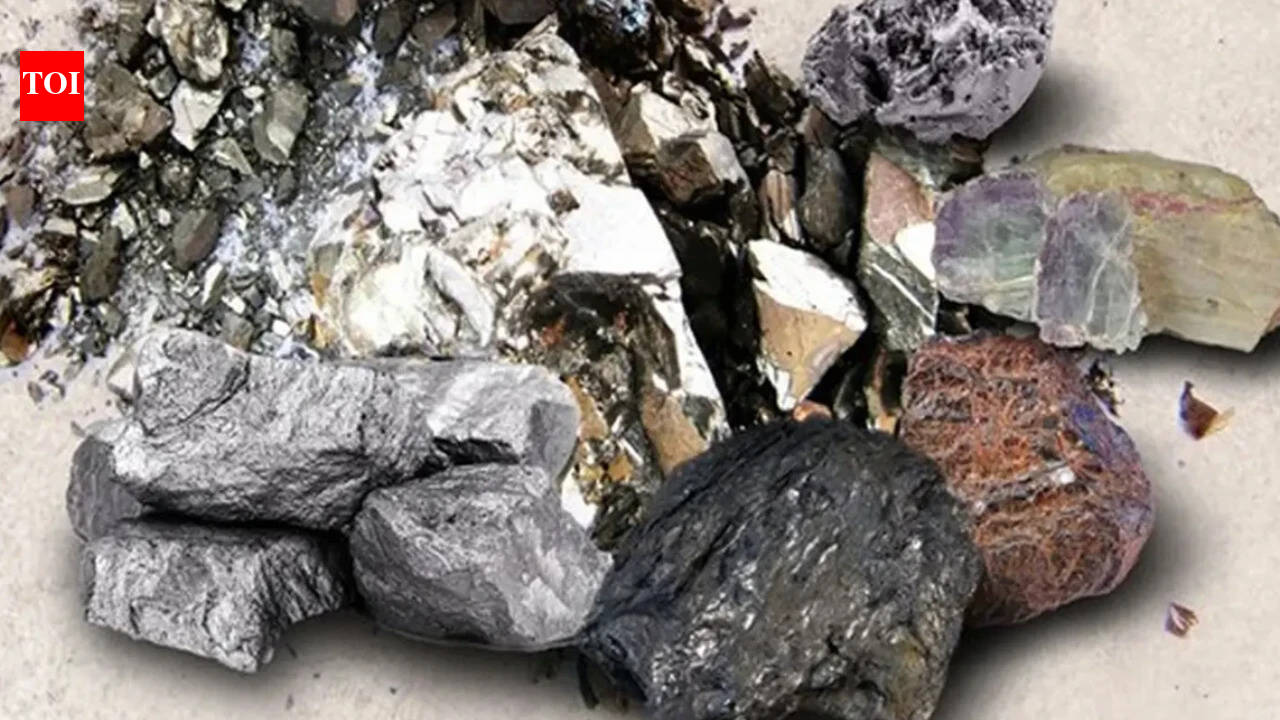
Zinc is emerging as one of India’s most strategic industrial enablers, supporting everything from transmission towers to next-generation energy storage, according to The Hindu BusinessLine. With India aiming to become a developed economy by 2047, the publication reports that roads, bridges, transmission towers and industrial infrastructure often deteriorate prematurely due to corrosion, and industry estimates put corrosion-related losses at nearly 5 per cent of India’s GDP.
Corrosion: a multi-billion-dollar problem for India
According to The Hindu BusinessLine, harsh environmental conditions — including long coastlines, saline soils, air pollution and monsoon rains — accelerate the corrosion of metals across India. The publication notes that globally, corrosion costs nearly $2.5 trillion annually. In India, the article says, the durability of assets increasingly matters as much as the scale of construction, because premature deterioration raises maintenance costs and reduces economic efficiency.
Industry estimates suggest corrosion-related losses could amount to nearly 5 per cent of India’s GDP, according to The Hindu BusinessLine.
Metallic zinc coatings deliver the long-term protection India’s infrastructure requires, the article states. Two technologies are emphasised:
- Galvanising — widely used for fabricated steel.
- Thermal spray zinc metallising — suited for large structures, on-site applications and maintenance of existing assets.
Together, these technologies extend service life, reduce maintenance requirements and lower lifecycle costs, according to The Hindu BusinessLine.
Infrastructure and automotive demand
India’s infrastructure ambitions span highways, railways, ports, airports, industrial corridors and smart cities. The Government’s enhanced commitment of ₹60,000 crore to the National Investment and Infrastructure Fund (NIIF) reflects this long-term vision, the article reports. Zinc is already embedded in everyday infrastructure, from streetlight poles and water pipelines to transmission towers and industrial facilities.
In the automotive sector, The Hindu BusinessLine says galvanised steel enhances durability, safety and vehicle life. The cost of using zinc-coated steel is estimated at less than 0.1 per cent of overall vehicle production costs, yet it delivers long-term benefits through improved structural integrity, lower maintenance and better resale value. As electric vehicles become more widespread, the article adds, demand for corrosion-resistant battery enclosures and structural components will further strengthen zinc’s strategic role.
Energy storage and the 500 GW renewable target
India’s transition towards 500 GW of non-fossil fuel electricity capacity by 2030 will require infrastructure capable of performing reliably under demanding environmental conditions, according to The Hindu BusinessLine. The article reports that galvanised steel protects solar mounting structures, wind turbine components and transmission networks. It also highlights zinc-based batteries as a safe, recyclable and scalable complement to lithium-ion technologies for long-duration stationary energy storage.
Agriculture: zinc beyond industry
Zinc’s contribution extends into agriculture as an essential plant micronutrient, improving soil health and crop productivity. The Hindu BusinessLine reports that Indian Council of Agricultural Research (ICAR) surveys have consistently shown that more than half of India’s cultivated soils are deficient in plant-available zinc, making zinc-enriched fertilisers an effective solution for improving yields and strengthening food security.
Key figures cited in the report
| Metric | Value |
|---|---|
| India corrosion-related GDP loss (industry estimate) | Nearly 5% of GDP |
| Global annual corrosion cost | Nearly $2.5 trillion |
| NIIF enhanced commitment | ₹60,000 crore |
| India non-fossil electricity capacity target by 2030 | 500 GW |
| Cost of zinc-coated steel in vehicle production | Less than 0.1% of total vehicle production costs |
Implications for commodity market participants
For commodity traders, procurement teams and analysts tracking base metals, The Hindu BusinessLine’s report frames zinc as a metal with unusually broad demand exposure — across infrastructure, automotive, renewable energy, agriculture and stationary energy storage. The publication notes that few industrial metals contribute across as many sectors as zinc. Its coverage ties that breadth to India’s ₹60,000 crore NIIF enhancement, the 500 GW non-fossil electricity target, the adoption of zinc-based batteries, and the widespread soil zinc deficiency identified by ICAR surveys.
Sources: