
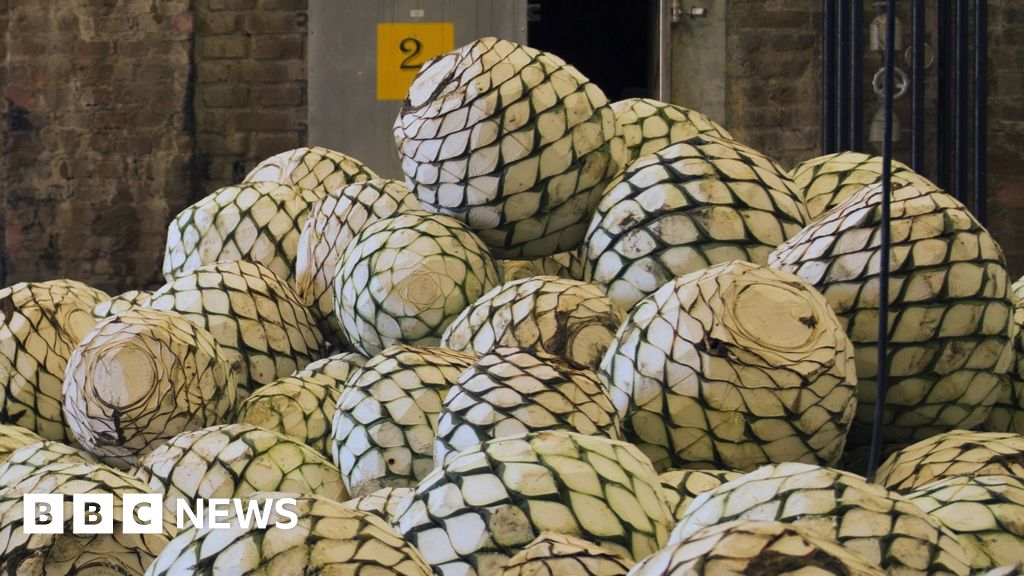
A plant once dismissed as a 'stubborn, valueless weed' by Indian farmers is now driving a nascent agave spirit industry, with the domestic market expanding at 31% annually, according to Rakshay Dhariwal, founder of distiller Maya Pistola Agavepura. The agave americana cactus, which grows wild across India's Deccan Plateau, has been repurposed from fencing to feedstock for spirits, earning the nickname 'blue gold' among rural suppliers.
From Weed to Harvest: The Supply Chain
For farmers like Masapalli Venkatesh of Kandukur, the agave cactus was once only good for keeping wild animals off his tomato, peanut and corn fields. But since 2010, traders have approached him to collect the wild plants. Today, he coordinates villagers and farmers across a 100 km (60 mile) area, combining yields to ensure a steady, high-volume supply for distilleries. The plant's heart, or piña, must be harvested in a precise pre-blooming window to retain sugar content. 'If the flower blooms, the sugar is completely depleted,' said Dhariwal. Once cut, piñas must reach a pressure cooker within 24 hours to avoid spoilage, a logistical challenge given that suppliers are scattered across states including Karnataka, Maharashtra, Rajasthan and Andhra Pradesh.
Wild Agave's Limitations vs. Mexican Efficiency
India's system relies entirely on wild agave, which is genetically inconsistent, according to Sree Harsha Vadlamudi, co-founder of tequila brand Loca Loka. 'That means sugar yields fluctuate and alcohol output changes, so standardizing production becomes difficult,' he said. In contrast, Mexico's large, organised farms in Jalisco use drones and AI to monitor crops and predict optimal harvest windows. Vadlamudi's brand uses Mexican blue agave for its terroir, while Indian producers work with semi-wild plants.
| Aspect | India (Wild Agave) | Mexico (Farmed Agave) |
|---|---|---|
| Agave type | Agave americana (wild) | Blue agave (cultivated) |
| Farming system | Informal, scattered collection | Large, organized plantations |
| Genetic consistency | Low (genetic inconsistency) | High (selective breeding) |
| Technology use | Minimal | Drones, AI monitoring |
| Harvest timing | Critical pre-blooming window | Managed via technology |
Demand Growth: India Catches the 'Tequila Bug'
The Indian market for agave spirits is growing at 31%, according to Dhariwal. Vikram Achanta, co-founder of 30 Best Bars India, said it's 'only been a few years now that India's finally caught the tequila bug.' He noted that consumers are more open to exploring new spirits, but agave drinks are unlikely to replace whisky, India's favourite spirit. He called new brands 'interesting examples of early experimentation' that are helping the category become more credible.
Building an Industry: Scientific Approach and Sustainability
Desmond Nazareth, a pioneer whose company Agave India launched the country's first homegrown agave spirit in 2011, is taking a scientific approach. He uses satellite images of areas where agave grows successfully to identify suitable land for potential cultivation, noting that agave grows for 9–13 years — 'if you plant in the wrong area, you lose a decade.' Agricultural expert Miguel Braganza said India's wild supplies are not at risk of depletion for at least five years because the domestic industry is still tiny — with only one processing plant (Agave India's) — and the plant propagates via root runners, forming colonies without human help. Nazareth expressed confidence that India could eventually become a major agave spirit producer.
Sources:


