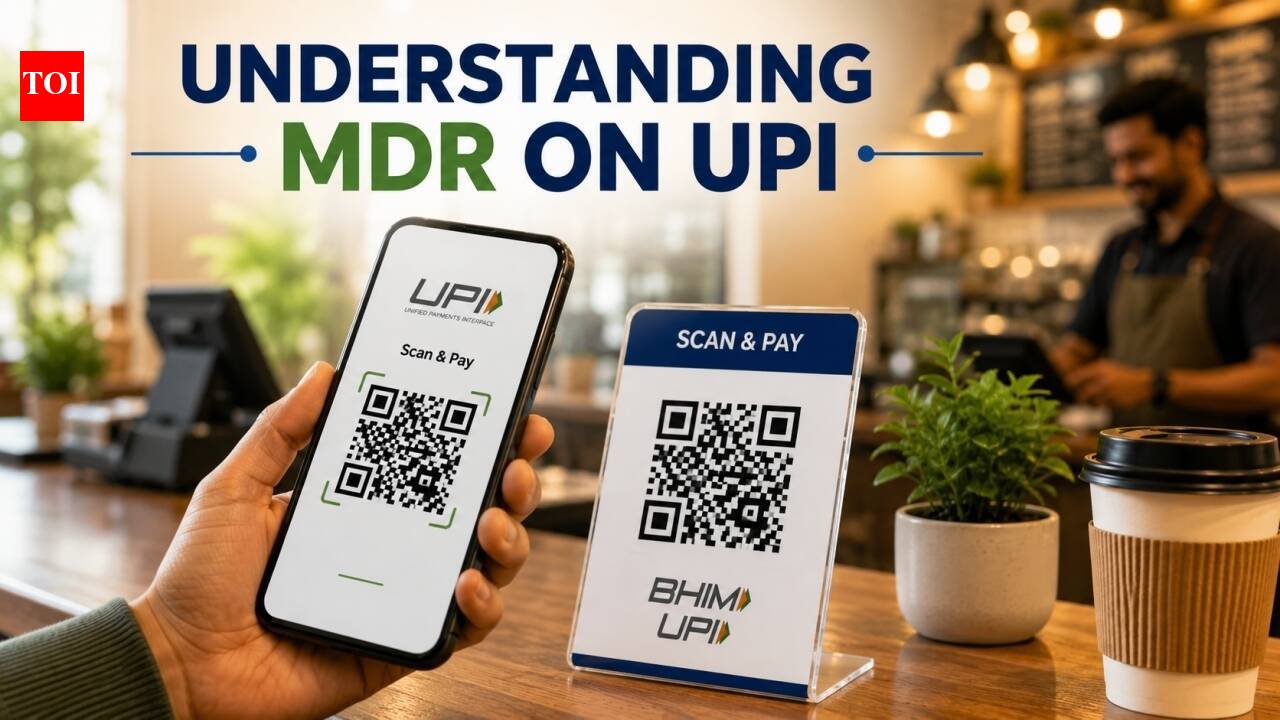
The Lok Sabha on Thursday approved a Bill amending the Payment and Settlement Systems Act, 2007, a step that Business Today reported brings India closer to possibly introducing Merchant Discount Rate (MDR) on UPI transactions. The amendment empowers the government to allow banks and other payment service providers to impose charges on transactions conducted through the Unified Payments Interface (UPI) and other electronic payment modes that may be notified.
What the amendment changes
According to Business Today, the amendment removes the existing legal restriction that bars banks and payment service providers from collecting MDR on notified electronic payment modes. The House cleared the Bill without any discussion amid repeated disruptions.
The Bill does not itself impose a merchant discount rate or prescribe any fee, but it establishes the legal foundation that would enable the government to revise the present zero-MDR framework at a later stage. Under the existing framework, banks and payment system providers are prohibited from imposing any direct or indirect charges on transactions carried out through UPI and RuPay debit cards. The Bill also seeks to delink the Payment and Settlement Systems Act from the Income Tax Act while giving the government legal authority to alter the existing zero-MDR framework governing UPI and RuPay card transactions.
"In the Payment and Settlement Systems Act, 2007, in Section 10A, for the words, figures and letters 'the electronic modes of payment prescribed under section 269SU of the Income-tax Act, 1961', the words 'one or more electronic modes of payment as the central government may, by notification, specify' shall be substituted with effect from the date of publication of this Act in the Official Gazette," the Bill said.
Projected fee structure: 0.25% to 0.4% above Rs 2,000
The Times of India reported that the government is likely to permit banks and payment service providers to levy a merchant discount rate of between 0.25% and 0.4% on UPI transactions exceeding Rs 2,000 when payments are made to businesses, while person-to-person transfers are expected to remain exempt. According to a PTI report, the government intends to create a framework under which consumers and small businesses pay a nominal fee for digital payment services while ensuring banks, payment service providers (PSPs) and payment infrastructure companies that support the digital payments ecosystem have a sustainable source of revenue.
| Transaction type | Current MDR | Projected MDR | Scope |
|---|---|---|---|
| UPI payments to businesses above Rs 2,000 | Zero | 0.25%–0.4% (per The Times of India) | ~5% of transactions; ~65% of UPI value |
| UPI person-to-person transfers | Zero | Expected to remain exempt | — |
| RTGS and NEFT transfers | Service fee already applies | Service fee continues | Real-time fund transfers |
The 5% of transactions that carry 65% of value
According to official estimates, setting the threshold at Rs 2,000 would bring only about 5% of all UPI transactions within its scope. However, these transactions account for nearly 65% of the total value processed through the platform. As a result, routine purchases such as milk, vegetables, groceries, or payments for auto-rickshaw and taxi rides are unlikely to be affected. UPI recorded 23.7 billion transactions in July, with the total value estimated at Rs 29.9 lakh crore.
MDR has remained a contentious issue, with banks and other participants in the payments industry consistently advocating its introduction, while the government has so far refrained from taking a decision even as UPI has continued to witness robust growth. Some industry observers believe MDR could eventually be introduced for merchant-to-customer UPI transactions exceeding a specified value, while peer-to-peer transfers may continue to remain exempt. Unlike UPI transactions, which have so far remained free of such charges, real-time fund transfers carried out through RTGS and NEFT already attract a service fee.
Impact on marketplace and B2B sellers
For marketplace operators, B2B platform managers, and sellers who receive high-value business payments through UPI, the projected levy concentrates cost on exactly the segment where business-to-business payments sit: transactions above Rs 2,000, which account for nearly 65% of processed value. At the reported 0.25%–0.4% range, a Rs 50,000 B2B payment would translate to roughly Rs 125 to Rs 200 in charges per transaction — a direct margin impact for sellers who currently route payments through UPI at zero cost.
The proposed legislation empowers the central government to determine, through official notification, which electronic payment modes or categories of transactions will continue to remain exempt from such charges.
What sellers need to do
- Track the official notification that will specify which electronic payment modes or categories remain exempt, since the Bill delegates that decision to the central government.
- Model the reported 0.25%–0.4% MDR range into cost structures for UPI payments above Rs 2,000 received from business customers.
- Separate person-to-person transfers, which are expected to remain exempt, from merchant-to-customer business payments in reconciliation workflows.
- Review payment acceptance flows for business payments above Rs 2,000, the transaction category the reported fee would target.
Sources: