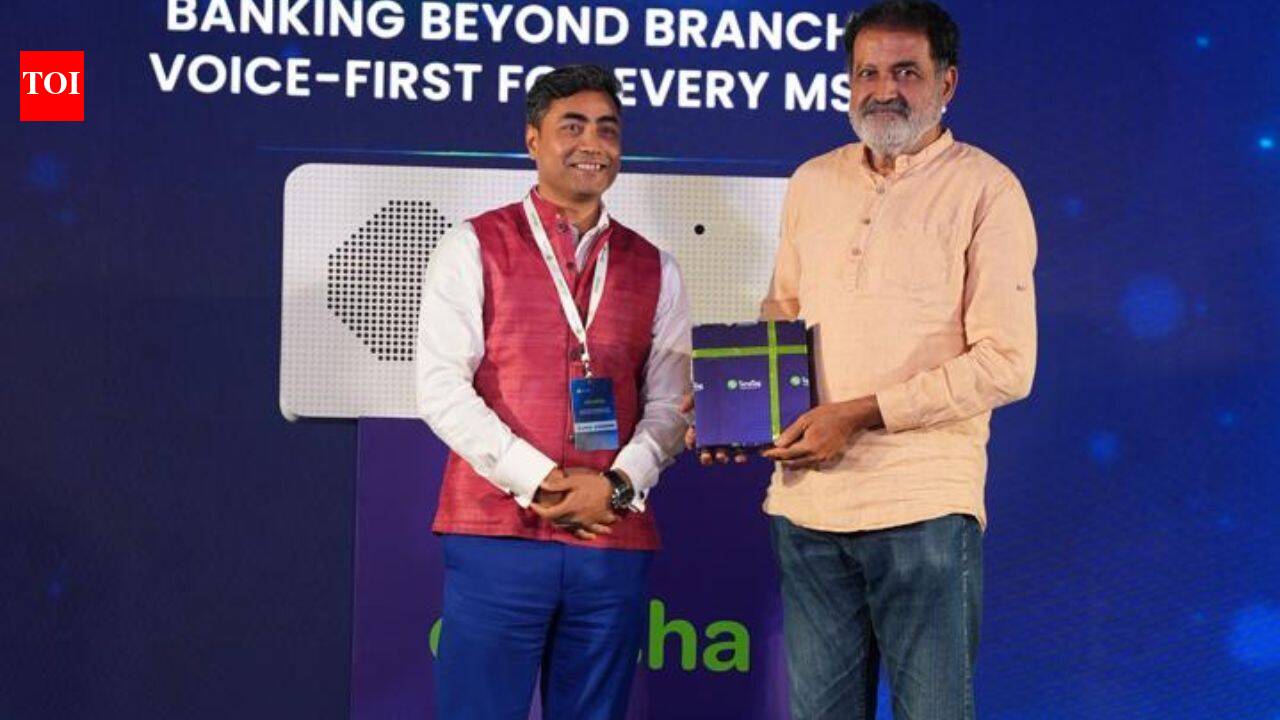
Bengaluru-based fintech ToneTag has launched eKosha, a tech stack that converts existing UPI soundboxes into always-on banking touchpoints for merchants. The product leverages ToneTag’s proprietary sound-based contactless data transfer technology and analog Edge AI to enable conversational banking through natural language voice commands, according to a report by Business Today.
How eKosha Works
ToneTag’s core protocol is embedded directly into soundboxes already deployed across the country. Merchants can press a button and talk to their bank to inquire about credit, overdrafts, request a cheque book, or access scheme information — all without needing internet connectivity or digital literacy. The platform supports UPI, UPI 123Pay and CBDC flows.
Founder and CEO Kumar Abhishek told TOI that the company has packed its protocol into soundboxes, achieving over 3 million touch points covering 73% of India's pin codes. The system handles roughly 28 million daily interactions and processes about $4 billion worth of transactions every month.
Cost and Adoption
Traditional POS machines cost north of Rs 7,000, limiting their reach to about 3-3.5 million of India's 60 million MSMEs. Soundboxes, however, have already scaled to over 16-17 million devices, according to Kumar. The eKosha enhancement adds an extra Rs 350-500 to a soundbox that typically costs about Rs 1,000, making conversational banking accessible at a fraction of the cost of POS terminals.
| Device | Cost (Rs) |
|---|---|
| Traditional POS terminal | North of 7,000 |
| Soundbox (base) | ~1,000 |
| Soundbox with eKosha | ~1,350-1,500 |
Impact on MSMEs and Banks
Kumar framed the launch against India’s economic growth from $4 trillion to $10 trillion, noting that 30-40% of GDP comes from MSMEs. He said MSMEs need "much more quicker access to working capital, at a much more lower cost."
For banks, ToneTag claims the model can reduce merchant servicing costs by up to 60%, double cross-sell opportunities, and cut churn significantly by enabling direct, data-rich relationships without intermediaries.
ToneTag holds 21 global patents around its sound-based data transfer and conversational processing stack. Kumar likened the evolution of soundboxes to the role ATMs played in retail banking: "These boxes are very similar to what ATM did for consumers… these boxes are now going to become a branch banking channel for India's MSME."
The platform requires no app downloads or digital literacy, pre-processing speech locally using ToneTag’s IP before sending it for further computation. For MSMEs, this means quicker access to working capital and banking services in their own language, without needing the tech savviness required for mobile or internet banking.
Sources: