iGEN
Visit IGEN World Explore IGEN Expo
EXPLORE UPGRADE PLANS
BREAKING
Relay Q: London Startup's AI Microphone Puts Hands-Free Voice Dictation on the Desktop Google Pixel 10a Crowned Best Budget Pixel in WIRED's Updated 2026 Buying Guide Global Steel Wire seeks fresh Santander terminal concession Veritas Shipmanagement books fresh ultramax pair at COSCO yard, Splash247 reports Seanergy linked to fresh newcastlemax at Hengli as dry bulk orderbook grows Weaker rupee may push foreign assets over FAST-DS Rs 1 crore limit, raising tax bill 45 Indian power plants face critically low coal stocks as monsoon hits supply SFL Makes Fresh $363m Car Carrier Play With Four LNG Dual-Fuel Newbuilds Iran Blacklist Threatens Hormuz Shuttle Tanker Lifeline for Gulf Crude Keyfield International Enters Dredging Market with $24.7m Vessel Acquisition Relay Q: London Startup's AI Microphone Puts Hands-Free Voice Dictation on the Desktop Google Pixel 10a Crowned Best Budget Pixel in WIRED's Updated 2026 Buying Guide Global Steel Wire seeks fresh Santander terminal concession Veritas Shipmanagement books fresh ultramax pair at COSCO yard, Splash247 reports Seanergy linked to fresh newcastlemax at Hengli as dry bulk orderbook grows Weaker rupee may push foreign assets over FAST-DS Rs 1 crore limit, raising tax bill 45 Indian power plants face critically low coal stocks as monsoon hits supply SFL Makes Fresh $363m Car Carrier Play With Four LNG Dual-Fuel Newbuilds Iran Blacklist Threatens Hormuz Shuttle Tanker Lifeline for Gulf Crude Keyfield International Enters Dredging Market with $24.7m Vessel Acquisition
Home ›› Ecommerce Marketplaces ›› Trade Payments ›› Mobile payments rise in UK as cash decline slows, UK Finance data shows

Mobile payments rise in UK as cash decline slows, UK Finance data shows

Two-thirds of UK adults were registered with a mobile payment service last year, according to UK Finance. Debit cards accounted for 54% of payments, while cash use fell to 8% and is forecast to halve by 2035. The decline in cash is slowing, with millions still relying on notes and coins.

iG
iGEN Editorial
August 18, 2026
Mobile payments rise in UK as cash decline slows, UK Finance data shows

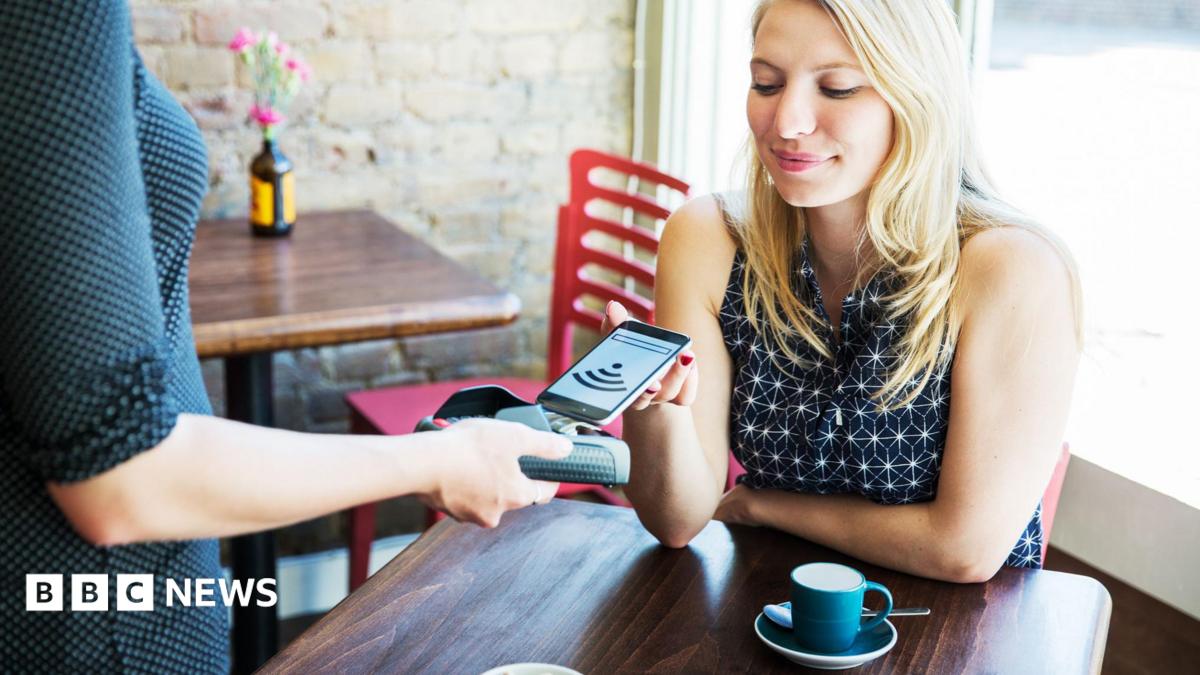
Consumers in the UK are increasingly relying on mobile phones to make payments rather than carrying bank cards, according to an annual report by banking trade body UK Finance. The data, published in the UK Payments Market report, shows that two-thirds of UK adults were registered with at least one mobile payment service last year, a decade after Apple Pay launched in the UK.

Mobile wallets become default payment method

The report shows that nine in 10 users of mobile wallets have their debit card loaded as the default payment method on their phone, with the remainder having registered a credit card. This suggests phones are being used for everyday payments, with use particularly high among younger consumers, although older age groups are gaining ground, according to UK Finance.

More than 80% of 16 to 34-year-olds make mobile payments on a regular basis, compared with 22% of over 65s, the report found.

Consumers are increasingly storing card details on phones or watches and making contactless payments backed up by facial or fingerprint verification, instead of entering a PIN.

Debit cards dominate, cash decline slows

Debit cards — including those loaded onto phones — were the predominant way to pay last year, accounting for 54% of all payments made in the UK in 2025. Some 39% of payments were contactless.

Payment method Share of UK payments (2025) Volume/Notes
Debit cards 54% Predominant method, including cards on phones
Contactless 39% Share of all payments
Cash 8% 3.9 billion transactions
Cheques 0.2% 77 million written

While cash use continues to decline, the data suggests the fall is slowing. Notes and coins were used in 3.9 billion, or 8%, of all payments last year. UK Finance forecasts this will halve to 4% of all payments in 2035, or two billion transactions.

Cheques, which had been due to be phased out by 2018 until MPs forced a change of heart by the industry, have withered to just 0.2% of payments, with 77 million written last year.

Cash remains important for millions

Cash is unlikely to go the same way as cheques, according to UK Finance forecasts. Nearly 50 million people used a cash machine last year.

"Our latest data show that the UK is now a predominantly digital economy when it comes to making and receiving payments," said Adrian Buckle, head of research at UK Finance.

"Rather than the UK becoming a cash-free society over the next decade, the UK will transition to an economy where cash is less important than it once was but remains widely valued and still preferred by some," the report said.

Nick Quin, from Link, which oversees the UK's ATM network, said: "Cash withdrawals are falling across every part of the country. More people find it convenient and prefer to pay using contactless cards and digital wallets on smartphones, but millions still rely on cash day in, day out."

"People on lower incomes rely more heavily or entirely on cash to budget, which is why our job is to protect access to cash for as long as people need it," Quin said.

The data provides the most recent official snapshot of how consumers in the UK pay, covering both card-based and mobile payments, with debit cards retaining the largest share of transactions and cash remaining a significant payment option for a minority of the population.


Sources: BBC-Business
Keep Reading

Recommended Stories

No Charge on UPI for Consumers, Payments Council Clarifies in New FAQs E-Commerce & Marketplaces

No Charge on UPI for Consumers, Payments Council Clarifies in New FAQs

The Payments Council of India released FAQs reiterating Finance Minister Nirmala Sitharaman's stance that consumers will not pay for UPI. The clarification follows the government's lifting of the legal restriction on merchant discount rates. Small merchants also remain exempt from MDR, while larger merchants face commercial service-charge arrangements.

August 8, 2026
India Paves Way for UPI Merchant Fees as Free Payments Era Nears End E-Commerce & Marketplaces

India Paves Way for UPI Merchant Fees as Free Payments Era Nears End

India has paved the way for banks and payment companies to charge merchants a fee on UPI transactions, according to BBC News. The government is considering a merchant discount rate of 0.3-0.5% on larger transactions, while consumers and person-to-person payments remain free. Most UPI payments would stay free under the proposal.

August 17, 2026
Parliamentary panel recommends expeditious MDR rollout on high-value UPI transactions E-Commerce & Marketplaces

Parliamentary panel recommends expeditious MDR rollout on high-value UPI transactions

According to Business-Today, a Parliamentary panel has recommended the expeditious introduction of a calibrated Merchant Discount Rate (MDR) on high-value UPI transactions. The report follows Parliament clearing amendments to the Payment and Settlement Systems Act, 2007, that enable banks and payment providers to levy charges on notified digital payment modes. The committee noted the Rs 2,000 crore zero-MDR compensation covers only about 10 per cent of the industry's estimated Rs 20,700 crore operating costs.

August 13, 2026
What is the proposed UPI MDR, who pays the final cost, and how does it work? E-Commerce & Marketplaces

What is the proposed UPI MDR, who pays the final cost, and how does it work?

UPI transactions in India may soon attract a Merchant Discount Rate for certain merchant payments, with a proposed Rs 2,000 threshold and 0.25%–0.4% fee. Consumers and person-to-person transfers will remain free, according to Business Today. The government says the fee is needed to make the UPI ecosystem financially sustainable.

August 11, 2026