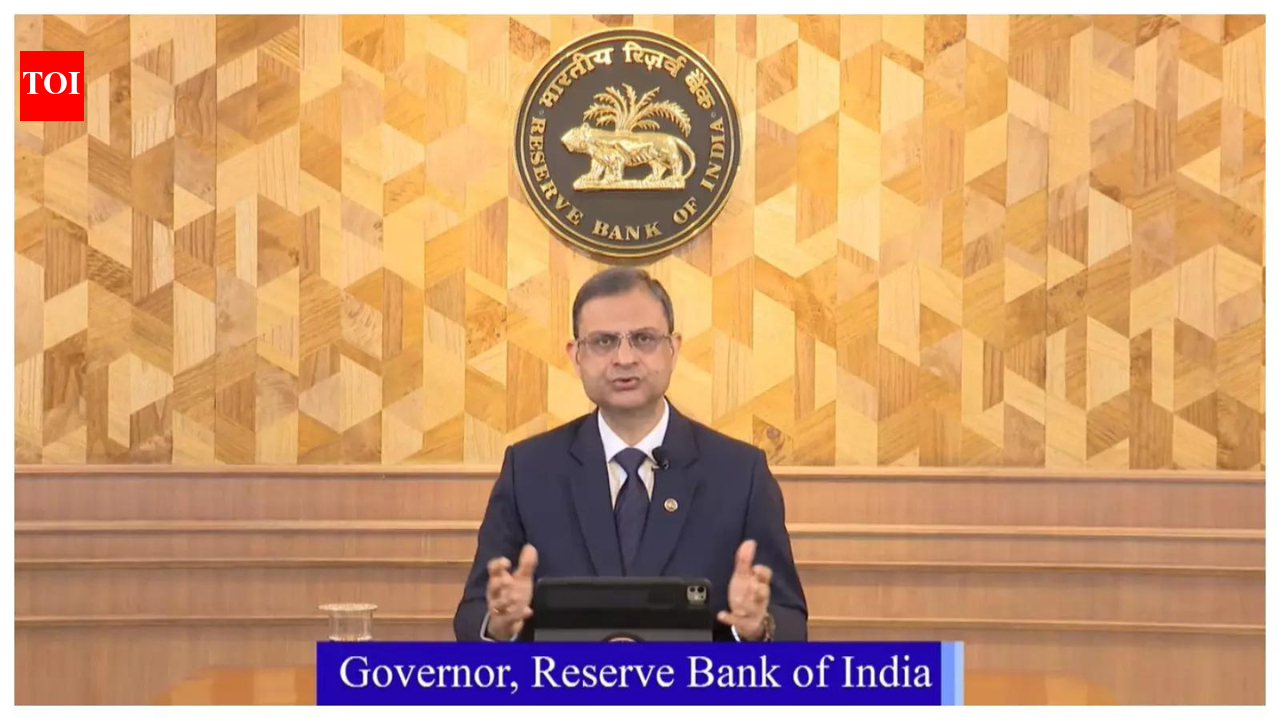
Reserve Bank of India Governor Sanjay Malhotra has dismissed expectations of an imminent interest rate hike, describing such talk as 'premature' in the face of elevated geopolitical uncertainty following the fragile truce between the US and Iran, according to an interview with ET Now on Wednesday. "If it was so certain that we are going to hike in the coming months, then we would have changed the stance from neutral to restrictive, right? We did not do that," Malhotra said. "We did not do that precisely because there is elevated uncertainty."
Rate Stance and Geopolitical Risks
The RBI's Monetary Policy Committee (MPC) voted unanimously on June 5 to hold the repo rate at 5.25%, after cutting rates by a full percentage point since February 2025. Malhotra's remarks come as crude prices have dropped sharply following the US-Iran deal, offering relief to India, which depends on imports for 90% of its oil needs. However, he cautioned that the truce is fragile and normalization of supply will take time. "The truce itself is fragile. It will take some time for the supplies to restore fully," he said. "Upside risks have certainly reduced, but we'll have to still wait and watch as to where crude prices ultimately end up." The MPC minutes from the June meeting showed rate-setters believed the economy would improve quickly once the war ended. Following the truce, economists at Citigroup dropped their earlier call for rate hikes this financial year.
Economic Projections Revised
The MPC revised its economic outlook significantly in June. The committee lowered its GDP growth forecast for FY27 to 6.6% from 6.9%, while raising its inflation projection to 5.1% from 4.6%. The following table summarizes the changes:
| Indicator | Previous Forecast (FY27) | Revised Forecast (FY27) |
|---|---|---|
| GDP Growth | 6.9% | 6.6% |
| Inflation | 4.6% | 5.1% |
Malhotra said the MPC is monitoring two key variables: the monsoon and crude prices. "Both are uncertain, both have consequences for inflation," he noted.
Monsoon Deficit and Inflation Watch
A major concern for inflation is the monsoon performance. India's cumulative monsoon rainfall is 43% below normal as of June 22, raising concerns about agricultural output and rural demand. The governor said India has sufficient food buffers but policymakers will remain watchful. Below-normal rains could push food prices higher, complicating the RBI's inflation targeting mandate.
Currency and Bond Market Response
The Indian rupee, which hit a record low of nearly 97 per dollar last month, was trading 0.1% lower at 94.85 to the dollar after Malhotra's comments. Malhotra emphasized that the rupee remains market-determined, but the RBI is ready to act against excessive volatility. The central bank has already taken steps to support the currency, including allowing banks to raise foreign-currency deposits, easing investment rules, and offering tax incentives to boost foreign inflows. Additionally, India is hopeful of securing inclusion in the Bloomberg Aggregate Bond Index, which could support capital flows. Yields on India's 10-year benchmark government bonds slipped two basis points to 6.85% following the governor's dovish remarks.
For treasury professionals and trade finance practitioners, the RBI's hold decision signals stable near-term borrowing costs in Indian rupees. However, the combination of a weak rupee, elevated inflation, and a fragile geopolitical backdrop keeps hedging costs elevated. The 43% monsoon deficit adds uncertainty to agricultural commodity prices and rural demand, factors that directly affect invoice financing and supply chain credit in India. With the repo rate unchanged at 5.25%, trade finance cost of capital remains steady but vulnerable to any shift in the MPC's stance if crude or food prices spike.
Sources: