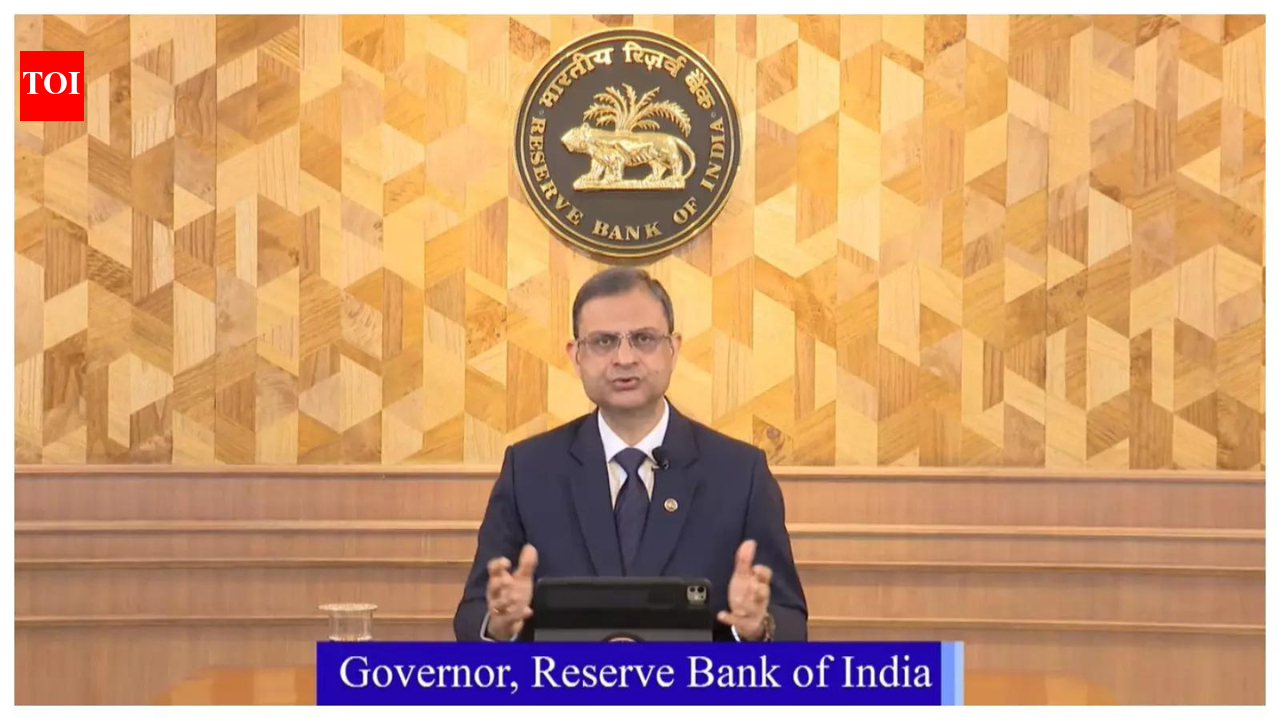
MUMBAI – RBI Governor Sanjay Malhotra on Monday said it is “premature” to talk about an interest rate hike, pushing back against market expectations that had begun pricing in tighter monetary policy. According to an interview with ET Now, Malhotra emphasized that the central bank has made no such signal and remains firmly data-dependent amid persistent global uncertainty.
Rate Hike Premature
Malhotra stated that the RBI’s current stance should not be interpreted as a precursor to higher rates. “If we intended to signal a hike, we would have shifted the stance from neutral to restrictive,” he said, adding that given elevated uncertainty, “it is premature to discuss rate hikes.” He noted that easing tensions in West Asia have brought some relief to the global economy, particularly through lower crude oil prices, which is supportive of both growth and inflation moderation for India.
“If we intended to signal a hike, we would have shifted the stance from neutral to restrictive.”
However, Malhotra cautioned that the situation remains fragile. “Supply restoration will take time, inventories need rebuilding, and demand may return,” he said, adding that the RBI is in a “wait-and-watch mode” as uncertainties persist.
Inflation and Economic Outlook
On inflation, Malhotra said there are no clear signs yet of second-round effects taking hold. Headline inflation remains below the RBI’s 4% target, largely driven by food prices, while core inflation is subdued at around 2.4%. Wholesale price inflation has risen, mainly due to fuel, but the central bank is closely tracking whether these pressures spread more broadly. “If price increases generalise and persist, then policy action would be warranted. At present, we do not see such generalisation,” he said.
| Inflation Metric | Current Level | Target/Context |
|---|---|---|
| Headline inflation | Below 4% | Driven by food prices |
| Core inflation | ~2.4% | Subdued |
| Wholesale price inflation | Rising | Due to fuel |
Currency and Capital Flows
Reiterating the RBI’s stance on the currency, Malhotra said the rupee is market-determined, with intervention limited to curbing excessive volatility. He noted that recent measures have helped ensure orderly market movements and reduced speculative pressures. On capital flows, he said initiatives such as FCNR deposits and external commercial borrowings (ECBs) have seen encouraging initial responses, with expectations of continued resilience in the external sector.
Digital Infrastructure and AI
Malhotra outlined RBI’s ongoing push to deepen digital financial infrastructure. He said the central bank is working towards making the BHIM app interoperable with digital rupee wallets, a move aimed at improving user convenience and accelerating adoption of the central bank digital currency (CBDC).
On technology, he noted that the RBI is actively exploring the use of AI to enhance regulatory oversight, improve efficiency, and strengthen financial stability frameworks. “We are using AI in our day-to-day work. We have our language model ChiRAG (Chat Interface with Retrieval Augmented Generation).” ChiRAG is a tool to help RBI staff retrieve, synthesise, and analyse information from the central bank’s internal data and documents.
Implications for Trade Finance and Business
For CFOs and treasury professionals tracking India’s monetary policy, Malhotra’s remarks signal that borrowing costs are unlikely to rise in the near term, which maintains the current cost of capital for trade finance and working capital facilities. The steady currency stance suggests that importers and exporters may continue to hedge at current volatility levels. The RBI’s focus on digital infrastructure, including CBDC interoperability, could eventually lower transaction costs for cross-border payments. The central bank’s cautious optimism on external sector resilience, supported by capital flow initiatives like FCNR deposits and ECBs, provides a stable backdrop for international trade financing.
Sources: