Bank of Baroda (BoB) and Bank of India (BoI), the two largest public sector banks by overseas branches, are aiming to raise over $6 billion in foreign capital through schemes where the Reserve Bank of India (RBI) undertakes to cover forex risk via a dollar swap, according to a Business Today report.
Key Targets and Instruments
Bank of Baroda is targeting $4 billion to $5 billion through a combination of FCNR(B) deposits, medium-term notes in foreign currency, and overseas foreign currency bonds. "We have already raised over $700 million through FCNR(B) deposits and should cross $1 billion by the end of the month," said Debadatta Chand, MD and CEO of Bank of Baroda.
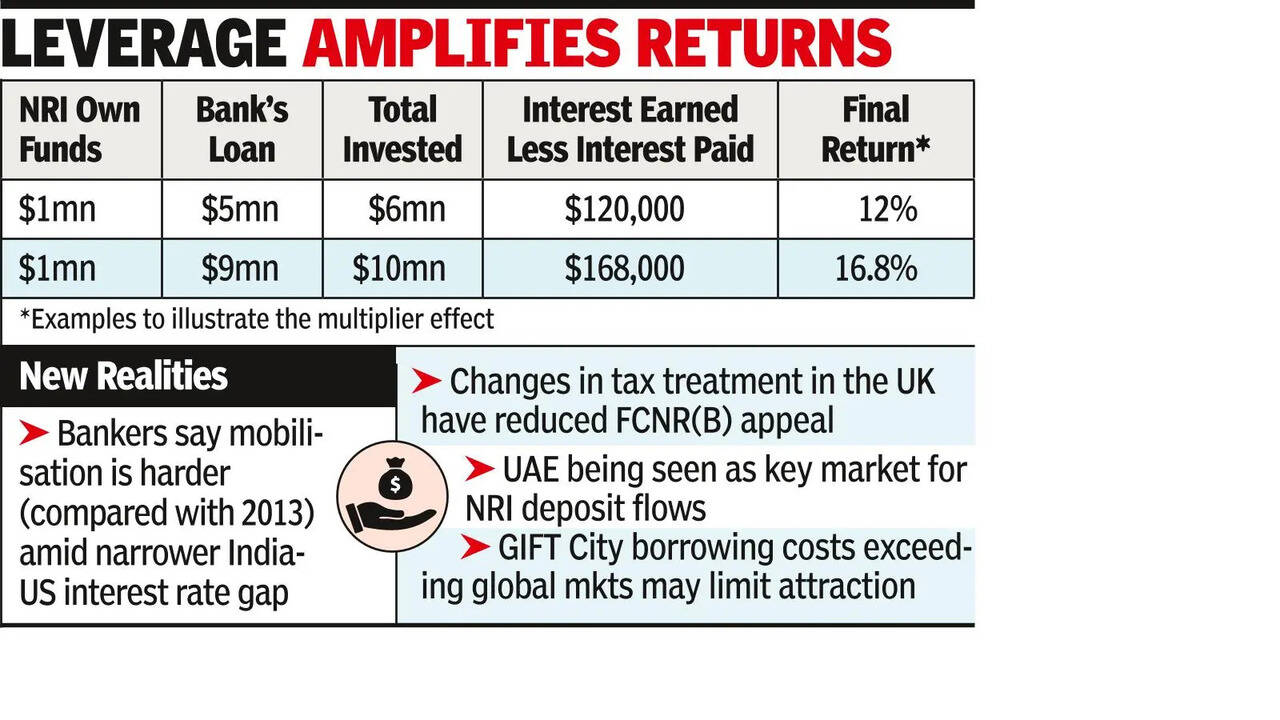
Bank of India MD and CEO Rajneesh Karnatak said the bank has raised $200 million through deposits and aims to mobilise $1.2 billion by the time the scheme closes at end-September. Karnatak noted that the bank would offer leverage up to nine times the initial deposits placed by the customer. "We will be doing this on our own as we have significant foreign operations," he added.
Deposit Returns and Margin Accretion
Karnatak stated that while the bank would offer returns as high as 6.5% on these international deposits to compete with other alternatives available to Non-Resident Indians (NRIs), the funds would still be margin accretive as they would be 50 to 60 basis points lower than the cost of bulk deposits.
Industry-Wide Mop-Up
The RBI said that banks have raised over $17 billion until this week through FCNR(B) deposits. Among other public sector banks:
- Punjab National Bank said it could raise around $2.5 billion of FCNR(B) deposits.
- Union Bank of India expects to mobilise up to $2.0 billion.
- Central Bank of India has set a $400 million target.
Implications for Trade Finance and Capital Flows
The coordinated mop-up through FCNR(B) deposits and dollar swaps is a significant development for treasury professionals and investors tracking emerging market capital flows. The RBI's forex risk cover via swaps effectively lowers the cost of foreign currency funding for banks, enabling them to offer attractive rates to NRI depositors while maintaining margin discipline. For CFOs and finance executives, this influx of foreign capital can ease domestic liquidity conditions and potentially stabilise the rupee, reducing hedging costs for importers and exporters. The $17 billion already raised signals strong NRI confidence in India's banking system despite global rate pressures.
Sources: