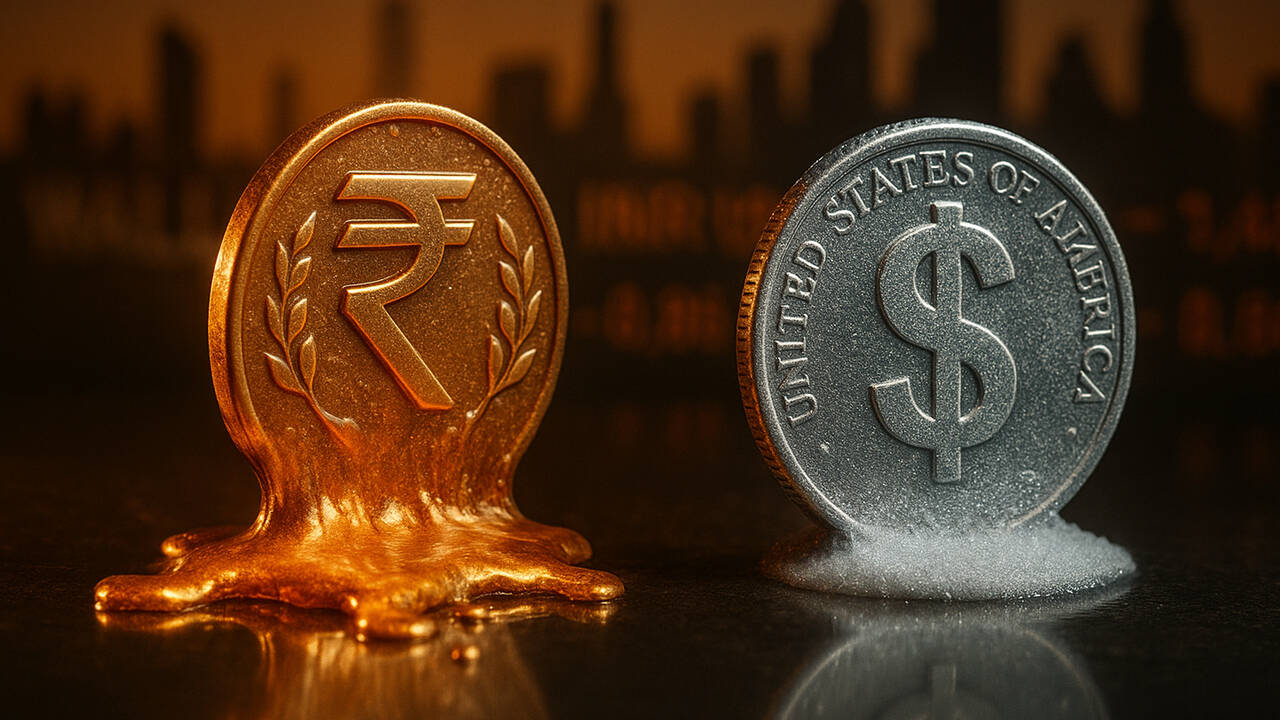
The Indian rupee resumed its depreciation on Tuesday, breaching the 96 level against the US dollar after a brief recovery fueled by Reserve Bank of India (RBI) measures, according to a report by Business Today. The currency opened with a 48 paise fall from Monday's close of 95.62, reaching its weakest level since June 8, as rising crude oil prices driven by US-Iran tensions weighed on the domestic currency.
RBI Intervention and Forward Premiums
The RBI stepped into the market on Monday to limit the rupee's decline, with state-run banks spotted selling dollars likely on the RBI's behalf, according to Anil Bhansali, head of treasury at Finrex Treasury Advisors. This intervention brought the rupee to 95.57, the strongest level on Monday. The one-month forward premium stood at 3.17% and the one-year forward premium at 2.83%, citing an ET report. The domestic currency has weakened by more than 0.8% so far in the current fiscal year.
Market Outlook and Structural Demand
Kunal Sodhani, head of treasury at Shinhan Bank India, noted that "global factors, especially oil prices, Federal Reserve expectations, and portfolio flows, are likely to dominate near-term direction." He added that "India's trade deficit, corporate dollar demand, and external payment obligations continue to create structural demand for dollars." Traders said market expectations for the near-term trading range have shifted towards weaker levels around 96.
| Metric | Value |
|---|---|
| Monday close | 95.62 |
| Tuesday opening | 96+ (48 paise fall) |
| One-month forward premium | 3.17% |
| One-year forward premium | 2.83% |
| FY depreciation | >0.8% |
Implications for Trade Finance and Hedging Costs
The rise in forward premiums directly impacts the cost of hedging for importers and exporters. With the one-month forward premium at 3.17%, importers face increased costs to lock in exchange rates, while exporters may benefit from higher premiums on forward sales. The structural dollar demand from India's trade deficit and external obligations, as highlighted by Sodhani, suggests continued downward pressure on the rupee, further raising hedging costs for businesses with unhedged forex exposure. "Escalating geopolitical risks prompted investors to move into safe-haven assets, boosting the US dollar and weighing on the rupee," said Bhansali.
Geopolitical and Data Calendar
Investors are now focused on US Consumer Price Index (CPI) inflation data due Wednesday, which is expected to influence the dollar index and other global currencies, according to traders. The rupee is likely to remain highly responsive to fluctuations in oil prices, foreign investment flows, and dollar index moves in the near term, driven by escalating geopolitical risks that have prompted a shift towards safe-haven assets, boosting the US dollar.
Sources: