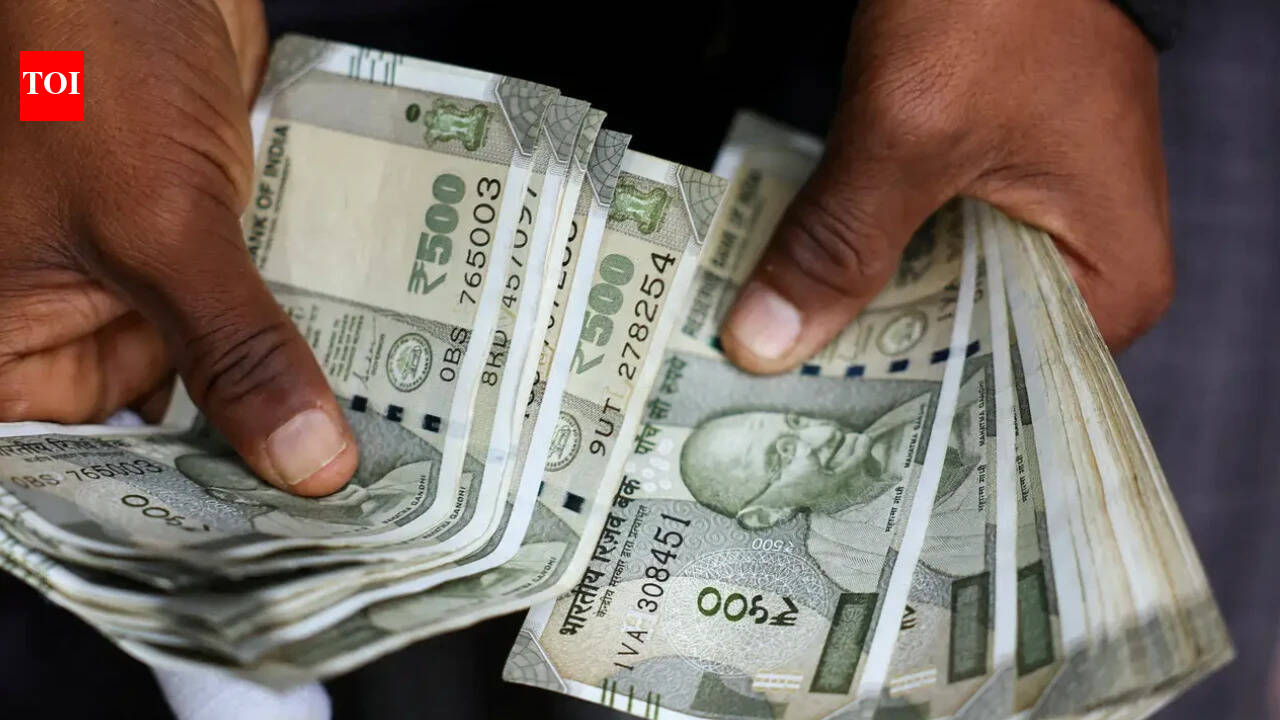
Rupee banknotes in circulation amount to 176 billion pieces — three times the number of US dollar bills and nearly six times the number of euro notes, according to RBI Deputy Governor Shirish Chandra Murmu. In a keynote at a cash management conference organised by Bank Indonesia in Jakarta on August 13, Murmu said the comparison partly reflects India's denomination mix, which is weighted towards lower-value notes and therefore requires more pieces to carry out transactions of the same value.
"Over the past few years, we have produced between 28 and 30 billion banknotes annually across six denominations, and disposed of roughly 21 billion pieces a year. As of today, 176 billion banknotes are in circulation in India. By comparison, roughly 56 billion US dollar bills and 30 billion euro banknotes were in circulation at the end of last year," Murmu said. "Even so, the volume gives you a sense of the scale of the logistics we manage every day."
Why India has so many notes
India's lower-value denomination mix is the main reason the country needs so many physical pieces. The table below summarises the comparative circulation data cited by Murmu:
| Currency | Notes in circulation (billions) |
|---|---|
| Indian rupee | 176 |
| US dollar | 56 |
| Euro | 30 |
The RBI projects currency demand five years ahead, separating transactional demand from replacement demand. Transactional demand is driven by expected changes in currency in circulation, GDP growth, interest rates, food inflation and the adoption of digital payments, while replacement demand reflects the need to withdraw old and unfit notes.
The cash paradox: digital payments and currency growth
"Currency in circulation continues to grow at double-digit rates even as cash's share of individual transactions declines, thanks to growing digital payment adoption," Murmu said, describing this as a "cash paradox" that makes future demand harder to predict. The central bank's projections are therefore built around two distinct drivers: transactional demand, influenced by economic variables and payment behaviour, and replacement demand, which reflects the physical quality of notes already in the system.
Production, distribution and disposal
India produces between 28 billion and 30 billion notes annually through banknote paper mills, four currency printing presses and ink production units owned and controlled by the RBI and the government. The Clean Note Policy, introduced in 1999, requires the central bank to make good-quality notes available to citizens and continuously replace notes deemed unfit for circulation.
The RBI distributes currency through its 19 regional offices and a network of currency chests operated by commercial and cooperative banks and government treasuries. Currency also reaches the public through bank branches, more than 250,000 ATMs and cash dispensers, and millions of business correspondents, particularly in rural areas and smaller towns. Currency chests collect circulated notes, sort them and send soiled or mutilated notes for disposal. This network handled the 2016 demonetisation exercise and the 2023 withdrawal of Rs 2,000 notes, serving as collection and redistribution points.
Preserving trust and reducing cost
Murmu said the RBI was examining ways to make notes last longer as it seeks to reduce the cost of replacing them. "We are exploring ways to extend the life of banknotes, including surface coatings on the substrate, and polymer notes for lower denominations," he said. The central bank is also working to reduce the carbon footprint of the cash cycle by improving the efficiency of its distribution network and finding better uses for banknote briquettes after disposal.
"Cash remains a significant mode of payment in the Indian economy, and preserving trust in it, through clean notes, secure logistics, and a currency ecosystem people can rely on, is central to preserving monetary sovereignty itself," Murmu said.
Sources: