Union Finance Minister Nirmala Sitharaman on Sunday stated that movements in the rupee against the US dollar are influenced by a combination of global and domestic factors, emphasising that the Reserve Bank of India (RBI) intervenes only to contain excessive volatility and not to defend any specific exchange rate, according to a report by PTI.
Addressing reporters at Devanahalli near Bengaluru during an event marking 12 years of the Narendra Modi-led NDA government, Sitharaman said currency markets are affected by global developments ranging from US monetary policy to movements in major international currencies.
"Whenever there is a severe fluctuation or volatility, the Reserve Bank intervenes in the market not to fix a price. Only to stop any kind of fluctuation. The Reserve Bank comes into picture, stabilises it, and comes out, for which it uses foreign exchange from the Reserve. So it does it sparingly."
Key Drivers of Rupee Movement
Sitharaman listed several factors influencing the rupee's trajectory: decisions by the US Federal Reserve, foreign capital flows, and currency movements in other economies. She specifically noted, "the US Fed talking about increasing or decreasing interest rates in their country, the Japanese yen crashing against the dollar and the Korean won crashing." Additionally, foreign institutional and direct investors booking profits and reallocating funds because of developments in the US can also influence reserves and currency movements.
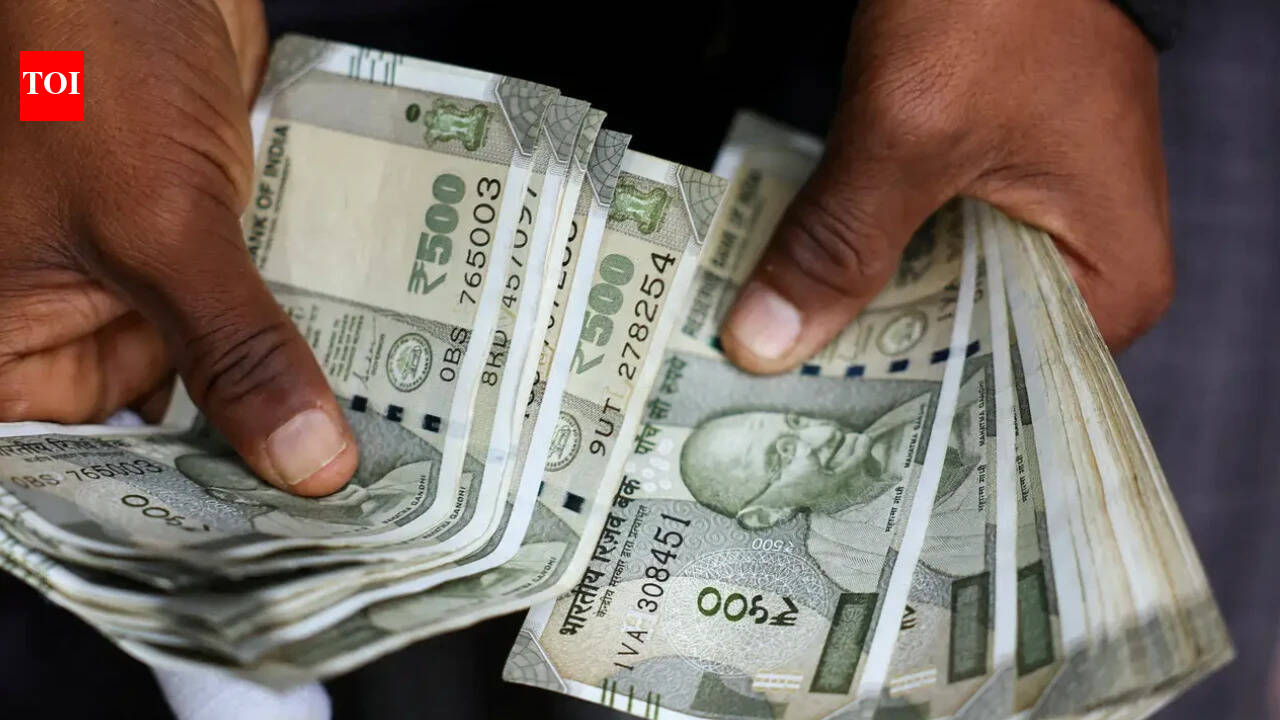
India's dependence on imports of crude oil, fertilisers and gold requires substantial dollar payments, making foreign exchange management an important task, she added.
| Factor | Description |
|---|---|
| US Federal Reserve Policy | Decisions on interest rates affect rupee-dollar dynamics |
| Foreign Capital Flows | FII/FDI profit booking and fund reallocation due to US developments |
| Global Currency Movements | Japanese yen and Korean won crashes against the dollar |
| Import Dependence | Crude oil, fertilisers, gold imports require large dollar payments |
RBI's Intervention Policy
Sitharaman stressed that the RBI does not target a specific exchange rate but steps in sporadically to smooth severe fluctuations. The central bank uses foreign exchange reserves for this purpose, intervening "sparingly." This approach provides clarity to treasury professionals that RBI actions are stabilisation measures rather than defence of a particular level.
Implications for Trade Finance and Forex Management
For CFOs, treasury directors, and trade finance professionals, the FM's comments underscore that India's forex management framework prioritises order over price fixation. The substantial import bill for crude, fertilisers, and gold means that any sharp rupee depreciation raises costs for importers, while exporters gain competitiveness. The RBI's intervention helps avoid disorderly FX moves that could disrupt trade finance contracts and hedging strategies. The recent crash of the Japanese yen and Korean won highlights how external currency stress can feed into rupee volatility, requiring active monitoring of cross-currency positions.
India's Economic Growth Context
Sitharaman noted that official data and international institutions consistently show India as the fastest-growing major economy. "Repeatedly last five, six years, India is the fastest growing economy. And this year, when the GDP numbers came, every sector right from manufacturing to agriculture, service, logistics, transport, every sector has shown substantial growth," she said. On employment, she stated unemployment levels are declining per official surveys, and highlighted initiatives focused on internships, skill development and AI-based training.
Fiscal Discipline and State Funding
Responding to Karnataka's allegations of inadequate fund releases, Sitharaman said allocations are determined by the Finance Commission, not the central government. She rejected the argument that states should receive back all taxes they contribute, and urged states to ensure adequate fiscal resources before making welfare commitments. She also encouraged Karnataka to utilise central budget provisions for cold storage and warehousing through Farmer Producer Organisations.
For investors and economic analysts, Sitharaman's reaffirmation of India's growth status and the RBI's measured intervention stance suggests a stable macroeconomic environment that supports long-term trade and capital flows.
Sources: