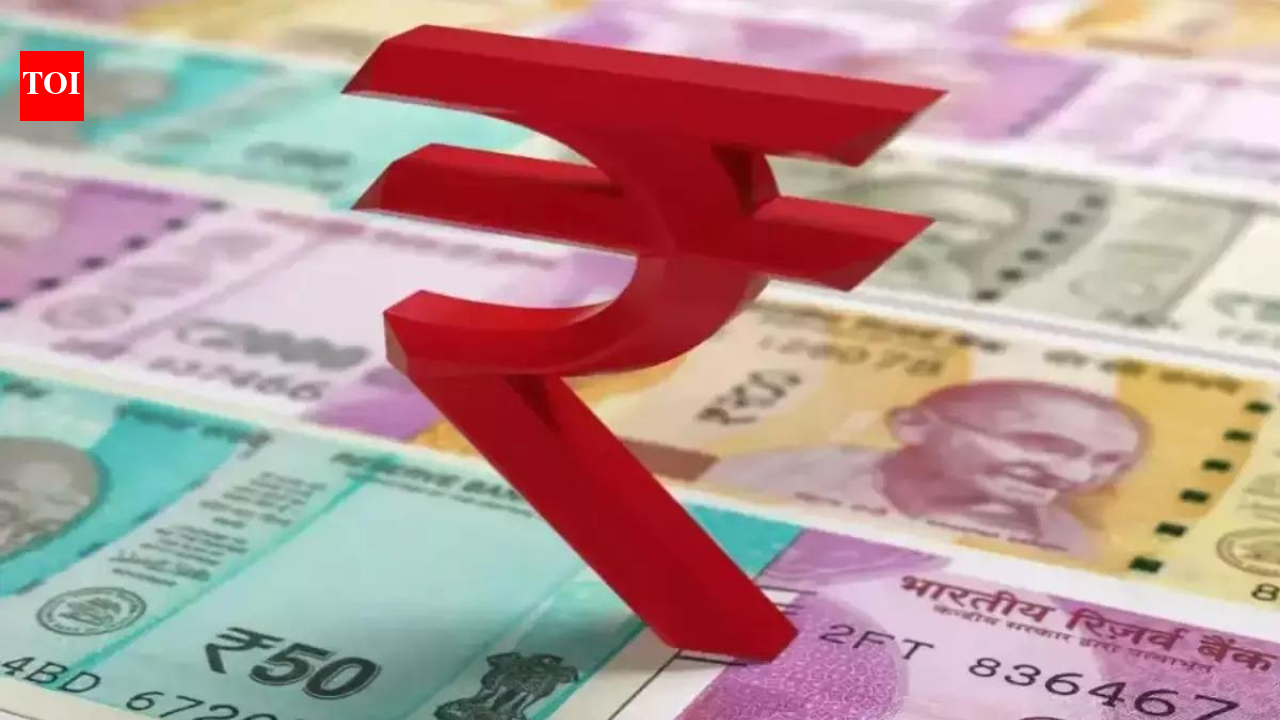
The Indian rupee weakened 6 paise to 95.28 against the US dollar in early Friday trade, as a firmer greenback and elevated US Treasury yields put pressure on the currency, according to Business-Today.
The rupee opened at 95.27 at the interbank foreign exchange market before slipping to 95.28, following a 14-paise decline in the previous session when it ended at 95.22 against the dollar, Business-Today reported. Forex traders said dollar purchases by importers and profit-taking after the rupee's recent gains had outweighed the favourable global backdrop.
Dollar index, crude and yields in focus
The dollar index, which tracks the US currency against a basket of six major currencies, was trading 0.02 per cent higher at 99.95. Brent crude gained 1.20 per cent to $83.48 a barrel in futures trade. Combined with elevated US Treasury yields, these factors are expected to keep the rupee under pressure, according to Business-Today.
Key pressure points cited by analysts:
- Brent crude trading near $83.48 a barrel
- Dollar index holding near the 100 mark
- Elevated US Treasury yields
- Renewed geopolitical concerns around the Strait of Hormuz
Expert view: bias tilted towards weakness
Amit Pabari, managing director of CR Forex Advisors, said the rupee could remain vulnerable, with oil prices, the dollar and US yields likely to influence its near-term movement.
With oil back near $83, the dollar firm near 100, and US yields elevated, 95.00-95.10 stands out as a solid support for the rupee, and the currency climbing back towards the 96.00-96.20 zone looks like reality. Global developments, particularly around oil prices and the dollar, are likely to remain the key drivers for the rupee in the near term, keeping the overall bias tilted towards weakness.
Pabari told Business-Today. Anil Kumar Bhansali, head of treasury and executive director at Finrex Treasury Advisors LLP, said the dollar was also receiving support from higher US Treasury yields and renewed geopolitical concerns around the Strait of Hormuz.
The rise in US Treasury yields and renewed geopolitical concerns around the Strait of Hormuz are providing some support to the dollar.
Bhansali said.
Equities and FII flows
The rupee's weakness came alongside a decline in domestic equities in early trade. The Sensex was down 235.36 points at 78,699.80, while the Nifty fell 24.30 points to 24,608.25. Foreign institutional investors were net sellers in the equity market on Thursday, offloading shares worth Rs 17.86 crore, according to exchange data cited by Business-Today.
Key market indicators
| Indicator | Level / Value | Move |
|---|---|---|
| USD/INR (current session) | 95.28 | Rupee down 6 paise |
| USD/INR (previous close) | 95.22 | Rupee down 14 paise in prior session |
| Dollar index | 99.95 | +0.02% |
| Brent crude futures | $83.48/barrel | +1.20% |
| Sensex | 78,699.80 | -235.36 points |
| Nifty | 24,608.25 | -24.30 points |
| FII net selling (Thursday) | Rs 17.86 crore | — |
Implications for treasury and trade finance
For finance executives managing USD-INR exposure, the rupee's slide toward 95.28 underscores the importance of the three variables flagged by experts: oil prices, dollar strength and US Treasury yields. Importers, who were among the active dollar buyers in the session, face a currency that is biased toward weakness, with Pabari identifying 95.00-95.10 as solid support and a possible move toward 96.00-96.20 if global conditions persist. Bhansali pointed to the Strait of Hormuz as a geopolitical factor reinforcing the dollar, which could keep hedging decisions sensitive to headlines from the region. Treasury teams tracking these inputs will find the rupee's near-term direction closely tied to global oil and US yield movements, according to the analysts cited by Business-Today.
Sources: