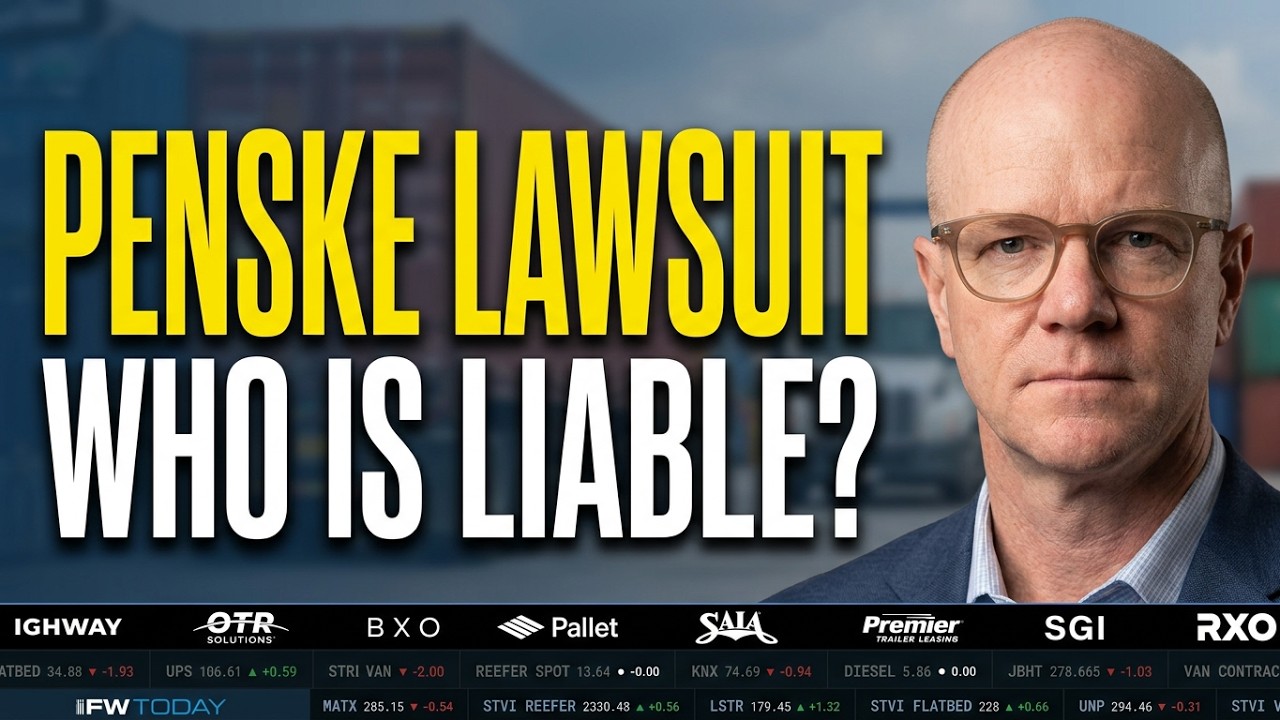
A disputed $7,000 rate gap between FR8 Solutions and 22 independent drivers has been settled, ending a federal civil RICO lawsuit that tested how trucking companies report load revenue to percentage-based pay contractors, according to FreightWaves.
FR8 Solutions and the drivers reached a settlement in the federal civil RICO lawsuit, and on July 28 a Florida court dismissed the case with prejudice, FreightWaves reported. The court filings do not disclose the settlement's financial terms. Plaintiffs and defendants filed a joint notice of settlement on July 27, telling the court they had resolved the matter and were finalizing their agreement. Judge Wendy Berger closed the case the following day; her order allows either side 60 days to request a final order or reopen proceedings.
Disputed rates behind the lawsuit
FR8 and the drivers worked under agreements that promised drivers 88% of each load's linehaul rate, according to FreightWaves. The complaint claims company records showed smaller rates than FR8 actually received. Drivers claimed FR8 supplied settlement statements and dispatch documents that understated the company's revenue, reducing their percentage-based payment on individual loads.
| Lane | Rate shown by FR8 | Rate drivers claim FR8 received | Difference |
|---|---|---|---|
| Wood Dale, Illinois → Gaffney, South Carolina | $2,400 | $2,500 | $100 |
| Del Rio, Texas → Kansas City, Kansas | $8,000 | $15,000 | $7,000 |
The $7,000 difference represented $6,160 under the drivers' claimed 88% formula, FreightWaves reported. Drivers also identified Ascent On-Demand, Active On-Demand and Landstar in disputed transactions. They claimed another company operator revealed different rates during June 2023. FR8 then ended their contracts and locked them out of its mobile application, the lawsuit states.
Court rejects defendants' contract reading
FR8 and the individual defendants asked the court to dismiss the lawsuit, arguing the agreements set compensation through separately negotiated rates for each truckload. Judge William Young rejected that reading at the dismissal stage, writing that it could produce an absurd result. Young allowed claims against FR8 and Kajdic to continue in a February order. The court also retained allegations involving messages that drivers described as threats. Kajdic argued Google Translate distorted messages originally written in Bosnian. Young made no final findings about the drivers' factual claims, according to FreightWaves.
Company background
FMCSA records list FR8 Solutions as an active interstate motor carrier, according to FreightWaves. The Jacksonville, Florida, company reports 65 power units and 78 drivers, and 4.72 million vehicle miles during 2025. Its website markets brokerage, transportation and cross-border services, and advertises that owner-operators can take home 88% of the agreed rate.
Why it matters
Percentage-based driver pay requires accurate access to the underlying load rate. A disputed rate gap can become thousands of dollars on one shipment, as the $7,000 gap in this case shows. For freight forwarders, 3PL operators and shippers, the case highlights that rate transparency in truckload moves directly affects driver settlement calculations, and that discrepancies between the rate shown to a driver and the rate actually received by a carrier can trigger legal exposure.
Sources: